You Should Not Get Injured During a Training Session

Written by Evelyn Calado, MKin, CSCS, RKin

If you leave a training session injured, something has gone wrong.

That is not normal. It should not be expected. And it is not part of “training hard.”

I have been in this industry for over a decade, and I have seen far too many situations where clients get hurt in the weight room. Not because of bad luck, but because of poor decisions.

The Gym Should Be One of the Safest Places You Train

Think about it.

The weight room is a controlled environment.

  • You control the load

  • You control the movement

  • You control the pace

  • You control the rest

Compare that to sport, where there are opponents, unpredictable movements, and variables you cannot control.

In theory, your injury risk in the gym should be extremely low.

That does not mean training is easy. You should still be challenged. You should still push your limits.

But it should be done in a controlled and intentional way.

Where Things Go Wrong

Most training-related injuries are not random. They come from avoidable mistakes.

1. Ego-Based Training

This is one of the biggest issues.

A client walks in, maybe they look strong or athletic, and the session becomes about proving something. The load goes up too quickly, technique breaks down, and fatigue is ignored.

That is how people get hurt.

2. No Plan

This is more common than people think.

Clients come in and have no idea what they are doing that day. The trainer is choosing exercises on the spot with no structure, no progression, and no record of previous sessions.

Without a plan, there is no progression. Without progression, there is no direction. And without direction, you are just accumulating risk.

3. Poor Exercise Sequencing

Fatigue matters.

If someone is pushed to the point of exhaustion through their legs and core, and then asked to perform a heavy compound lift, that is a problem.

That is not “hard training.” That is poor decision-making.

4. Ignoring the Individual

Not every client should move the same way.

Mobility, injury history, movement patterns, and training experience all matter. If those are ignored, you are forcing someone into positions they are not prepared for.

That is where breakdown happens.

Soreness Is Not the Goal

Another misconception is that a good session should leave you unable to move.

If your trainer’s goal is to completely destroy you, that is a red flag.

  • You should not struggle to sit at your desk

  • You should not be unable to walk for days

  • You should not feel worse instead of better

Anyone can make you tired.

It takes skill to build a program that challenges you, progresses you, and still allows you to function.

What Good Training Actually Looks Like

Good training is not random. It is structured.

  • There is a clear plan

  • There is progression over time

  • Your loads and performance are tracked

  • Exercises are selected for a reason

  • Intensity is managed, not guessed

You are pushed, but within your capacity.

You improve, without being completely broken down in the process.

Playing the Long Game

At Avos Strength, the focus is simple:

Train. Play. Repeat.

The goal is not to win a single session. The goal is to keep you training consistently, improving over time, and continuing to do the things you enjoy.

That means:

  • Checking your ego at the door

  • Building progressively

  • Respecting your current capacity

  • Training with intention

The Bottom Line

The gym should not be where you get injured.

Can things happen occasionally? Yes. But injuries should be rare, not expected.

If you have worked with a trainer and felt unsafe, unsupported, or left sessions worse than when you walked in, that is not something you should accept.

You deserve better coaching than that.
Osteopenia and Strength Training for Women: What Happens Before Menopause

Written by Evelyn Calado, MKin, CSCS, RKin

There is a persistent misconception that bone loss is something that “just happens” after menopause. By the time many women start thinking seriously about bone density, the process of loss is already well underway.

Osteopenia and strength training are directly linked, yet most women are not told how early bone loss actually begins.

Bone health is not a passive outcome of aging. It is an active, dynamic process shaped by hormones, mechanical loading, and energy availability across the entire female lifespan.

Understanding osteopenia requires understanding one central principle: bone is living tissue, constantly undergoing remodeling through the opposing actions of osteoblasts and osteoclasts.

Bone Remodeling: The Balance Between Formation and Breakdown

At any given moment, your skeleton is not static. It is metabolically active.

  • Osteoblasts are responsible for bone formation

  • Osteoclasts are responsible for bone resorption

In a healthy system, these processes are tightly coupled. Bone that is broken down is replaced with new, strong bone. The integrity of your skeleton depends on the balance between these two forces.

Estrogen plays a critical regulatory role in maintaining this equilibrium.

Estrogen as a Regulator of Bone Turnover

Estrogen is not just a reproductive hormone. It is deeply involved in musculoskeletal health.

It functions, in part, by:

  • Inhibiting excessive osteoclast activity

  • Supporting osteoblast survival and activity

When estrogen levels are stable, bone turnover remains balanced. But when estrogen becomes low or erratic, this regulatory system begins to fail.

Estrogen does not “leach calcium from bone.” Its decline removes inhibitory control over osteoclasts, allowing bone resorption to outpace formation.

The result is a gradual reduction in bone mineral density, what we clinically recognize as osteopenia, and eventually osteoporosis if left unchecked.

Perimenopause: The Underappreciated Inflection Point

Much of the conversation around bone health focuses on postmenopause. However, perimenopause is a critical and often overlooked phase.

This is not simply a state of low estrogen. It is a state of hormonal volatility.

During perimenopause:

  • Estrogen levels fluctuate unpredictably

  • Progesterone exposure becomes inconsistent

  • The coordination of tissue remodeling processes becomes impaired

These fluctuations influence:

  • Bone turnover

  • Muscle protein synthesis

  • Recovery capacity

The net effect is a physiological environment that becomes increasingly catabolic, meaning tissue breakdown can begin to exceed tissue formation.

This is why bone density decline can begin before menopause is complete.

The Muscle–Bone Unit: Why Strength Matters

Bone does not exist in isolation. It is functionally linked to muscle through what is often referred to as the muscle–bone unit.

When muscle contracts, it exerts mechanical force on bone. This mechanical strain is the primary stimulus for bone adaptation.

Without sufficient loading, the body interprets bone as metabolically expensive and unnecessary, and osteoclastic activity increases accordingly.

Strength training directly targets this system.

Through high-load resistance exercise:

  • Muscle force increases

  • Mechanical strain on bone increases

  • Osteoblast activity is stimulated

  • Bone mineral density is preserved or improved

This is not a marginal effect. It is one of the most powerful non-pharmacological interventions available for maintaining skeletal integrity.

If you are unsure where to start, this is exactly where an individualized approach matters. [Start with an Initial Assessment]

Why Endurance Alone Is Not Enough

Many active women assume that being “fit” is sufficient to protect bone health. However, endurance training does not provide the same osteogenic stimulus as resistance training.

In fact, without adequate nutrition and strength work, high volumes of endurance exercise can:

  • Increase cortisol and systemic stress

  • Contribute to low energy availability

  • Impair bone formation

Bone health requires specific, targeted mechanical loading, not just general activity.

Why Strength Training Is Essential for Women’s Bone Health

Dr. Stacy Sims is explicit. Strength training is not optional for women. It is a lifelong requirement.

General recommendations include:

  • At least 2 to 3 strength sessions per week

  • Emphasis on heavy resistance, not just light weights

  • Inclusion of compound lifts and power-based movements

This becomes even more critical during perimenopause and beyond, when:

  • Muscle mass becomes harder to maintain

  • Hormonal support for tissue repair declines

  • The risk of accelerated bone loss increases

Strength training is not simply about preserving aesthetics or performance. It is about maintaining structural integrity.

For most people, this requires structure, progression, and accountability. [Explore Personal Training Options]

The Compounding Effect of Muscle Loss

Muscle loss and bone loss are interconnected.

As muscle mass declines:

  • Mechanical loading on bone decreases

  • Bone formation signals weaken

  • Risk of fragility increases

Hormonal environments during this phase can also increase muscle protein breakdown, making it harder to maintain lean mass without intentional intervention.

This creates a feedback loop:

Less muscle leads to less bone stimulus, which leads to weaker bone and higher injury risk.

Strength training interrupts this cycle.

Bone Health Is Built, Not Preserved

One of the most important reframes is this:

You are not trying to hold on to bone. You are trying to continually build and reinforce it.

Bone is responsive tissue. It adapts to the signals it receives.

  • If the signal is inactivity, bone loss occurs

  • If the signal is chronic stress without adequate fuel, bone loss occurs

  • If the signal is heavy loading with adequate nutrition, bone strength improves

Perimenopause does not mark the end of this adaptability. It simply raises the stakes.

Final Thoughts

Osteopenia is not an inevitable consequence of aging. It is, in large part, the result of mismatched physiology, where hormonal changes are not met with appropriate mechanical and nutritional support.

Estrogen may set the stage, but behavior determines the outcome.

Strength training, done consistently and with sufficient intensity, provides the necessary stimulus to:

  • Maintain bone mineral density

  • Preserve lean muscle mass

  • Counteract the catabolic shifts of hormonal fluctuation

For women entering perimenopause, this is not optional. It is essential.

And the earlier this foundation is built, the more resilient the system becomes over time.

This is why most of the women we work with are already incorporating structured resistance training before these changes begin. [Learn More About Hybrid Coaching]

Source

Dr. Stacy Sims, ROAR

ACL Injury Risk in Female and Youth Athletes: What Actually Matters (Part 2)

Written by Michael Crawley, BSc, BPT, CSCS

Anterior cruciate ligament injuries are a significant issue in sport, particularly among female and youth athletes. Female athletes have a significantly greater incidence of ACL injury compared to males, with research suggesting the risk may be between 2 and 8 times higher depending on the population studied (Herzberg et al. 2017).

A number of factors have been proposed to influence this increased risk. These include both extrinsic factors such as playing surface, and intrinsic factors such as biological, structural, and physical characteristics. This article focuses on the intrinsic side of the equation.

If you have not read Part 1, where we break down how ACL injuries occur and what influences risk more broadly, you can start here: ACL Injuries: How They Occur, Who Is at Risk, and Why Training Quality Matters

The key intrinsic factors that may influence ACL injury risk in the female athlete include:

  • hormonal influences

  • biomechanics and structural considerations

  • strength and neuromuscular control

It is also important to recognize that surgery is not the only solution following an ACL injury. The appropriate approach depends on the athlete’s age, injury severity, and the presence of additional damage such as meniscal or cartilage involvement. Graft selection is also influenced by these factors and plays an important role in long-term outcomes.

Menstruation and Hormones

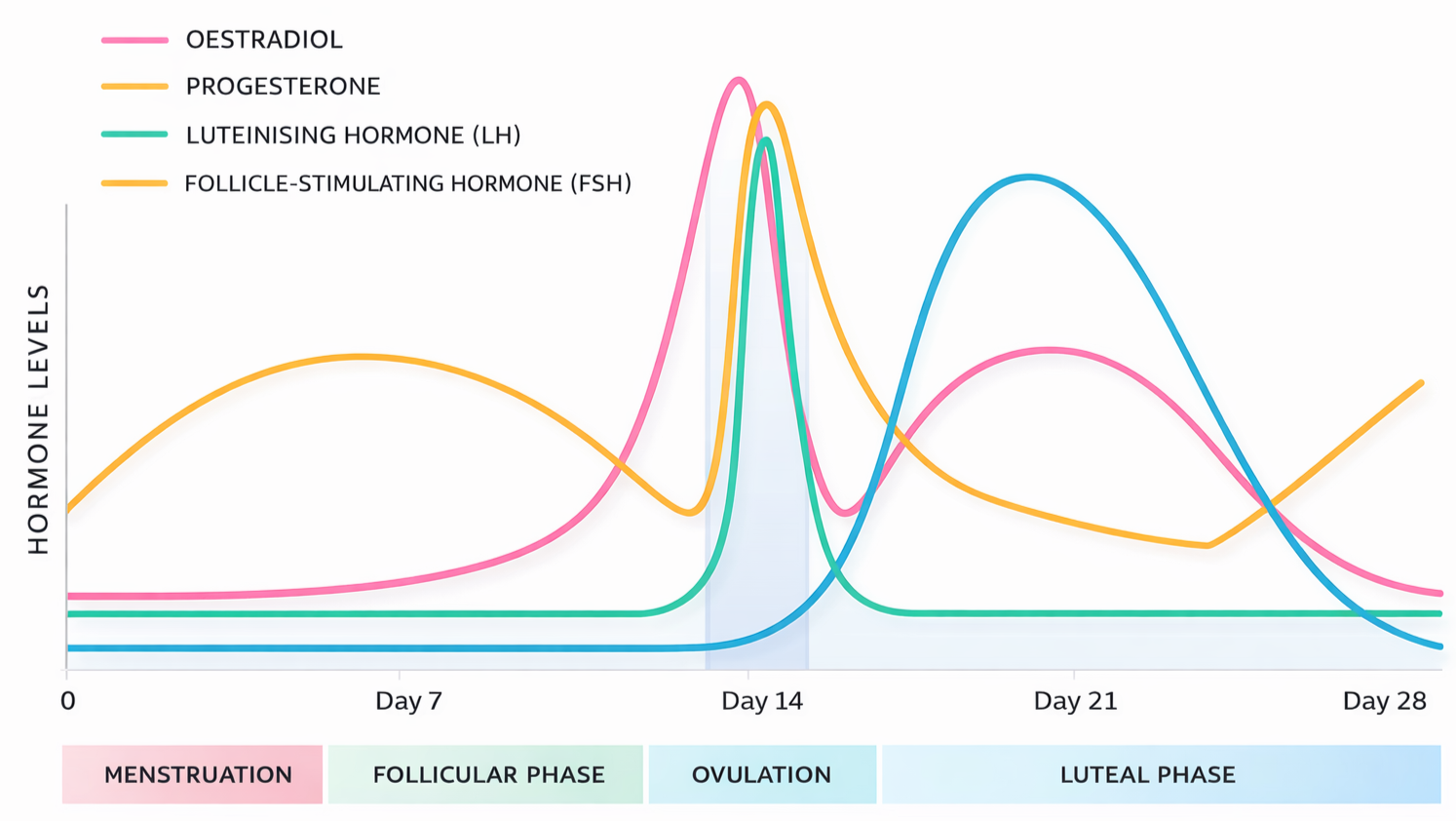
The menstrual cycle consists of three phases, each characterized by fluctuations in key hormones including estrogen, progesterone, and luteinizing hormone (Wojtys et al. 2002).

  • Follicular phase: approximately 9 days

  • Ovulatory phase: approximately 5 days, marked by peaks in estrogen and luteinizing hormone

  • Luteal phase: approximately 14 to 15 days, with elevated progesterone

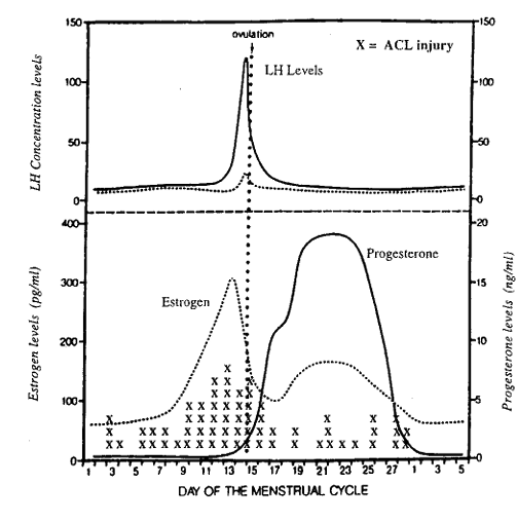
Research in this area remains mixed. However, several studies have reported a higher incidence of ACL injuries during the ovulatory phase compared to other phases (Wojtys et al. 2002; Herzberg et al. 2017).

Wojtys et al. (2002) demonstrated a higher number of ACL injuries, marked as X on the figure above, in a group of young female athletes during the ovulatory phase. The mechanisms behind this relationship are varied and often disputed. At the neurological level, Kumar et al. (2013) demonstrated reduced reaction time to visual and auditory stimulus between the follicular and luteal phases.

From a structural perspective, the ACL contains estrogen receptors, and cell culture research has demonstrated that estrogen can influence the ligament’s collagen composition. It is proposed that this may increase knee joint laxity. Maruyama et al. (2021) examined knee laxity across the menstrual cycle and found increased anterior knee laxity during the ovulatory phase.

However, this difference was only observed when participants were grouped into those with genu recurvatum and those without it, meaning athletes whose knees hyperextend 10 degrees or more versus those who do not. This adds another layer of complexity, as it suggests that biomechanical factors such as hyperextension may interact with hormonal factors such as higher estrogen levels rather than acting independently.

Relaxin is another important peptide hormone that has been specifically linked to injury risk in female athletes. It appears to work synergistically with estrogen, contributing to changes in ligament laxity (Berger et al. 2023; Parker et al. 2024).

Relaxin exerts its effects in two key ways:

  • increases type 1 collagen degradation

  • suppresses collagen synthesis

Given that ligaments are composed of approximately 40 to 50 percent type 1 collagen, this provides a plausible mechanism by which relaxin may influence ACL integrity. Alterations in the collagen structure of the ligament are one proposed explanation for increased laxity and injury risk.

Parker et al. (2024) also highlight a practical consideration. Relaxin levels tend to peak around days 21 to 24 of the menstrual cycle. In a coaching setting, this may present as an athlete reporting unexplained musculoskeletal discomfort around the knee without a clear training-related cause. This is not something to overreact to, but it can serve as a useful opportunity for education, monitoring, or short-term modification of training.

Across the cycle, these hormonal fluctuations may contribute to changes in reaction time, ligament laxity, and available joint range of motion. While some research has explored the use of oral contraceptives to regulate these hormonal variations and potentially reduce ACL injury risk (Herzberg et al. 2017), the quality of evidence remains low and is often confounded by multiple variables.

More importantly, as Parker et al. (2024) point out, oral contraceptives are not without trade-offs. While they may influence hormones such as relaxin and estrogen, there are more accessible and lower-risk interventions available. For most young female athletes, this is not where the focus should be.

Which leads into the next major factor: strength and neuromuscular training.


Strength and Neuromuscular Training

As female participation in sport has increased over the past few decades, there has been a corresponding increase in injury rates. At the same time, training age and exposure to structured strength and conditioning within a gym setting has generally lagged behind that of male athletes.

Well-rounded strength and conditioning is not only a tool to support and improve performance in sport. It can have a profound effect on robustness and coordinative qualities, helping to mitigate injury risk.

For a deeper look at how strength training should be structured for younger athletes, see: Building a Strong Foundation: The Crucial Role of Youth Strength and Conditioning

In young female athletes, several characteristics have been associated with increased ACL injury risk (Collings et al. 2022):

  • lower strength ratios between hip adductors and abductors

  • reduced trunk control

  • higher countermovement peak force values

This highlights the importance of a complete strength and conditioning plan. As young athletes improve jumping ability and increase power output, the risk of ACL injury and other issues such as patellofemoral pain may also increase (Myer et al. 2015; Collings et al. 2022).

Training for these athletes must address several components:

  • maximal strength and power

  • jumping and landing mechanics and technique

  • strength capacity

  • energy system development

Sugimoto et al. (2016) demonstrated that neuromuscular programs that include a combination of strength training, jumping, trunk control, and coordination significantly reduce ACL injury risk in young female athletes.

Practical Exercise Examples

Below are five exercises that cover several key qualities related to performance and injury mitigation:

Adjusting variables such as volume, intensity, range of motion, and frequency can make exercises like these highly effective across a range of sports and athlete levels.


Adherence, Enjoyment, and the Training Environment

Several factors can impact adherence in young female athletes:

  • time

  • enjoyment

  • coaching expertise

  • equipment access

Research suggests that even two 30-minute sessions per week in-season can meaningfully reduce ACL injury risk, provided a more comprehensive program is completed in the off-season (Sugimoto et al. 2016).

Enjoyment and coaching quality are closely linked. Engagement in the gym setting can be a challenge, particularly for younger athletes. Incorporating competition, variability, and game-based elements can improve buy-in and training consistency.

Reaction, Coordination, and Game-Based Training

The following examples can be used to improve reaction time, coordination, and strength:

These drills can be implemented in pairs, relay formats, or with sport-specific variations. They also expose athletes to a broader range of movement patterns.

This ties closely into long-term athlete development principles, which are outlined further here:
Build the Athlete First: Why Youth Athletes Need Physical Literacy Before Sport Specialization

An additional benefit of implementing games with different constraints and equipment is the development of energy systems and exposure to a wider range of motor patterns. The importance of this is two-fold.

  1. Fatigue has been shown to impact landing control and hip-to-ankle force dissipation in female athletes (Mancino et al. 2024). Improving overall capacity can enhance an athlete’s ability to maintain reaction time and landing mechanics over longer periods.

  2. Game and exercise constraints can also help offset the repetitive, high-volume actions seen in many sports. This becomes even more relevant in athletes who specialize early in a single sport.

Luo et al. (2025) found that early sport specialization increases injury risk, reduces long-term performance, and negatively impacts psychological outcomes. With a creative and experienced coach, the gym setting can serve as a valuable environment to address these gaps.

That said, even with a well-informed and diligent athlete who engages in strength training and participates in multiple sports, ACL injuries can still occur.


Surgical Route and Graft Selection

When a discussion has been made and surgery is deemed the best option, the next decision is graft selection. The importance of this choice lies in the fact that it is one of the few modifiable factors (Duchman et al. 2017). For the young female athlete, variables such as sex, age, and sporting demands cannot be changed.

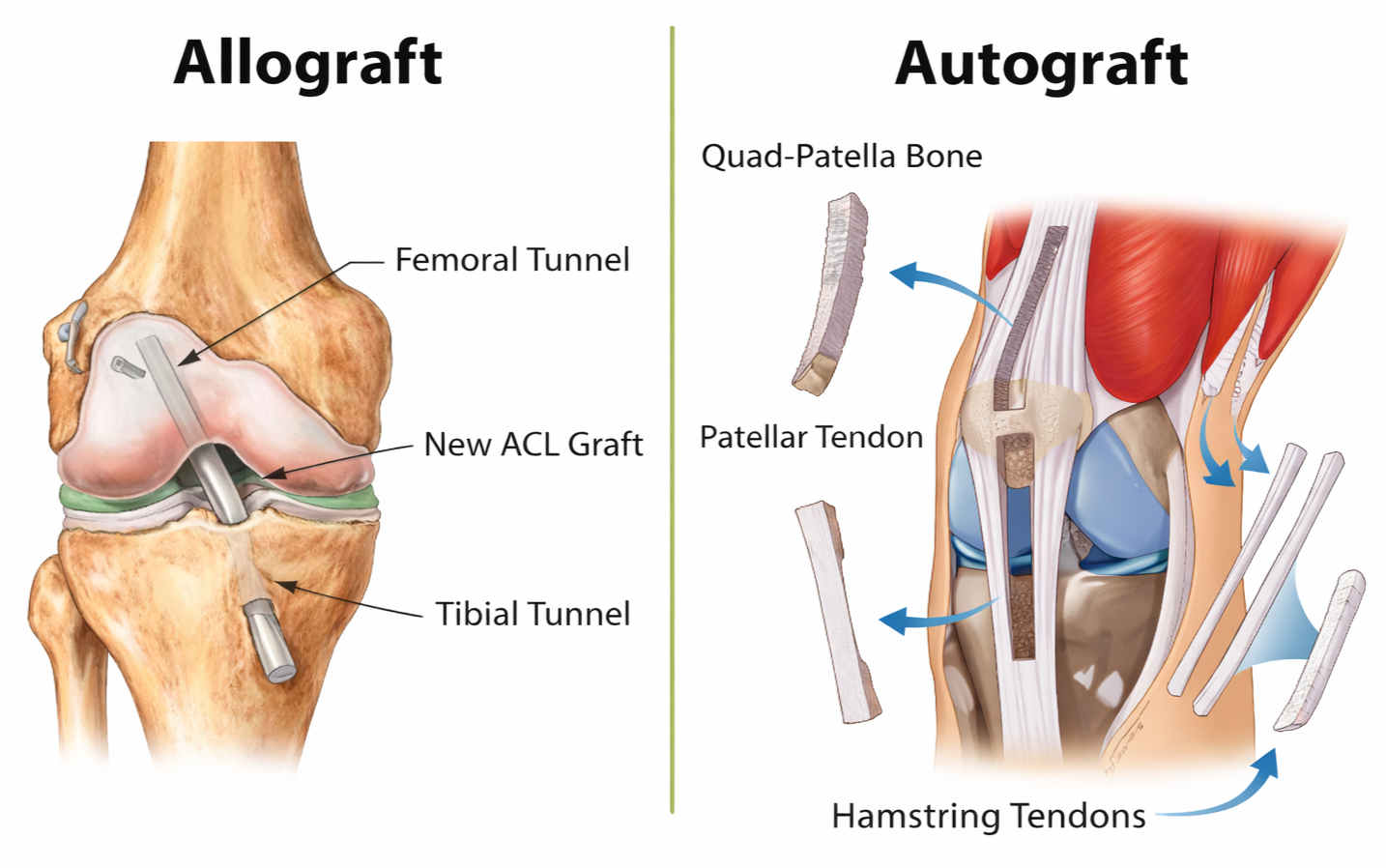
The main graft options include:

  • Autograft: tissue harvested from the athlete’s own body. Common options include hamstring tendon (HT), bone-patellar tendon-bone (BPTB), and quadriceps tendon (QT)

  • Allograft: donor tissue. Options can include tibialis anterior, Achilles tendon, hamstring, or patellar grafts (Duchman et al. 2017)

Pinheiro et al. (2022) conducted a large analysis in female athletes and found that bone-patellar tendon-bone grafts had a lower incidence of graft failure compared to hamstring grafts. This becomes more nuanced when age is considered.

Mancino et al. (2024) reported that BPTB grafts had lower re-rupture rates in females aged 15 to 20 compared to hamstring autografts. However, in athletes aged 21 and older, outcomes between BPTB and hamstring grafts were similar.

Graft revision risk is also an important consideration. Pinheiro et al. (2022) found that revision rates were 1.8 times higher in hamstring grafts compared to BPTB, increasing to 2.8 times in females under 18. This is particularly relevant, as revision surgeries tend to produce poorer outcomes compared to primary ACL reconstruction (Meena et al. 2024).

More recent evidence suggests that quadriceps tendon grafts produce comparable outcomes in terms of knee stability, functional performance, and re-tear risk (Meena et al. 2024).

Previous injury history should also influence graft selection. Lazarides et al. (2018) reported that a history of moderate to severe patellar tendinopathy was associated with increased graft failure when using BPTB grafts.

Similarly, hamstring autografts may contribute to post-surgical return-to-sport challenges (Bouzekraoui Alaoui et al. 2025), including:

  • persistent strength deficits compared to the uninvolved side

  • reduced maximum effective angle, a proxy for hamstring function and potential injury risk

In athletes with a history of recurrent hamstring strains or existing strength deficits, harvesting a hamstring graft from the involved side should be carefully considered. This may further complicate the already challenging process of restoring hamstring strength and function during rehabilitation.


Additional Surgical Consideration: LET

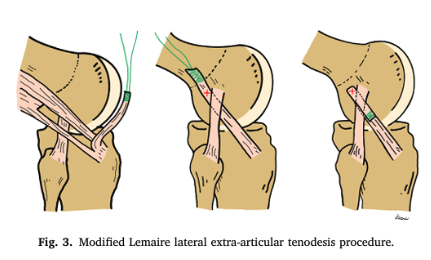
Another surgical consideration is the lateral extra-articular tenodesis (LET), which may provide additional protection against re-injury. Recent research has identified specific factors where LET can help reduce risk and may be used as an added layer of structural support (Meena et al. 2024).

These factors include:

  • increased general knee ligament laxity

  • high tibial slope and increased knee hyperextension

  • return to high-demand sport

  • younger age

These considerations are particularly relevant for the young female athlete. As discussed throughout this article, hormonal influences on ligament laxity, along with structural characteristics such as knee hyperextension, are commonly observed in this population.

Using appropriate graft selection alongside LET where indicated provides an additional layer of structural support and may improve long-term outcomes in higher-risk athletes.

Summary

There is a complex interplay between hormonal, structural, and neuromuscular factors that may increase ACL injury risk in young female athletes. While many aspects of the research still require further clarity, it is clear that both modifiable and non-modifiable factors are at play.

There are several practical approaches that can help mitigate risk while also improving performance. As participation in female sport continues to grow, appropriate exposure to education, training, and support systems is no longer optional. It is essential.

Actionable Takeaways

  • Pre-season screening and strength testing, alongside ongoing in-season monitoring, can help identify and manage risk

  • Strength and neuromuscular training should be prioritized, including development of landing mechanics and force absorption

  • Coaches can use warm-ups and training creatively to expose athletes to a wider range of movement patterns, which can improve engagement and reduce repetitive strain

  • Avoiding early sport specialization where possible can support long-term performance and reduce injury risk

  • Graft selection should consider individual factors such as age and injury history, with input from both the physio and orthopaedic surgeon

  • Discussing additional surgical options, such as LET where appropriate, may improve outcomes in higher-risk athletes

  • Education for both athletes and parents is key. Increasing awareness and training age can have a meaningful impact on long-term development and injury mitigation

For athletes or parents looking for more structured support, this is where individualized assessment and programming can make a meaningful difference: Book an Initial Assessment

Are You Actually Fight Ready? What Most Fighters Get Wrong About Conditioning

Written by Evelyn Calado, MKin, CSCS, RKin

You think you’re in shape.
Until round two.

Everything feels sharp early. Your hands are fast. Your feet are light. You’re seeing openings.

Then your output drops. Your shoulders start to burn. Your breathing spikes. Now you are surviving instead of fighting.

This isn’t a lack of toughness.
It’s a conditioning problem.

More specifically, it is a fight conditioning problem that most fighters never actually address.

The Real Problem Isn’t Effort

Most fighters do not lack work ethic.

They train hard. They push themselves. They leave the gym exhausted.

The problem is they are training the wrong things at the wrong time.

A lot of fighters live in what we call the gray zone. Sessions that are not easy enough to build a real aerobic base. Not intense enough to develop true fight specific power. Just hard enough to feel tired.

And feeling tired gets mistaken for getting better.

But fatigue is not a performance metric.

Fighting is not about how tired you can get. It is about how long you can produce, recover, and repeat high intensity efforts.

Why Fighters Misjudge Their Conditioning

Gym Conditioning Is Not Fight Conditioning

You can hit pads hard, push through circuits, and still gas out in a fight or sparring.

Because fighting is not continuous effort. It is intermittent.

Short explosive bursts.
Brief recovery periods.
Repeated over multiple rounds.

All energy systems are working together, not just general effort.

If your training does not reflect that structure, your conditioning will not transfer.

No Objective Testing

Most fighters judge conditioning based on how tired they feel or how hard a session was.

That is guesswork.

Without testing, you do not know if your output is dropping round to round, if your recovery is improving, or where your actual limitation is.

Without testing, you are guessing.

Over Reliance on Fatigue

A hard session feels productive.

But you can get better at tolerating fatigue without improving the systems that actually drive performance.

That is why some fighters look great in training but fall apart when the pace of a real fight hits.

What Actually Matters for Fight Conditioning

To perform at a high level, you need a system, not just effort.

Aerobic Base

This is your foundation.

A well developed aerobic system helps you recover between exchanges, maintain output, and sustain effort across rounds.

Repeat Power

Explosive combinations rely on your highest power output.

The key is not just producing power once. It is being able to repeat it with limited recovery.

Glycolytic Capacity

Longer exchanges and flurries are where most fighters begin to break down.

If this system is not developed, output drops and technique starts to fade.

Recovery Between Efforts

This is one of the biggest separators.

Fighters who recover faster between bursts can maintain pace and stay effective deeper into rounds.

Efficiency Under Fatigue

At a high level, conditioning is also about efficiency.

Can you stay relaxed when tired?
Can you maintain technique?
Can you make good decisions under pressure?

That is what real fight readiness looks like.

Why Testing Matters

Most fighters know they get tired.

Very few know why.

Testing does not give you every answer, but it gives you a clearer picture of what is happening. Especially when it comes to fight conditioning and repeat effort performance.

It can help show how your heart rate responds to work, how your output changes over time, and how well you repeat high intensity efforts.

It gives direction to your training instead of relying on guesswork.

Where We Come In

This is part of what we look at in our performance testing at Avos Strength.

We use simple, practical tests to get a snapshot of how your conditioning is functioning and how it compares to other athletes.

It is not about labeling you as fit or unfit.

It is about giving you better information so you can train with more intent.

Try It for Yourself at the Combat Sports Farmers Market

If you are coming to the Combat Sports Farmers Market, on March 29th in North Vancouver, we will be running a simple jump test on site. The event supports a charitable initiative, making it a great opportunity to connect with the community while giving back.

This test gives you a quick look at your lower body power, which is one piece of performance across all combat sports.

We will also have a leaderboard running so you can see how you stack up.

If you enter, you will be put into a draw to win a discount on a full performance testing session.

If you are interested in a more complete look at your conditioning, you can learn more about our full testing process here.

Final Note

If you feel like you are doing everything right in training but still fading in sparring or competition, you are not alone.

Most fighters are working hard.

Very few are training with clarity.

The Limb Arc Model: Why You Should Train the Range of Motion You Actually Own

Written by Evelyn Calado, MKin, CSCS, RKin

If you’ve ever wondered why:

  • Your knees cave in at the bottom of a squat

  • Your low back extends when the weight gets heavy

  • One hip always feels “stuck” at 90°

  • Or mobility drills don’t seem to transfer to strength

…you’re probably running into a concept explained by the Limb Arc Model.

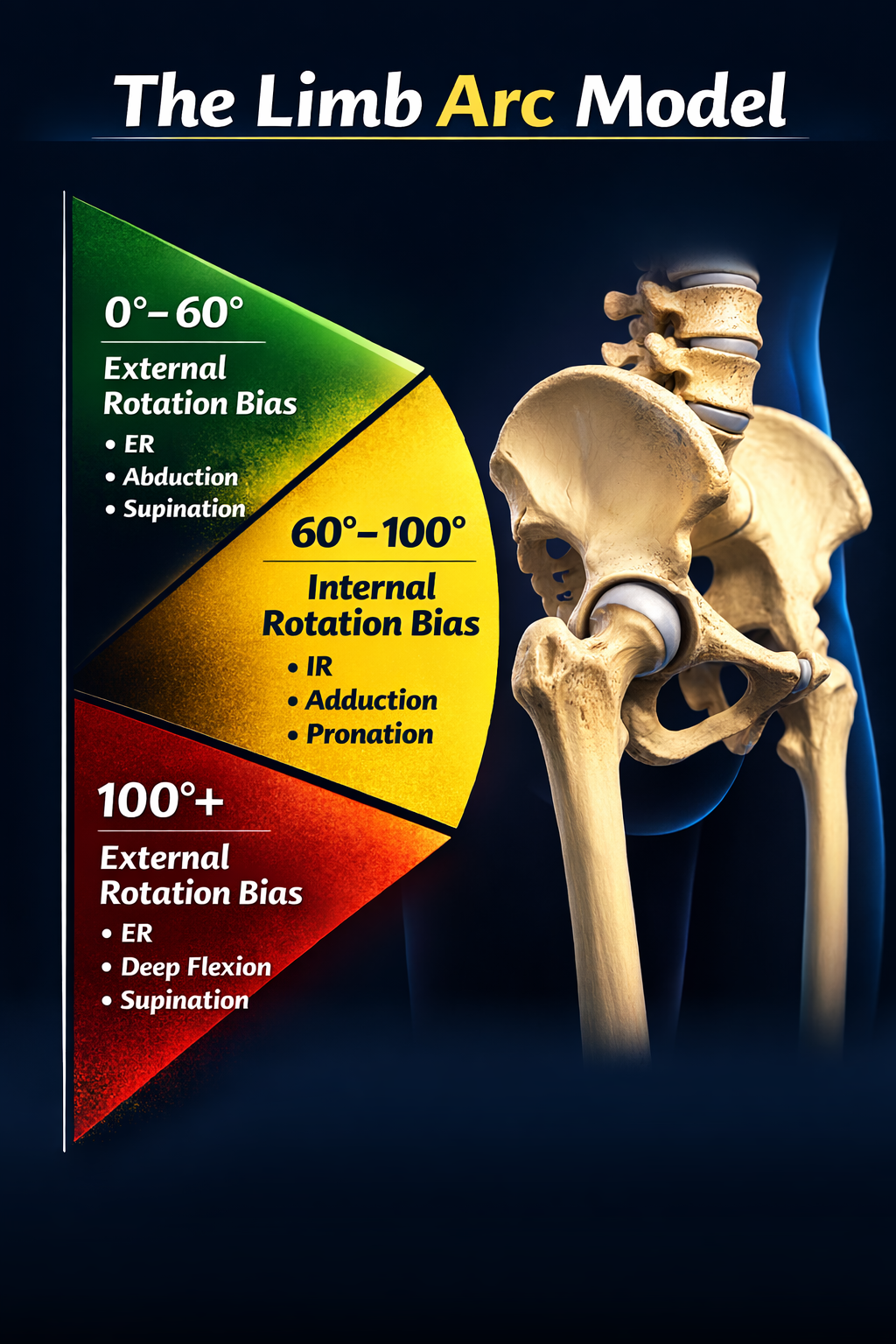
This model, commonly attributed to Bill Hartman, describes how rotational bias changes across ranges of joint flexion — particularly at the hip. And once you understand it, exercise selection becomes dramatically more logical.

Let’s break it down.


What Is the Limb Arc Model?

The Limb Arc Model proposes that rotational leverage changes as a joint moves through flexion.

At the hip specifically:

  • Early flexion favors external rotation (ER)

  • Mid-range flexion favors internal rotation (IR)

  • Deep flexion returns to an external rotation bias

This is not arbitrary. It reflects changes in joint geometry, length tension relationships, and moment arms.

Most people train hip flexion as if it is one continuous quality. It is not. It is three mechanically distinct regions.

That shift matters for:

  • Squats

  • Deadlifts

  • Split squats

  • Gait mechanics

  • Sport performance

  • Injury risk

The Hip Flexion Arc Explained

Here’s the simplified breakdown:

0–60° Hip Flexion → External Rotation Bias

In early hip flexion, the joint favors:

  • External rotation

  • Abduction

  • Supination at the foot

  • Sacral counternutation

In gait, this corresponds most closely with early stance, when the heel has contacted the ground and the pelvis is relatively externally rotating as load is being accepted.

In the gym, this is the top portion of a squat or the early phase of a hinge.

External rotators and abductors have favorable leverage here.

60–100° Hip Flexion → Internal Rotation Bias

Around 90° hip flexion:

  • Internal rotators and adductors have improved leverage

  • Length–tension relationships favor IR

  • The piriformis shifts moment arm toward IR

  • The sacrum moves toward nutation

  • The foot transitions toward pronation

In gait, this corresponds most closely with mid stance, when the pelvis is internally rotating on the femur and vertical ground reaction forces are highest.

In a squat, this is typically around parallel.

100°+ Hip Flexion → Returns to External Rotation Bias

As you approach deep hip flexion:

  • The system transitions back toward ER

  • Supination strategies often reappear

  • External rotators regain leverage

This helps explain why some people feel “better” deep in a squat even if they struggle at parallel. They are returning to a range where external rotation leverage increases again.


Why Internal Rotation at 90° Matters

Most loaded bilateral lower-body exercises demand control around 60–100° hip flexion.

If internal rotation is limited in that range, common compensations show up:

  • Knee valgus

  • Lumbar extension

  • Butt wink

  • Hip shifting

  • Over-pronation

  • Gripping with toes

This is not always a strength problem.

It’s often a relative motion problem.

The joint is being asked to produce force in a range it does not control. When the femur is not internally rotating relative to the pelvis, the pelvis, spine, or foot moves instead.


“Train within the Range You Own”

Here’s where this becomes practical.

Owning a range means:

  • You can access it

  • You can control it

  • You can breathe in it

  • You can maintain joint relationships without compensating

If you lack IR at 90°, loading it heavily won’t fix it.

It may:

  • Reinforce compensations

  • Drive orientation strategies (like anterior pelvic tilt)

  • Increase compressive strategies instead of restoring motion

Instead, you might need:

  • Split squats that bias mid-stance

  • Exercises emphasizing medial arch contact

  • Internal rotation control drills

  • Breathing-based repositioning work

  • Heel references to restore early stance mechanics

Force production should follow motion restoration — not precede it. Ie; Restore control first. Then add load.


How This Applies to Programming

The Limb Arc Model gives you a filter for exercise selection.

The question is not whether someone “has internal rotation.”

The question is where in the arc they lose control.

If Control Breaks Down Between 0 and 60 Degrees

You will see:

  • Difficulty accepting load at the top of the squat

  • Poor heel contact

  • Immediate external rotation gripping

  • Early lumbar extension

In this case, reinforce early stance mechanics.

Use closed chain drills that emphasize heel reference and controlled external rotation.
Keep the hip in the zero to sixty degree range and teach load acceptance without extension strategies.

The goal is stable external rotation control in early hip flexion.

If Control Breaks Down Between 60 and 100 Degrees

You will see:

  • Knee valgus at parallel

  • Hip shift at ninety degrees

  • Lumbar extension at the sticking point

  • Loss of medial arch control

This is the most common presentation.

Here, you bias time spent in sixty to one hundred degrees of hip flexion in closed chain.


Split squat variations are useful when organized correctly because they allow:

  • Pelvis on femur relative motion

  • Clear stance leg reference

  • Control of hip flexion angle

  • Moderate load that does not overwhelm internal rotation capacity

The key is managing support and load so that the pelvis can internally rotate on the femur without defaulting into orientation strategies such as anterior pelvic tilt or lateral shift.

This is not about making someone balance harder.

It is about placing them in the internal rotation biased window and allowing them to control it.

If Control Breaks Down Beyond 100 Degrees

You will see:

  • Instability or collapse in deep squat

  • Over reliance on passive structures

  • Loss of tension in the bottom

In this case, gradually expose the athlete to deeper flexion under controlled conditions, restoring external rotation leverage without compensatory lumbar flexion.


Why This Model Is Powerful

The Limb Arc Model connects:

  • Gait

  • Breathing mechanics

  • Pelvic motion

  • Squat depth

  • Performance

  • Compensation patterns

It explains why:

  • One depth feels strong and another feels unstable

  • Deep squats don’t fix mid-range weakness

  • “Mobility” doesn’t always transfer to strength

Because leverage changes as joint angles change.

And if you don’t own the transition between those zones, the body will compensate.


Final Takeaway

The Limb Arc Model isn’t about stretching more.

It’s about understanding that:

Rotational demands shift as joints move through flexion.

And if you load a range you don’t own, your body will borrow motion from somewhere else.

Train the range you control.

Then expand it.

That’s how you build durable strength.

Learn more about how we assess movement and build individualized programs at Avos Strength.


What Actually Happens During an Initial Assessment?

Written by Evelyn Calado, MKin, CSCS, RKin

If you’ve ever hesitated to start training because you didn’t know what to expect from that first session, you’re not alone. At Avos Strength, we treat the initial assessment as one of the most important parts of the entire training process. Not because it’s a test, or something you can pass or fail, but because it lays the foundation for everything we do moving forward. It’s how we get to know you, your goals, your movement, and how we can best support you.

Here’s what actually happens during an initial assessment with us.

It’s a 55 Minute, One-on-One Session

Most initial assessments are done in person. We also offer virtual options for remote clients. Whether we’re working with you at the gym or through a screen, the goal is the same: get a clear picture of where you’re at so we can build something that’s right for you.

It Starts With a Conversation

Before we even get moving, we sit down together and go through your intake form. And yes, it’s detailed. We ask for it to be completed at least 24 hours in advance because we actually review it before the session.

We go over:

  • Your injury history and relevant medical conditions

  • Sports background, hobbies, and training experience

  • Your goals, both short-term and long-term

  • Any current pain, discomfort, or limitations

  • Your preferred training setup (in-person, hybrid, remote)

This isn’t just a checklist. It’s a conversation. We want to hear your story, understand what brings you in, and talk about how we can help. That also includes discussing which coach might be the best fit, based on your needs and our availability.

Movement Screen and Table Assessment

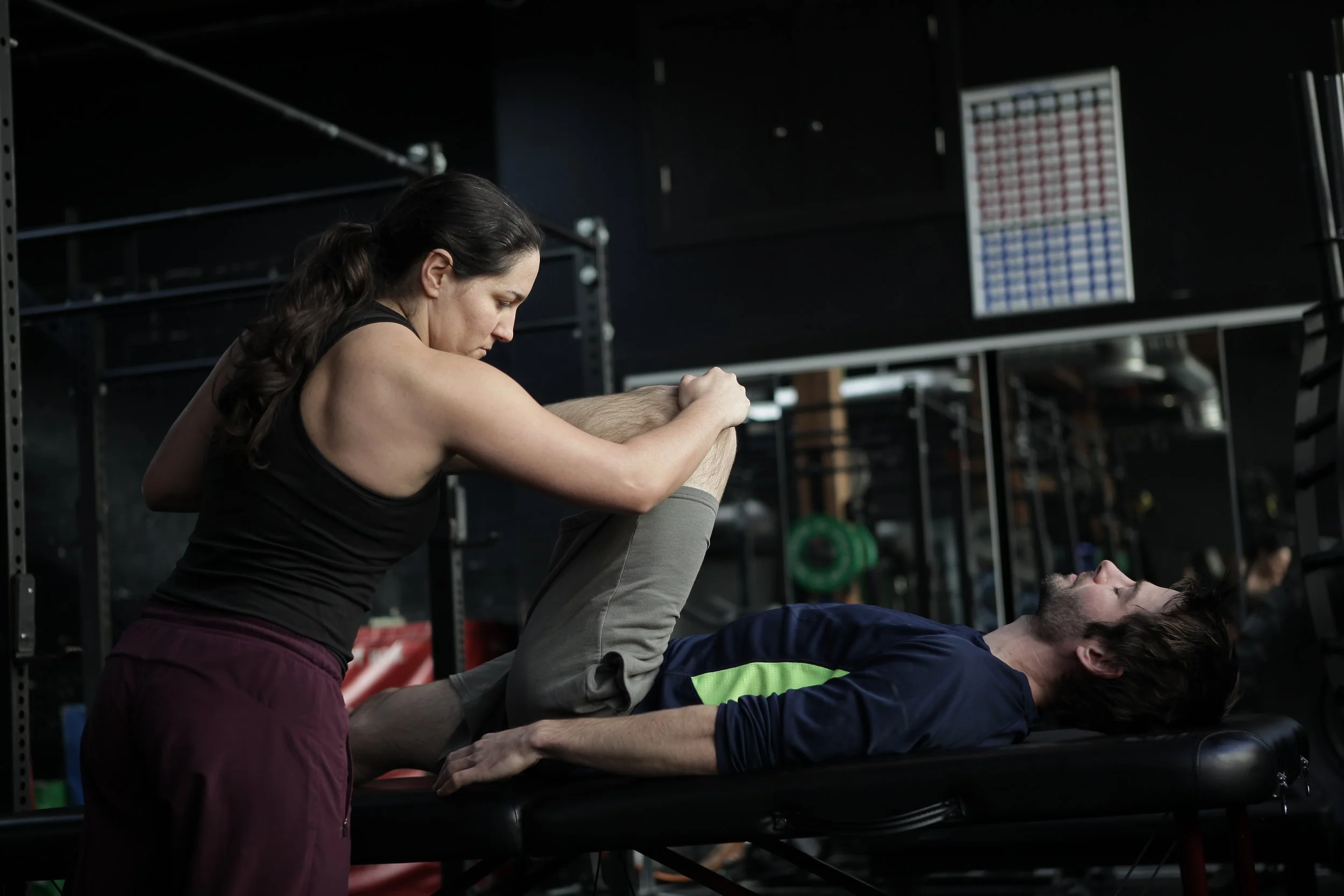
Table assessment being performed during an initial assessment at Avos Strength

After the consult, we begin assessing movement.

We typically look at:

  • Posture and gait

  • Basic functional movements (like squats, toe touches, and rotation)

  • Joint mobility and range of motion on the table

This gives us an idea of how you move in space, where you may feel limited, and what patterns we should be aware of when designing your program. For remote assessments, this part is adapted as best we can based on your space and setup.

This Is Not the Avos Performance Battery

Our initial assessment is different from the Avos Performance Battery, which is a full 90 minute performance testing session that includes a written report. This assessment is about gathering foundational information, not performance metrics. It’s the first building block in your training process, not a test.

What Happens With the Remaining Time?

Depending on how the session flows, we may use the last 10 to 20 minutes to go through some light drills, address pain points, or suggest a few exercises to get you started.

Sometimes we’ll do a bit of strength or movement testing, just enough to give us some useful data without overwhelming you on day one.

Why We Do It This Way

Your initial assessment helps us:

  • Build rapport and trust

  • Understand how you move

  • Identify restrictions or red flags

  • Gather everything we need to design a personalized program

Without this step, we’d be guessing. And that’s not how we operate. Your coach takes the time before, during, and after this session to make sure we’re starting from the right place.

How You Should Feel After

You should walk away feeling heard. You should feel supported. Ideally, you feel excited, not nervous, to start training and build something that’s going to serve you long term.

Training is a skill. It’s a habit. It’s a way of taking care of your body so you can keep doing the things you love, whether that’s playing sports, being active with your family, or just moving better every day.

Common Misconceptions We Hear

“I feel like I’m being judged.”
You’re not. There are no wrong answers in this process. If your hips move a certain way, or your shoulder is limited, that’s all information we use to help you.

“I don’t think I’m fit enough to be assessed yet.”
That’s exactly why we do assessments. You don’t need to be fit. This is about meeting you where you are and giving us a starting point to work from.

“What if I fail?”
You can’t fail. This isn’t a test. It’s a snapshot of where you’re at today.

A Structured, Individualized Approach

Everything we collect goes into your client file, not a generic template. Your program is built from the ground up based on your movement, your goals, your limitations, and your training setup.

Every Avos coach follows this system. Our junior coaches go through a structured mentorship before ever leading assessments on their own, and we continue to support them with feedback and review to maintain high standards.

There are no shortcuts. And that’s the point.


The first session isn't about being perfect. It's about getting started the right way; with a coach who sees you, listens to you, and builds something with you.

If you're ready to take the next step, explore our training options to find the approach that best fits your goals.