strength and conditioning

Why Your Training Program Won’t Work Without Sleep, Nutrition, and Recovery

Why Your Training Program Won’t Work Without Sleep, Nutrition, and Recovery

Written by Evelyn Calado, MKin, CSCS, RKin

One of the hardest things for coaches to accept is this:

You can write the most detailed, individualized, evidence-informed training program possible, and it still may not work if the big rocks are not in place.

I’ve seen this over and over again throughout my coaching career.

The athlete is committed.
They show up consistently.
They follow the sets, reps, tempos, and rest periods.
They train hard.
They genuinely want results.

But outside the gym?

They’re sleeping five hours a night.
Their stress is through the roof.
They barely drink water.
Their nutrition is inconsistent.
They rely on caffeine to survive the day and supplements to try to “fix” the problem.

At some point, the body stops being able to recover.

And recovery is where adaptation actually happens.
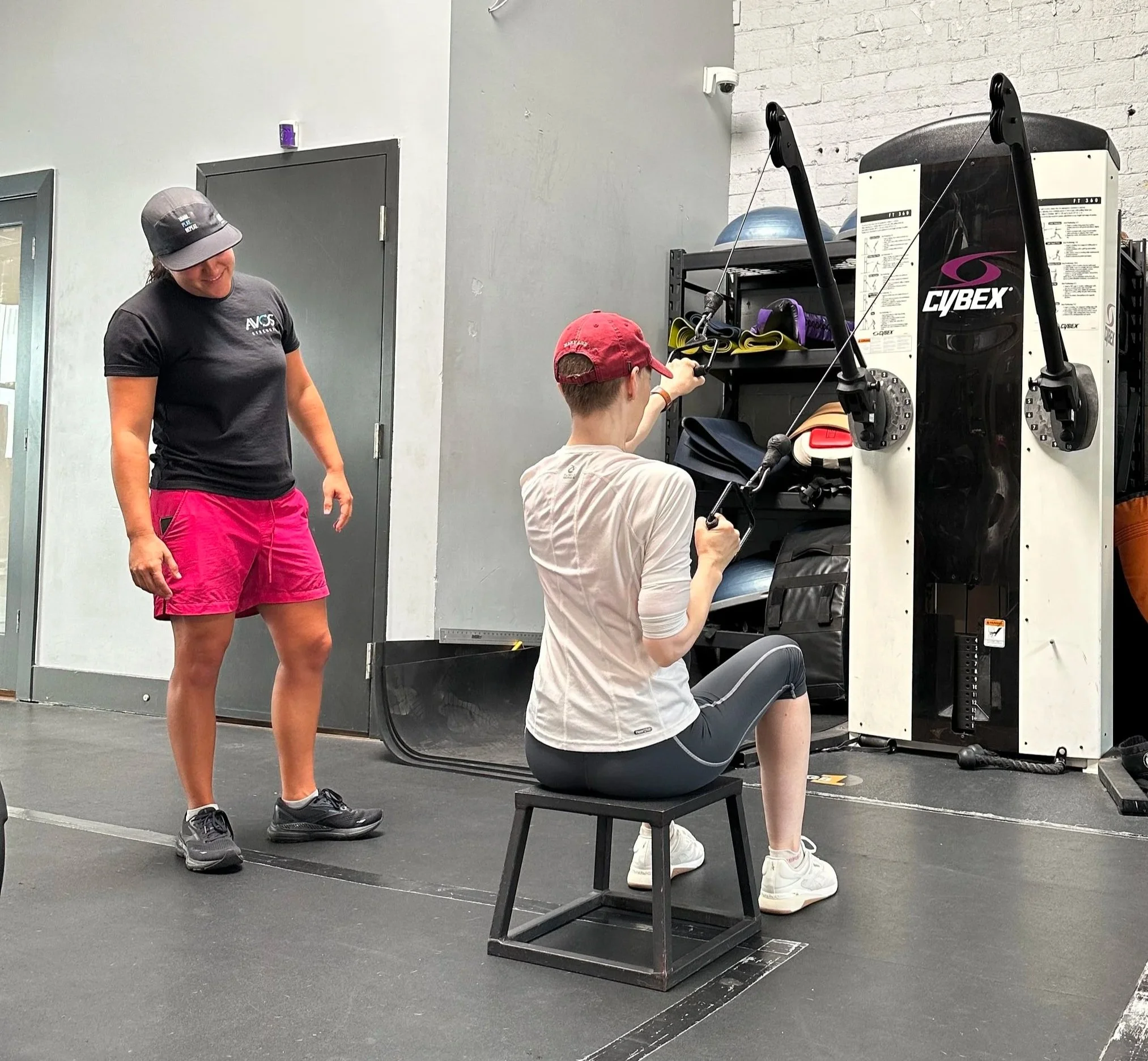
You Don’t Get Better During Training

Training is the stimulus.

Recovery is where the body adapts.

That means if you’re constantly exhausted, under-fueled, dehydrated, stressed, or running on poor sleep, your body has a much harder time repairing tissue, building muscle, improving conditioning, regulating hormones, and recovering from the demands of training.

This is one of the reasons why two people can follow the exact same program and get completely different results.

The program matters.

But the foundation matters more.

This is also why progress in strength, muscle growth, and conditioning often takes longer than people expect. Adaptation requires recovery capacity. How Long Does It Take to See Results from Training


Sleep Is One of the Biggest Performance Enhancers We Have

This is probably the most common issue I see.

People want better energy, better recovery, improved body composition, more muscle mass, lower pain levels, and better athletic performance, but they’re sleeping poorly every single night.

If you constantly wake up throughout the night, struggle with insomnia, or spend most of your day exhausted, your recovery capacity drops significantly.

Sleep impacts:

  • Recovery from training

  • Muscle repair and growth

  • Hormonal regulation

  • Mood and mental health

  • Pain sensitivity

  • Cognitive function

  • Energy levels

  • Immune function

You cannot out-train chronic poor sleep.

And no supplement stack is going to replace it.


Recovery Is More Than Just Taking a Rest Day

A lot of people think recovery simply means taking a day off from training.

But recovery is much bigger than that.

Recovery includes:

  • Sleep quality

  • Nutrition

  • Hydration

  • Stress management

  • Recovery between training sessions

  • Nervous system regulation

  • Overall lifestyle habits

You cannot continuously add more stress to the system without giving the body the resources it needs to recover and adapt.

Sometimes the issue is not the program itself.

Sometimes the body simply has no remaining capacity to tolerate additional stress.


Stress Is Still Stress

This is another major piece people underestimate.

Your body does not separate “life stress” from “training stress.”

Heavy training is a stressor.
Long work hours are a stressor.
Financial pressure is a stressor.
Relationship issues are a stressor.
Anxiety is a stressor.

It all contributes to your total stress load.

One book I often recommend is the Why Zebras Don't Get Ulcers by Robert Sapolsky, which discusses how humans often stay stuck in a chronic fight-or-flight state.

A lot of people are constantly “on.”

Their nervous system never really gets a chance to downshift.

Then they wonder why they feel exhausted, inflamed, sore, unmotivated, or unable to recover.


Nutrition Is Not Optional

You cannot build a high-performing body without giving it the raw materials it needs.

Protein matters.
Micronutrients matter.
Overall calorie intake matters.
Hydration matters.

If most of your diet consists of highly processed foods, takeout, chips, candy, and energy drinks, your recovery, energy levels, body composition, and performance are going to suffer.

That does not mean you need to eat “perfectly.”

But your body still needs adequate nutrients and amino acids to:

  • Build and maintain muscle

  • Recover from training

  • Support connective tissue health

  • Improve body composition

  • Regulate energy levels

  • Support overall health and longevity

Supplements can support a good foundation.

They cannot replace one.

Creatine is great.
Protein powder can be helpful.
Certain supplements absolutely have value.

But supplements cannot compensate for chronic sleep deprivation, poor nutrition, dehydration, and unmanaged stress.

If you want a deeper breakdown on the supplements that actually matter most for recovery and performance, check out The Only Two Supplements Most Athletes Actually Need.


Hydration Is More Important Than People Think

This is another one that gets overlooked constantly.

The number of people I meet who drink one or two glasses of water per day is honestly surprising.

Many people function almost entirely on coffee and caffeine.

Hydration impacts:

  • Performance

  • Recovery

  • Energy

  • Cognition

  • Joint comfort

  • Muscle function

  • Cardiovascular function

Even mild dehydration can negatively affect how you feel and perform.


Coaches Cannot Do The Work For You

As coaches, we can guide you.
We can educate you.
We can build individualized programs.
We can adjust your training loads.
We can help create structure and accountability.

But we cannot sleep for you.
We cannot manage your stress for you.
We cannot hydrate for you.
We cannot make your nutritional choices for you.

If we see you twice per week in person, that’s two hours out of a 168-hour week.

The other 166 hours matter.

A lot.

This is one of the reasons why our initial assessment process focuses on more than just exercises and sets and reps. Understanding lifestyle, recovery, stress, injury history, and daily habits matters when building an individualized plan. What Actually Happens During an Initial Assessment?


The Big Rocks Come First

People often search for advanced solutions before they’ve mastered the fundamentals.

They want the perfect program.
The perfect supplement stack.
The perfect recovery gadget.
The perfect optimization strategy.

Meanwhile:

  • They sleep poorly

  • They are chronically stressed

  • They barely eat protein

  • They drink almost no water

  • They recover inconsistently

The basics are not boring.

The basics are foundational.

And honestly, these “big rocks” are not just important for performance or body composition goals. They are fundamental for living a healthier, more energetic, and more resilient life.

That’s one of the reasons why strength training and recovery habits become increasingly important as we age. Strength Training for Longevity: Staying Active, Capable and Competitive as You Age

Training matters.
Strength matters.
Conditioning matters.

But none of it works as well if the foundation underneath it is unstable.

Get the big rocks in place first.

Everything else works better after that.

At Avos Strength, we focus on individualized coaching that takes into account your training history, recovery capacity, lifestyle, stress levels, and long-term goals. Training is important, but sustainable progress comes from addressing the full picture.

If you’re looking for guidance with strength training, recovery, performance, or long-term health, you can learn more about our coaching and assessment services here.
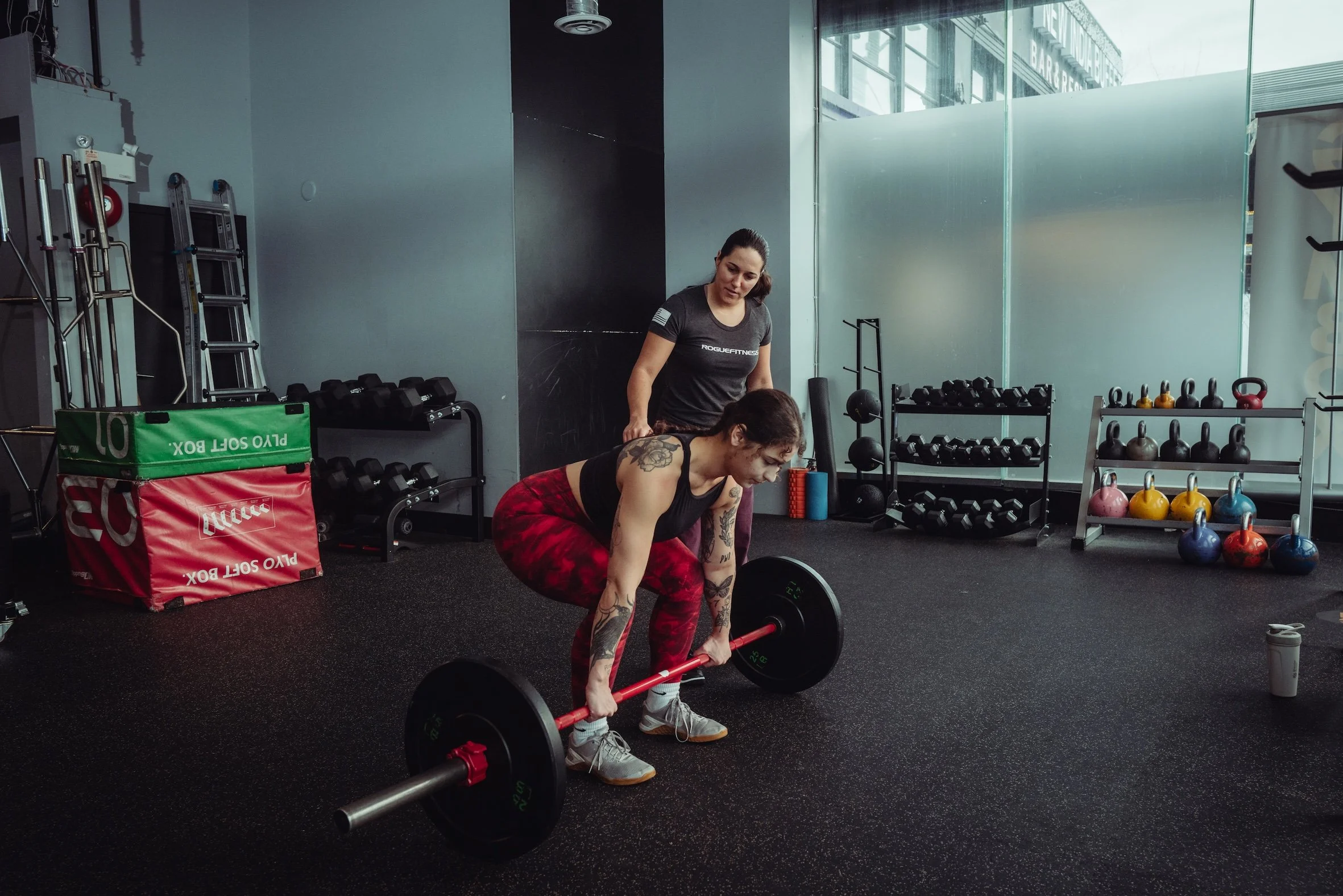
You Should Not Get Injured During a Training Session

Written by Evelyn Calado, MKin, CSCS, RKin

If you leave a training session injured, something has gone wrong.

That is not normal. It should not be expected. And it is not part of “training hard.”

I have been in this industry for over a decade, and I have seen far too many situations where clients get hurt in the weight room. Not because of bad luck, but because of poor decisions.

The Gym Should Be One of the Safest Places You Train

Think about it.

The weight room is a controlled environment.

  • You control the load

  • You control the movement

  • You control the pace

  • You control the rest

Compare that to sport, where there are opponents, unpredictable movements, and variables you cannot control.

In theory, your injury risk in the gym should be extremely low.

That does not mean training is easy. You should still be challenged. You should still push your limits.

But it should be done in a controlled and intentional way.

Where Things Go Wrong

Most training-related injuries are not random. They come from avoidable mistakes.

1. Ego-Based Training

This is one of the biggest issues.

A client walks in, maybe they look strong or athletic, and the session becomes about proving something. The load goes up too quickly, technique breaks down, and fatigue is ignored.

That is how people get hurt.

2. No Plan

This is more common than people think.

Clients come in and have no idea what they are doing that day. The trainer is choosing exercises on the spot with no structure, no progression, and no record of previous sessions.

Without a plan, there is no progression. Without progression, there is no direction. And without direction, you are just accumulating risk.

3. Poor Exercise Sequencing

Fatigue matters.

If someone is pushed to the point of exhaustion through their legs and core, and then asked to perform a heavy compound lift, that is a problem.

That is not “hard training.” That is poor decision-making.

4. Ignoring the Individual

Not every client should move the same way.

Mobility, injury history, movement patterns, and training experience all matter. If those are ignored, you are forcing someone into positions they are not prepared for.

That is where breakdown happens.

Soreness Is Not the Goal

Another misconception is that a good session should leave you unable to move.

If your trainer’s goal is to completely destroy you, that is a red flag.

  • You should not struggle to sit at your desk

  • You should not be unable to walk for days

  • You should not feel worse instead of better

Anyone can make you tired.

It takes skill to build a program that challenges you, progresses you, and still allows you to function.

What Good Training Actually Looks Like

Good training is not random. It is structured.

  • There is a clear plan

  • There is progression over time

  • Your loads and performance are tracked

  • Exercises are selected for a reason

  • Intensity is managed, not guessed

You are pushed, but within your capacity.

You improve, without being completely broken down in the process.

Playing the Long Game

At Avos Strength, the focus is simple:

Train. Play. Repeat.

The goal is not to win a single session. The goal is to keep you training consistently, improving over time, and continuing to do the things you enjoy.

That means:

  • Checking your ego at the door

  • Building progressively

  • Respecting your current capacity

  • Training with intention

The Bottom Line

The gym should not be where you get injured.

Can things happen occasionally? Yes. But injuries should be rare, not expected.

If you have worked with a trainer and felt unsafe, unsupported, or left sessions worse than when you walked in, that is not something you should accept.

You deserve better coaching than that.

How to Train Like a Pro Without Overtraining: 3 Conditioning Mistakes Every Fighter Makes

Written by Evelyn Calado, MKin, CSCS, RKin

“You’re in shape… until you aren’t.”

Every boxer knows the feeling. You think you’re in shape, you’re sparring well, and then by Round 2 your legs feel like concrete. The problem isn’t effort. It’s the wrong kind of conditioning.

In combat sports, the difference between being fit and being fight ready is small but critical. Fighters often equate exhaustion with improvement. But fatigue is not the goal. The goal is to develop a system that lets you recover, repeat, and stay sharp under stress.

True conditioning teaches your body how to sustain power and recover faster between bursts. It builds the capacity to deliver the same output over and over without falling apart technically.

Mistake #1: Living in the “No-Adaptation Zone”

Most fighters train at one speed all the time. The intensity is too high to truly build aerobic qualities, yet not high enough to improve anaerobic power. This middle zone feels hard but does not create meaningful adaptation.

Training in this gray area leaves you constantly tired without improving the key factors that drive endurance. The aerobic system is the foundation for every other energy system. It is what allows you to recover between flurries, maintain composure, and control your pace.

When the bulk of training sits around 80 to 85 percent of maximum heart rate, the heart and muscles are working, but they are not being pushed to develop either side of the spectrum.

Fix:
Include one dedicated aerobic session each week. Keep the effort at a comfortable but steady pace where you can still breathe through your nose.

  • 25 to 30 minutes at 65 to 75 percent of maximum heart rate, or RPE 4 to 5.

  • Use light jogging, a spin bike, or shadowboxing flow work.

These lower-intensity sessions build the foundation that makes every other type of conditioning more effective later in camp.

Mistake #2: Mistaking Fatigue for Progress

If every session leaves you completely drained, you are not building capacity, you are burning it.

Fatigue by itself does not equal progress. When you constantly push to exhaustion, your coordination drops, timing slows, and recovery between rounds suffers.

Conditioning should improve the ability to produce high effort repeatedly, not the ability to survive pain. The aim is quality effort, not constant exhaustion.

Fighters often overload glycolytic, or medium-duration, efforts. They push too hard for too long and never develop the shorter, high-power system or the longer aerobic system that supports it. The result is a strong first thirty seconds and then a quick drop-off in speed and output.

Fix:
Introduce short, high-quality power intervals that target your explosive energy system.

  • Perform 8 to 10 seconds of all-out work such as a bike sprint, heavy bag flurry, or sled push.

  • Rest for 80 to 100 seconds at an easy pace before repeating.

  • Complete 6 to 8 total efforts.

These efforts improve maximal power and nervous system efficiency while allowing full recovery between reps.

Mistake #3: Ignoring the Aerobic Engine

The aerobic system is what keeps fighters explosive through multiple rounds. It is also what allows the body to recover between rounds and between training sessions.

Aerobic training does not make a fighter slow. It develops the internal engine that supplies energy to every burst and every exchange. A well-developed aerobic system improves the ability to replenish ATP, clear hydrogen ions, and use lactate as a fuel source during sustained work.

The common idea that fatigue is caused by lactic acid buildup is outdated. Lactic acid does not actually accumulate in the muscles. Instead, it separates into lactate and hydrogen ions, and the resulting increase in acidity contributes to fatigue. Aerobic training improves the body’s ability to manage that acidity and maintain performance over time.

Fix:
Use structured aerobic capacity intervals once or twice a week.

  • Work for 2 to 3 minutes at 80 to 90 percent of maximum heart rate or RPE 6 to 7.

  • Recover actively for 2 to 3 minutes until your heart rate drops below 130 beats per minute.

  • Repeat 4 to 6 rounds.

This type of interval work develops both delivery and utilization of oxygen, helping you stay relaxed and efficient even at higher outputs.

Why Smart Conditioning Wins Fights

The best-conditioned fighters are not always the ones who look the fittest in training. They are the ones who can stay calm, explosive, and efficient no matter how chaotic the fight becomes.

That calmness is a physiological skill. It comes from balancing the aerobic system that drives recovery, the anaerobic system that fuels sustained power, and the alactic system that supports short, explosive actions.

Smart conditioning develops all three systems in the right sequence and with the right intent. Build the base first, layer power on top, and taper the total load before competition.

Train Systems, Not Just Willpower

The difference between being in shape and being ready to fight is not about effort, it is about precision.

Conditioning should make you faster, more efficient, and more durable. It should leave you confident that your body can keep up with your skill. Hard work matters, but only when it builds something specific.

“Hard work is only as good as what it builds.”
— Joel Jamieson

Take the Guesswork Out of Your Conditioning

Knowing what to train is only half the battle. Knowing when and how to train each energy system is what separates a well-conditioned fighter from a tired one. A structured plan designed around your schedule, fight calendar, and current fitness level turns theory into progress.

If you’re serious about improving your fight conditioning, click here to explore our custom programs for fighters— designed to help you train smarter, recover faster, and perform your best when it matters most.

References

  • Jamieson, J. (2009). Ultimate MMA Conditioning.

  • Bott, C. (2023). Uncovering Limitations in Work Capacity.

  • Robergs, R. et al. (2004). “Biochemistry of Exercise-Induced Metabolic Acidosis,” American Journal of Physiology.

  • Brooks, G. et al. (2005). Exercise Physiology: Human Bioenergetics and Its Applications.