female athletes

ACL Injury Risk in Female and Youth Athletes: What Actually Matters (Part 2)

Written by Michael Crawley, BSc, BPT, CSCS

Anterior cruciate ligament injuries are a significant issue in sport, particularly among female and youth athletes. Female athletes have a significantly greater incidence of ACL injury compared to males, with research suggesting the risk may be between 2 and 8 times higher depending on the population studied (Herzberg et al. 2017).

A number of factors have been proposed to influence this increased risk. These include both extrinsic factors such as playing surface, and intrinsic factors such as biological, structural, and physical characteristics. This article focuses on the intrinsic side of the equation.

If you have not read Part 1, where we break down how ACL injuries occur and what influences risk more broadly, you can start here: ACL Injuries: How They Occur, Who Is at Risk, and Why Training Quality Matters

The key intrinsic factors that may influence ACL injury risk in the female athlete include:

  • hormonal influences

  • biomechanics and structural considerations

  • strength and neuromuscular control

It is also important to recognize that surgery is not the only solution following an ACL injury. The appropriate approach depends on the athlete’s age, injury severity, and the presence of additional damage such as meniscal or cartilage involvement. Graft selection is also influenced by these factors and plays an important role in long-term outcomes.

Menstruation and Hormones

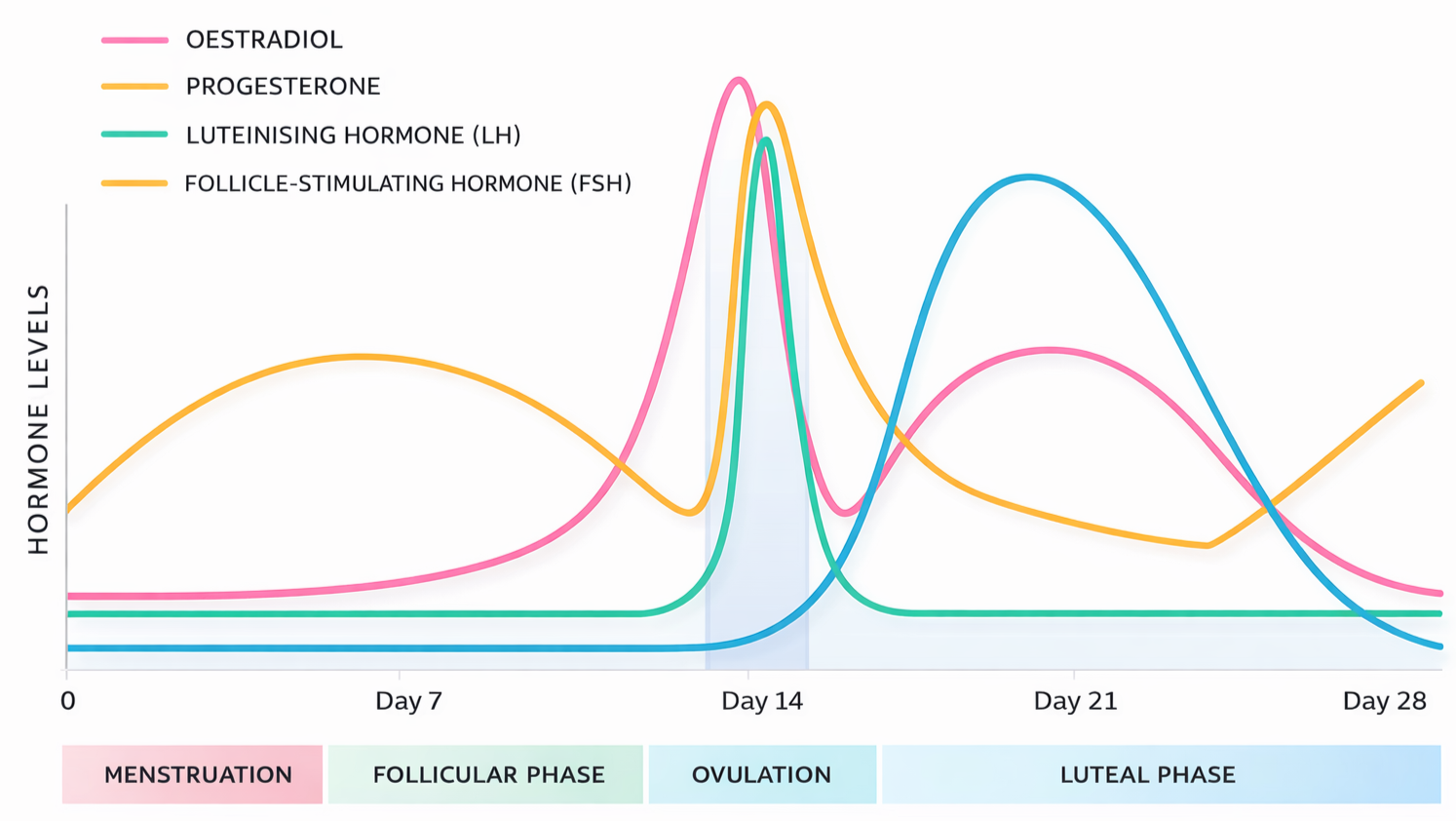
The menstrual cycle consists of three phases, each characterized by fluctuations in key hormones including estrogen, progesterone, and luteinizing hormone (Wojtys et al. 2002).

  • Follicular phase: approximately 9 days

  • Ovulatory phase: approximately 5 days, marked by peaks in estrogen and luteinizing hormone

  • Luteal phase: approximately 14 to 15 days, with elevated progesterone

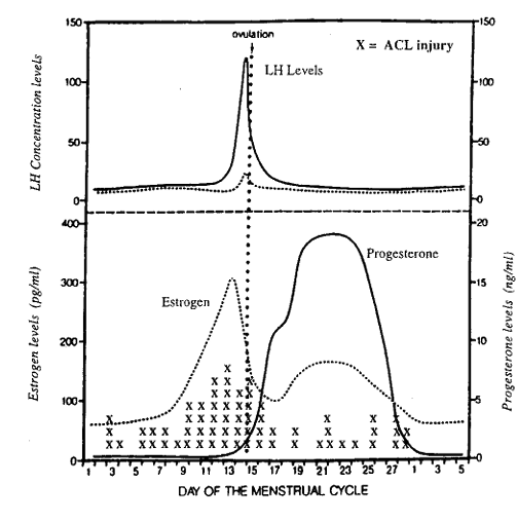
Research in this area remains mixed. However, several studies have reported a higher incidence of ACL injuries during the ovulatory phase compared to other phases (Wojtys et al. 2002; Herzberg et al. 2017).

Wojtys et al. (2002) demonstrated a higher number of ACL injuries, marked as X on the figure above, in a group of young female athletes during the ovulatory phase. The mechanisms behind this relationship are varied and often disputed. At the neurological level, Kumar et al. (2013) demonstrated reduced reaction time to visual and auditory stimulus between the follicular and luteal phases.

From a structural perspective, the ACL contains estrogen receptors, and cell culture research has demonstrated that estrogen can influence the ligament’s collagen composition. It is proposed that this may increase knee joint laxity. Maruyama et al. (2021) examined knee laxity across the menstrual cycle and found increased anterior knee laxity during the ovulatory phase.

However, this difference was only observed when participants were grouped into those with genu recurvatum and those without it, meaning athletes whose knees hyperextend 10 degrees or more versus those who do not. This adds another layer of complexity, as it suggests that biomechanical factors such as hyperextension may interact with hormonal factors such as higher estrogen levels rather than acting independently.

Relaxin is another important peptide hormone that has been specifically linked to injury risk in female athletes. It appears to work synergistically with estrogen, contributing to changes in ligament laxity (Berger et al. 2023; Parker et al. 2024).

Relaxin exerts its effects in two key ways:

  • increases type 1 collagen degradation

  • suppresses collagen synthesis

Given that ligaments are composed of approximately 40 to 50 percent type 1 collagen, this provides a plausible mechanism by which relaxin may influence ACL integrity. Alterations in the collagen structure of the ligament are one proposed explanation for increased laxity and injury risk.

Parker et al. (2024) also highlight a practical consideration. Relaxin levels tend to peak around days 21 to 24 of the menstrual cycle. In a coaching setting, this may present as an athlete reporting unexplained musculoskeletal discomfort around the knee without a clear training-related cause. This is not something to overreact to, but it can serve as a useful opportunity for education, monitoring, or short-term modification of training.

Across the cycle, these hormonal fluctuations may contribute to changes in reaction time, ligament laxity, and available joint range of motion. While some research has explored the use of oral contraceptives to regulate these hormonal variations and potentially reduce ACL injury risk (Herzberg et al. 2017), the quality of evidence remains low and is often confounded by multiple variables.

More importantly, as Parker et al. (2024) point out, oral contraceptives are not without trade-offs. While they may influence hormones such as relaxin and estrogen, there are more accessible and lower-risk interventions available. For most young female athletes, this is not where the focus should be.

Which leads into the next major factor: strength and neuromuscular training.


Strength and Neuromuscular Training

As female participation in sport has increased over the past few decades, there has been a corresponding increase in injury rates. At the same time, training age and exposure to structured strength and conditioning within a gym setting has generally lagged behind that of male athletes.

Well-rounded strength and conditioning is not only a tool to support and improve performance in sport. It can have a profound effect on robustness and coordinative qualities, helping to mitigate injury risk.

For a deeper look at how strength training should be structured for younger athletes, see: Building a Strong Foundation: The Crucial Role of Youth Strength and Conditioning

In young female athletes, several characteristics have been associated with increased ACL injury risk (Collings et al. 2022):

  • lower strength ratios between hip adductors and abductors

  • reduced trunk control

  • higher countermovement peak force values

This highlights the importance of a complete strength and conditioning plan. As young athletes improve jumping ability and increase power output, the risk of ACL injury and other issues such as patellofemoral pain may also increase (Myer et al. 2015; Collings et al. 2022).

Training for these athletes must address several components:

  • maximal strength and power

  • jumping and landing mechanics and technique

  • strength capacity

  • energy system development

Sugimoto et al. (2016) demonstrated that neuromuscular programs that include a combination of strength training, jumping, trunk control, and coordination significantly reduce ACL injury risk in young female athletes.

Practical Exercise Examples

Below are five exercises that cover several key qualities related to performance and injury mitigation:

Adjusting variables such as volume, intensity, range of motion, and frequency can make exercises like these highly effective across a range of sports and athlete levels.


Adherence, Enjoyment, and the Training Environment

Several factors can impact adherence in young female athletes:

  • time

  • enjoyment

  • coaching expertise

  • equipment access

Research suggests that even two 30-minute sessions per week in-season can meaningfully reduce ACL injury risk, provided a more comprehensive program is completed in the off-season (Sugimoto et al. 2016).

Enjoyment and coaching quality are closely linked. Engagement in the gym setting can be a challenge, particularly for younger athletes. Incorporating competition, variability, and game-based elements can improve buy-in and training consistency.

Reaction, Coordination, and Game-Based Training

The following examples can be used to improve reaction time, coordination, and strength:

These drills can be implemented in pairs, relay formats, or with sport-specific variations. They also expose athletes to a broader range of movement patterns.

This ties closely into long-term athlete development principles, which are outlined further here:
Build the Athlete First: Why Youth Athletes Need Physical Literacy Before Sport Specialization

An additional benefit of implementing games with different constraints and equipment is the development of energy systems and exposure to a wider range of motor patterns. The importance of this is two-fold.

  1. Fatigue has been shown to impact landing control and hip-to-ankle force dissipation in female athletes (Mancino et al. 2024). Improving overall capacity can enhance an athlete’s ability to maintain reaction time and landing mechanics over longer periods.

  2. Game and exercise constraints can also help offset the repetitive, high-volume actions seen in many sports. This becomes even more relevant in athletes who specialize early in a single sport.

Luo et al. (2025) found that early sport specialization increases injury risk, reduces long-term performance, and negatively impacts psychological outcomes. With a creative and experienced coach, the gym setting can serve as a valuable environment to address these gaps.

That said, even with a well-informed and diligent athlete who engages in strength training and participates in multiple sports, ACL injuries can still occur.


Surgical Route and Graft Selection

When a discussion has been made and surgery is deemed the best option, the next decision is graft selection. The importance of this choice lies in the fact that it is one of the few modifiable factors (Duchman et al. 2017). For the young female athlete, variables such as sex, age, and sporting demands cannot be changed.

The main graft options include:

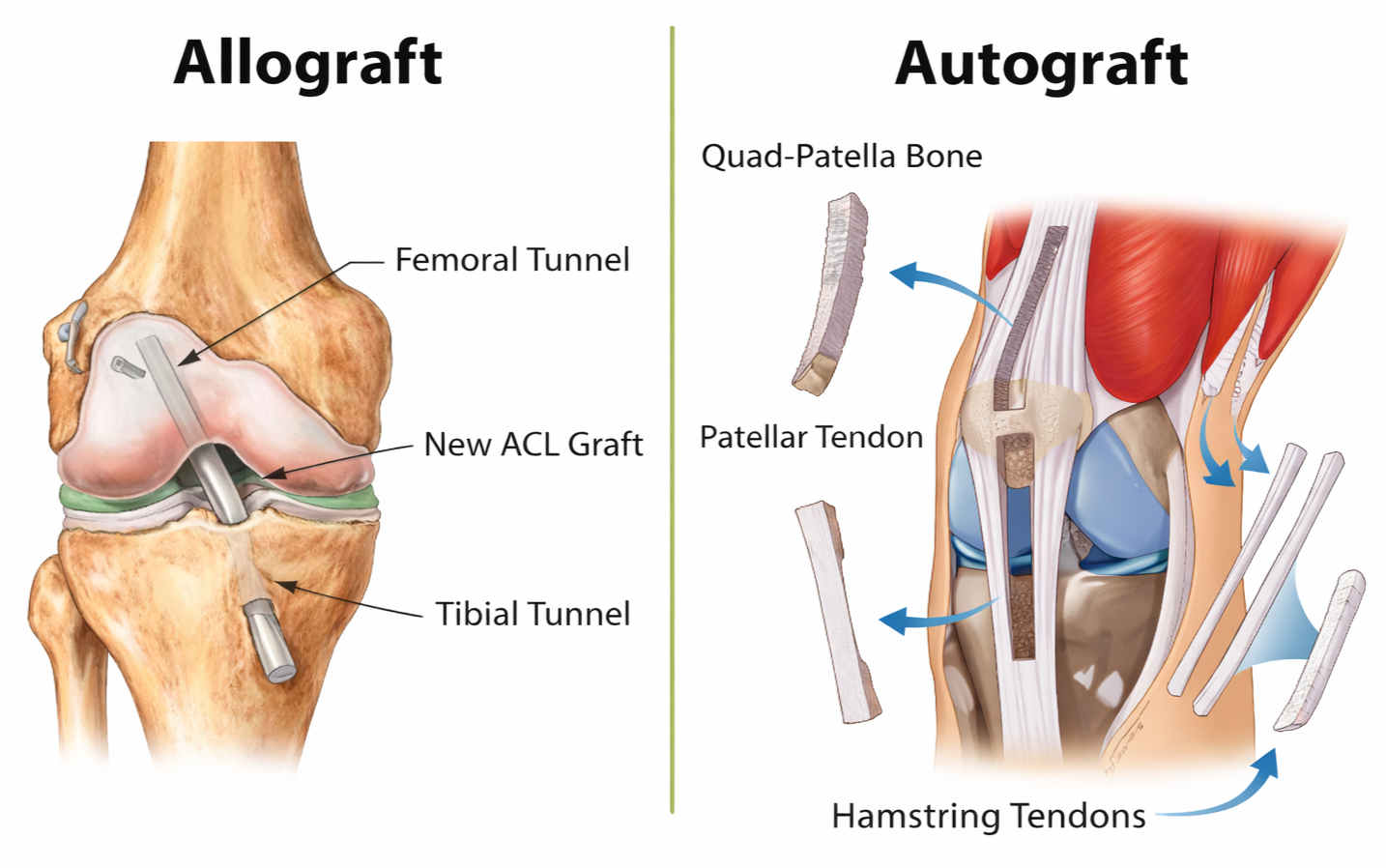
  • Autograft: tissue harvested from the athlete’s own body. Common options include hamstring tendon (HT), bone-patellar tendon-bone (BPTB), and quadriceps tendon (QT)

  • Allograft: donor tissue. Options can include tibialis anterior, Achilles tendon, hamstring, or patellar grafts (Duchman et al. 2017)

Pinheiro et al. (2022) conducted a large analysis in female athletes and found that bone-patellar tendon-bone grafts had a lower incidence of graft failure compared to hamstring grafts. This becomes more nuanced when age is considered.

Mancino et al. (2024) reported that BPTB grafts had lower re-rupture rates in females aged 15 to 20 compared to hamstring autografts. However, in athletes aged 21 and older, outcomes between BPTB and hamstring grafts were similar.

Graft revision risk is also an important consideration. Pinheiro et al. (2022) found that revision rates were 1.8 times higher in hamstring grafts compared to BPTB, increasing to 2.8 times in females under 18. This is particularly relevant, as revision surgeries tend to produce poorer outcomes compared to primary ACL reconstruction (Meena et al. 2024).

More recent evidence suggests that quadriceps tendon grafts produce comparable outcomes in terms of knee stability, functional performance, and re-tear risk (Meena et al. 2024).

Previous injury history should also influence graft selection. Lazarides et al. (2018) reported that a history of moderate to severe patellar tendinopathy was associated with increased graft failure when using BPTB grafts.

Similarly, hamstring autografts may contribute to post-surgical return-to-sport challenges (Bouzekraoui Alaoui et al. 2025), including:

  • persistent strength deficits compared to the uninvolved side

  • reduced maximum effective angle, a proxy for hamstring function and potential injury risk

In athletes with a history of recurrent hamstring strains or existing strength deficits, harvesting a hamstring graft from the involved side should be carefully considered. This may further complicate the already challenging process of restoring hamstring strength and function during rehabilitation.


Additional Surgical Consideration: LET

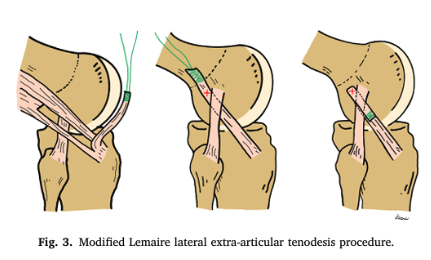
Another surgical consideration is the lateral extra-articular tenodesis (LET), which may provide additional protection against re-injury. Recent research has identified specific factors where LET can help reduce risk and may be used as an added layer of structural support (Meena et al. 2024).

These factors include:

  • increased general knee ligament laxity

  • high tibial slope and increased knee hyperextension

  • return to high-demand sport

  • younger age

These considerations are particularly relevant for the young female athlete. As discussed throughout this article, hormonal influences on ligament laxity, along with structural characteristics such as knee hyperextension, are commonly observed in this population.

Using appropriate graft selection alongside LET where indicated provides an additional layer of structural support and may improve long-term outcomes in higher-risk athletes.

Summary

There is a complex interplay between hormonal, structural, and neuromuscular factors that may increase ACL injury risk in young female athletes. While many aspects of the research still require further clarity, it is clear that both modifiable and non-modifiable factors are at play.

There are several practical approaches that can help mitigate risk while also improving performance. As participation in female sport continues to grow, appropriate exposure to education, training, and support systems is no longer optional. It is essential.

Actionable Takeaways

  • Pre-season screening and strength testing, alongside ongoing in-season monitoring, can help identify and manage risk

  • Strength and neuromuscular training should be prioritized, including development of landing mechanics and force absorption

  • Coaches can use warm-ups and training creatively to expose athletes to a wider range of movement patterns, which can improve engagement and reduce repetitive strain

  • Avoiding early sport specialization where possible can support long-term performance and reduce injury risk

  • Graft selection should consider individual factors such as age and injury history, with input from both the physio and orthopaedic surgeon

  • Discussing additional surgical options, such as LET where appropriate, may improve outcomes in higher-risk athletes

  • Education for both athletes and parents is key. Increasing awareness and training age can have a meaningful impact on long-term development and injury mitigation

For athletes or parents looking for more structured support, this is where individualized assessment and programming can make a meaningful difference: Book an Initial Assessment

ACL Injuries: How They Occur, Who Is at Risk, and Why Training Quality Matters (Part 1)

Written by Michael Crawley, BSc, BPT, CSCS


BACKGROUND

Anterior cruciate ligament injuries (ACLI) are often viewed as sudden, unavoidable events that are “fixed” through surgery. In reality, both injury risk and long-term outcomes are strongly influenced by training quality, rehabilitation approach, and the decisions made before and after injury.

This article highlights the complexity of ACL injuries, explains how and why they occur, and outlines key training and rehabilitation considerations that influence risk and return to sport outcomes. While ACL injuries are often discussed in isolation, they are rarely simple knee injuries, and successful outcomes require a broader, long-term view.

The information presented is intended to provide practical, actionable insight for a range of athletes and stakeholders, including:

  • Youth multi-sport athletes and their parents

  • High-level collegiate and professional athletes

  • Competitive recreational athletes of all ages

ACLI have increasingly been described as an epidemic across both amateur and professional sport. Several studies report that ACL injuries account for approximately 50 percent of knee injuries. Over the past 10 to 20 years, female and youth athletes have experienced the largest increase in incidence. Childers et al. (2025) identified female adolescent athletes as the highest-risk group, with a 1.5-fold increased risk compared to their male counterparts.

Importantly, ACL injuries often occur alongside meniscal and cartilage damage. These associated injuries substantially increase the risk of long-term joint degeneration, including osteoarthritis and the need for total knee replacement (Petushek et al. 2019). This added complexity also plays a significant role in surgical decision-making and long-term outcomes.


HOW DOES THIS HAPPEN

ACL injuries generally fall into two categories:

  1. Contact injuries

  2. Non-contact injuries, which account for nearly 80 percent of all ACL ruptures (Beaulieu et al. 2023)

Most non-contact injuries occur during high-speed or high-load movements such as single-leg landings, rapid deceleration, or sharp changes of direction. These movement patterns are common across many sports and can occur both during high-intensity competition and through repeated lower-intensity exposures over time.

Sports such as basketball, soccer, netball, and rugby place consistent demands on these movement patterns, emphasizing the importance of preparing athletes not only for isolated high-risk moments, but also for cumulative loading over a season.


RISK FACTORS AND TRAINING IMPLICATIONS

ACL injury risk is influenced by a combination of anatomical, biomechanical, and training-related factors. While some risk factors cannot be changed, many can be meaningfully influenced through education and training.

Female Athlete Considerations

In female athletes, structural features of the tibia, such as posterior tibial slope, along with hormonal influences on ligament laxity, contribute to an increased risk of ACL injury (Kikuchi et al. 2022; Beaulieu et al. 2023).

While these factors cannot be modified, they highlight the importance of early education for young female athletes and their coaches. Building awareness around neuromuscular control, strength development, and movement quality is a critical component of risk reduction.

Playing Surface

Research examining the influence of playing surface has produced mixed findings. However, some studies report higher ACL injury rates in NFL athletes competing on artificial surfaces compared to natural grass (Hershman et al. 2012).

Although athletes cannot always control the surface they compete on, training exposure can be diversified. Incorporating training on a variety of surfaces may help improve adaptability and tolerance to different loading conditions prior to competition.

Fatigue and Repetitive Loading

Emerging evidence suggests that ACL rupture does not always result from a single traumatic event. Fatigue and repetitive sub-maximal loading may contribute to progressive ligament failure over time (Wojtys et al. 2016).

From a training perspective, building tissue capacity in key muscle groups such as the hamstrings, quadriceps, calves, and adductors may increase tolerance to repeated stress and reduce injury risk.

Whole-Body Strength and Neuromuscular Control

Although ACL injuries occur at the knee, load can be transmitted from both the top down and bottom up through the kinetic chain. Poor three-dimensional strength across the trunk, hip, knee, and ankle can increase stress on different portions of the ACL (Beaulieu et al. 2023).

Training that develops strength in multiple planes of motion, both in isolated exercises and integrated movement patterns, helps improve robustness and neuromuscular control.

For example, multi-directional jumping exercises can target trunk, hip, knee, and ankle coordination simultaneously:


WHAT IS CONSIDERED SUCCESSFUL ACL REHABILITATION AND HOW IS IT ACHIEVED

Over the past decade, the definition of successful return to sport (RTS) following ACL injury has evolved. A well-regarded Canadian kinesiologist, Carmen Bott, emphasizes that simply returning to sport is not the same as returning successfully.

Long-term data highlight the difficulty of maintaining sport participation following ACL injury. Pinheiro et al. (2022) reported that among elite athletes followed over five years, participation at the same competitive level declined from 75 percent in year one to just 20 percent by year five.

Outcomes are even less favorable in competitive amateur athletes. Approximately 65 percent return to pre-injury level, with overall return to competitive sport roughly 10 percent lower (Nwachukwu et al. 2019).

Following a well-structured, progressively loaded strength and conditioning program can enhance both physical capacity and confidence during rehabilitation. A simplified progression may include:

This progression represents only a snapshot of a rehabilitation process that commonly spans 9 to 12 months. Progression should be goal-oriented rather than time-driven, with athletes meeting clearly defined prerequisites before advancing.


TO CUT OR NOT (NOT MEDICAL ADVICE)

When an athlete is diagnosed with an ACL injury, the immediate assumption is often that surgery is required. Indeed, 98 percent of orthopaedic surgeons recommend ACL reconstruction for athletes aiming to return to sports involving running, cutting, and jumping (Weiler et al. 2015).

However, surgery is not always the appropriate choice. Non-operative management may be suitable depending on several factors (Komnos et al. 2024), including:

  • Individual expectations and current sport level

  • Presence of concomitant injuries such as meniscal or cartilage damage

  • Degree of knee laxity and perceived instability

Fitzgerald et al. (2000) classified individuals into three groups:

  1. Copers: return to pre-injury level of sport

  2. Adapters: return to a reduced level to avoid instability

  3. Non-copers: unable to return due to persistent instability

A notable example is a Premier League footballer who returned to play eight weeks after a complete ACL rupture without surgery (Weiler et al. 2015). While this represents a single case, it highlights the importance of individualized decision-making.

What Does This Mean for Non-Professional Athletes?

Athletes outside professional systems should:

  • Ask detailed questions about the structures involved in their injury (ACL only vs associated damage)

  • Communicate subjective symptoms such as instability, confidence, or locking

  • Clarify long-term goals, whether returning to competition or maintaining an active lifestyle

  • Consider an initial period of structured rehabilitation before committing to surgery, particularly when instability is not present

In the Premier League case study, the athlete consulted three surgeons, two of whom recommended surgery, while one supported a conservative rehabilitation-first approach. This underscores the value of informed discussion and shared decision-making.


SUMMARY AND KEY TAKEAWAYS

  • ACL injuries are complex and influenced by multiple interacting factors including age, sex, sport demands, training exposure, and movement quality.

    • Educating female athletes about menstrual cycle considerations and ligament laxity may be beneficial.

    • Monitoring training load during high knee-stress activities is important.

    • Developing tissue capacity through comprehensive strength training can enhance tolerance to stress.

  • Returning to previous levels of sport remains challenging, particularly for non-professional athletes.

    • Rehabilitation should be thorough and guided by experienced practitioners.

    • Successful return to play depends on strength, neuromuscular control, and power that match sport-specific demands.

  • Surgery is not the only option.

    • Decisions should be made collaboratively between the athlete, physiotherapist, and surgeon.

    • Clear communication around injury extent and long-term goals leads to better outcomes.


Looking for Individualized Support?

If you’re currently dealing with an ACL injury, returning from surgery, or unsure how to safely progress your training, working with an experienced coach can make a meaningful difference.

Michael works closely with athletes across all levels and has extensive experience supporting ACL rehabilitation and return-to-sport training in collaboration with physiotherapists and medical professionals.

If you’d like to explore whether coaching support is right for you, you can book an initial assessment here.


PART 2: WHAT TO EXPECT

The next article will focus specifically on female and youth athletes and will explore:

  • Graft selection considerations when surgery is required

  • The role of prehabilitation in improving long-term outcomes


References

Beaulieu, M. L., Lamontagne, M., Xu, L., & Li, G. (2023). Loading mechanisms of the anterior cruciate ligament. Sports Biomechanics, 22(1), 1–29. https://doi.org/10.1080/14763141.2021.1916578

Childers, J. D., Weiss, L. J., Pennington, Z. T., Nwachukwu, B. U., & Allen, A. A. (2025). Reported anterior cruciate ligament injury incidence in adolescent athletes is greatest in female soccer players and athletes participating in club sports: A systematic review and meta-analysis. Arthroscopy, 41(3), 774–784.e772. https://doi.org/10.1016/j.arthro.2024.03.050

Fitzgerald, G. K., Axe, M. J., & Snyder-Mackler, L. (2000). A decision-making scheme for returning patients to high-level activity with nonoperative treatment after anterior cruciate ligament rupture. Knee Surgery, Sports Traumatology, Arthroscopy, 8(2), 76–82. https://doi.org/10.1007/s001670050190

Hershman, E. B., Anderson, R., Bergfeld, J. A., Bradley, J. P., Shelbourne, K. D., Sills, A., & McGuire, K. J. (2012). An analysis of specific lower extremity injury rates on grass and FieldTurf playing surfaces in National Football League games: 2000–2009 seasons. The American Journal of Sports Medicine, 40(10), 2200–2205. https://doi.org/10.1177/0363546512458888

Kikuchi, N., Hara, R., Hiranuma, K., Nakazawa, R., & Fukubayashi, T. (2022). Relationship between posterior tibial slope and lower extremity biomechanics during a single-leg drop landing combined with a cognitive task in athletes after ACL reconstruction. Orthopaedic Journal of Sports Medicine, 10(7), 23259671221107931. https://doi.org/10.1177/23259671221107931

Komnos, G. A., Kotsifaki, A., Dingenen, B., & Gokeler, A. (2024). Anterior cruciate ligament tear: Individualized indications for non-operative management. Journal of Clinical Medicine, 13(20), Article 6233. https://doi.org/10.3390/jcm13206233

Nwachukwu, B. U., Chang, B., Voleti, P. B., Berkanish, P., Cohn, M. R., & Allen, A. A. (2019). How much do psychological factors affect lack of return to play after anterior cruciate ligament reconstruction? A systematic review. Orthopaedic Journal of Sports Medicine, 7(5), 2325967119845313. https://doi.org/10.1177/2325967119845313

Petushek, E. J., Sugimoto, D., Stoolmiller, M., Smith, G., & Myer, G. D. (2019). Evidence-based best-practice guidelines for preventing anterior cruciate ligament injuries in young female athletes: A systematic review and meta-analysis. The American Journal of Sports Medicine, 47(7), 1744–1753. https://doi.org/10.1177/0363546518782460

Pinheiro, V. H., Mascarenhas, R., Saltzman, B. M., & Nwachukwu, B. U. (2022). Rates and levels of elite sport participation at 5 years after revision ACL reconstruction. The American Journal of Sports Medicine, 50(14), 3762–3769. https://doi.org/10.1177/03635465221127297

Weiler, R., Monte-Colombo, M., Mitchell, A., & Haddad, F. (2015). Non-operative management of a complete anterior cruciate ligament injury in an English Premier League football player with return to play in less than 8 weeks: Applying common sense in the absence of evidence. BMJ Case Reports, 2015, bcr2014208012. https://doi.org/10.1136/bcr-2014-208012

Wojtys, E. M., Beaulieu, M. L., Ashton-Miller, J. A., & Newcomb, W. (2016). New perspectives on ACL injury: On the role of repetitive sub-maximal knee loading in causing ACL fatigue failure. Journal of Orthopaedic Research, 34(12), 2059–2068. https://doi.org/10.1002/jor.23441

Why Women Should Think Twice About Cold Plunges

Written by Evelyn Calado, MKin, CSCS, RKin
Cold plunges are everywhere right now. Scroll through social media, walk into any boutique gym, or listen to the latest biohacking podcast, and you're bound to hear someone praising the "recovery magic" of ice baths. But there's a problem: this recovery trend is not built for female physiology. And no one seems to be talking about it.

As a woman, especially one training hard and aiming to get stronger, faster, or more resilient, you need to know this: cold plunges can actually hinder your progress.

The Hype vs. The Science

The fitness industry often pushes one-size-fits-all solutions that are, in reality, designed around male physiology. Cold water immersion is no exception. The main argument for it is that it reduces inflammation and muscle soreness. But what’s rarely discussed is that blunting inflammation also blunts adaptation—the very thing you're working hard for in your training.

A key study published in The Journal of Physiology (2015) found that post-exercise cold water immersion significantly reduced long-term gains in muscle mass and strength by suppressing key anabolic signaling pathways. In simpler terms, jumping into a cold plunge after lifting can shut down the processes your body needs to get stronger.

The Female Factor: Why It’s Worse for Women

Dr. Stacy T. Sims, PhD, exercise physiologist and author of ROAR, explains that women already have a more robust anti-inflammatory response, largely due to estrogen. This is great for recovery in general—but it also means that adding more inflammation-suppressing strategies (like cold plunges) can tip the balance too far.

Here’s what that means:

  • Estrogen helps buffer inflammation, so you don’t need the added suppression from cold water.

  • Cold plunges inhibit mTOR signaling, a critical pathway for muscle protein synthesis. Since women already face challenges building and maintaining lean muscle due to fluctuating hormone levels—particularly during the high-progesterone phase of the menstrual cycle—this further suppresses adaptation.

  • Women have a shorter post-exercise anabolic window. That means the timing and environment for recovery matter more. Cold exposure immediately post-training can close this window prematurely.

Heat, Not Cold, Supports Female Recovery

Dr. Sims recommends heat-based recovery tools for women, such as sauna use or hot baths. Heat increases blood flow, supports mitochondrial adaptations, and promotes muscle repair without blunting the natural signals for strength and hypertrophy.

Where cold shuts down your body’s growth processes, heat helps amplify them—especially beneficial for women looking to increase muscle mass, endurance, and overall athletic performance.

Let’s Talk About the Real Issue

This isn’t just a science debate. It’s a visibility problem. Right now, women are being told to do what’s trending without being informed of how it might hurt them. The fitness industry is ignoring female physiology. And it’s not okay.

If you're a woman who trains, lifts, runs, or just wants to be strong and healthy, you deserve better than a one-size-fits-all recovery strategy. You deserve recovery tools that actually work with your body, not against it.

So the next time someone tells you to jump into a cold plunge for recovery, remember that your physiology is different. And according to Dr. Stacy Sims and peer-reviewed research, cold plunges may be doing more harm than good for women.

Let’s change the conversation.