Coaching Philosophy

What Is the Stack? How Rib Cage and Pelvis Position Affect Movement

Written by Evelyn Calado, MKin, CSCS, RKin

If you've trained at Avos Strength for any length of time, you've probably heard us talk about "the stack."

Whether we're coaching a squat, a deadlift, a breathing drill, a carry, or simply standing posture, the concept comes up repeatedly.

That's because the stack is one of the foundational principles that influences how we breathe, move, stabilize, and produce force.

While it may seem like a small detail, it often has a significant impact on movement quality and performance.


What Is the Stack?

At its simplest, the stack refers to the relationship between the rib cage and the pelvis.

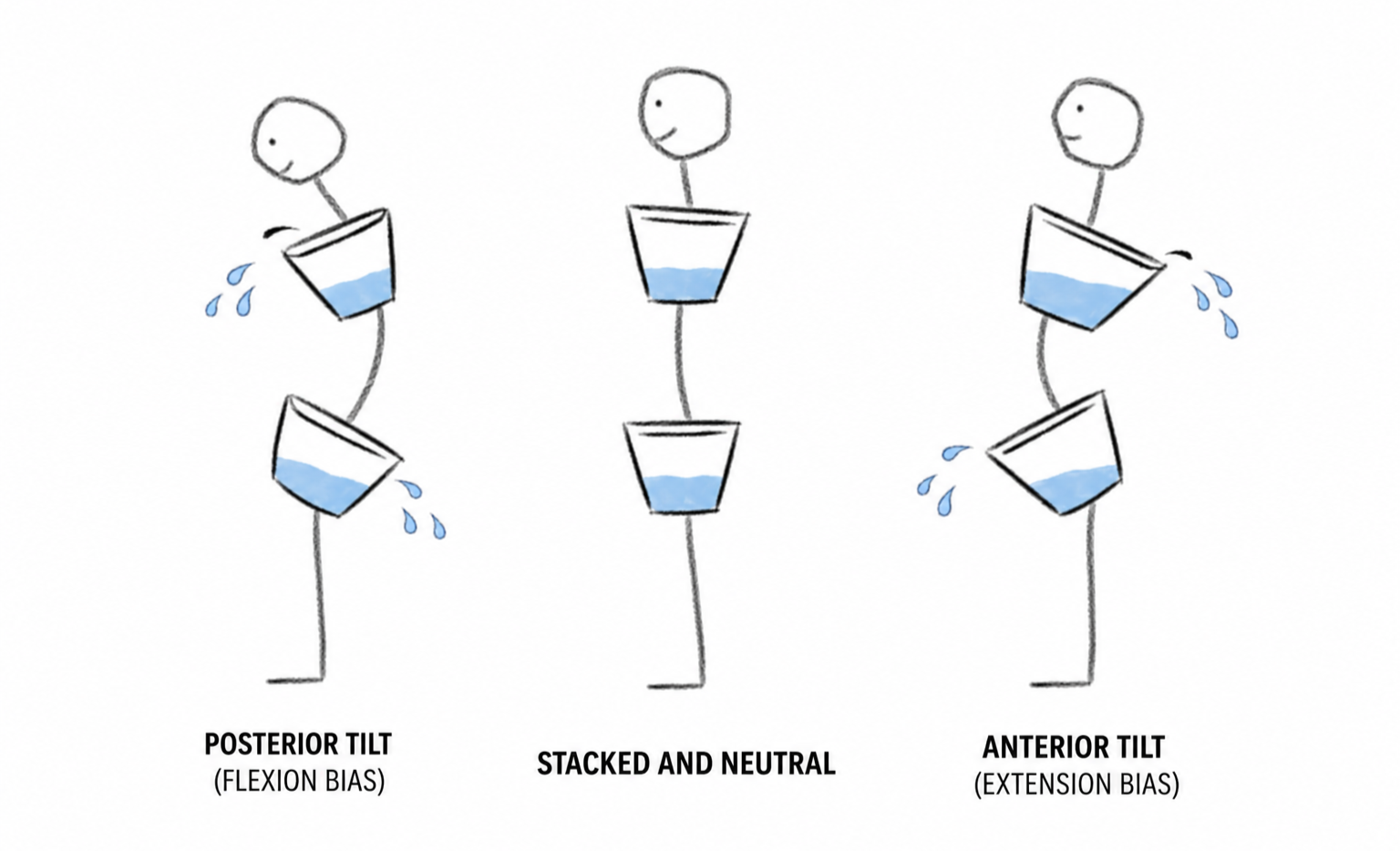
One way to visualize this is to think of both the rib cage and pelvis as buckets of water. When the buckets are stacked on top of one another and remain relatively level, the body is generally in a better position to manage pressure, breathe efficiently, and move well.

When either bucket tips excessively forward or backward, the relationship between the rib cage and pelvis changes. The body may then rely on compensatory strategies to create stability, manage pressure, or access movement.

While no one maintains a perfectly stacked position all the time, this analogy provides a useful framework for understanding why rib cage and pelvic position matter.
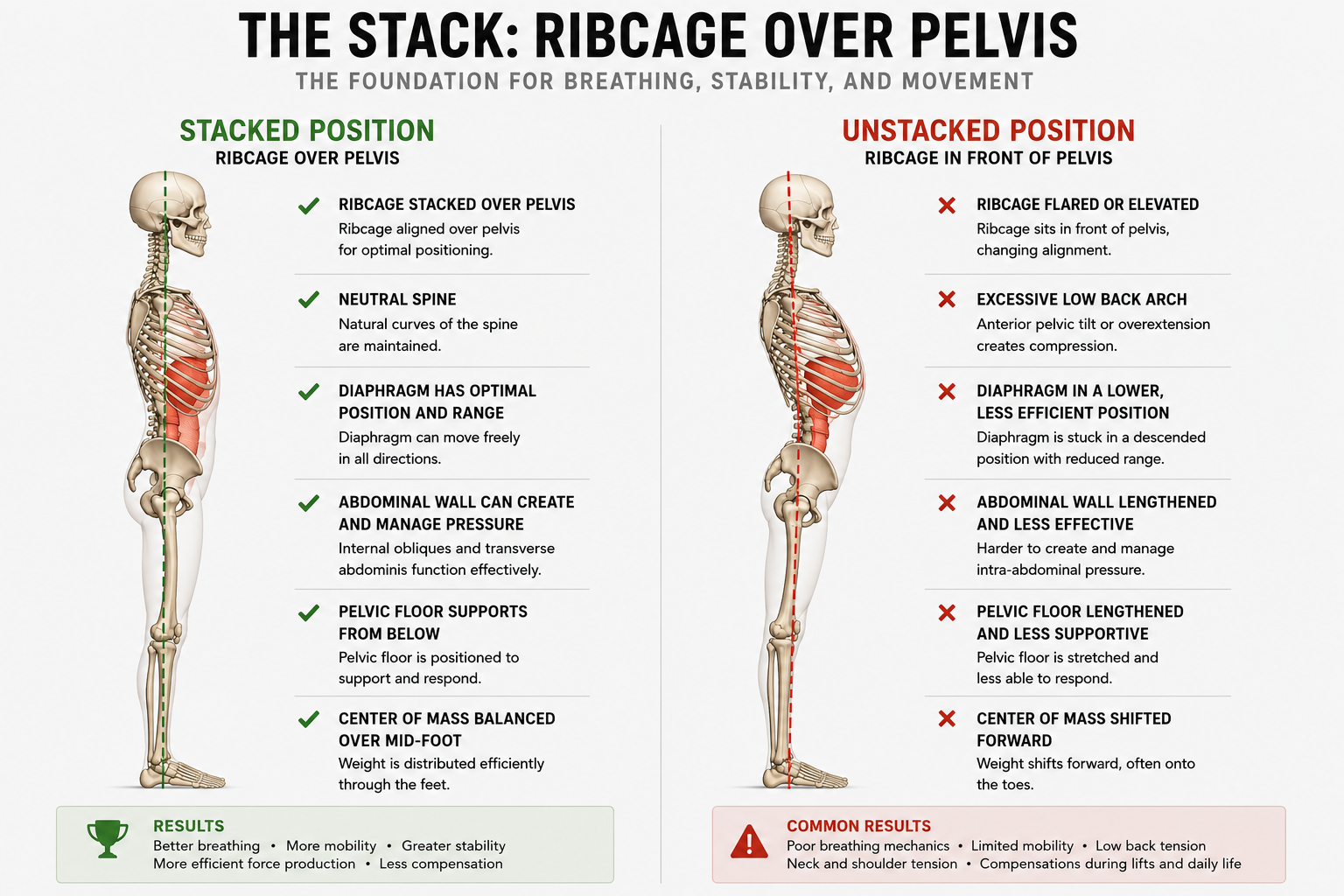
When we talk about being stacked, we're generally referring to the rib cage being positioned over the pelvis.

This doesn't mean flattening the spine, tucking the pelvis excessively, or walking around with your ribs permanently pulled down.

A stacked position still maintains the natural curves of the spine. Instead, it creates an environment where the body can effectively manage pressure, breathe efficiently, and move through available ranges of motion.

From a biomechanical perspective, stacking helps align the thoracic diaphragm and the pelvic floor. These structures form the top and bottom of a pressure system that works together with the abdominal wall to create stability throughout the trunk.

When the rib cage and pelvis are positioned well relative to one another, the body has a stronger foundation from which movement can occur.
Why We Coach the Stack

Many people think of strength, mobility, and stability as separate qualities.

In reality, they are deeply connected.

One of the primary reasons we coach the stack is because it influences the body's ability to manage pressure.

The diaphragm sits at the top of the abdominal cavity. The pelvic floor sits at the bottom. The internal obliques, transverse abdominis, and other abdominal muscles form the walls of this cylinder.

Together, these structures help regulate intra-abdominal pressure.

This pressure system plays a critical role in spinal stability, force transfer, breathing mechanics, and movement efficiency.

When pressure is managed effectively, the body is often able to access movement options more easily and distribute forces more efficiently.

A useful way to think about this is to imagine an empty aluminum pop can. Despite being made of very thin metal, an undamaged can can support a surprising amount of weight when force is distributed evenly through the structure. The moment the side of the can is dented, however, its ability to manage force drops dramatically.

While the human body is far more complex than a pop can, the analogy illustrates an important principle. When the diaphragm, abdominal wall, pelvic floor, rib cage, and pelvis work together to manage pressure, the trunk becomes remarkably efficient at transferring and resisting force.
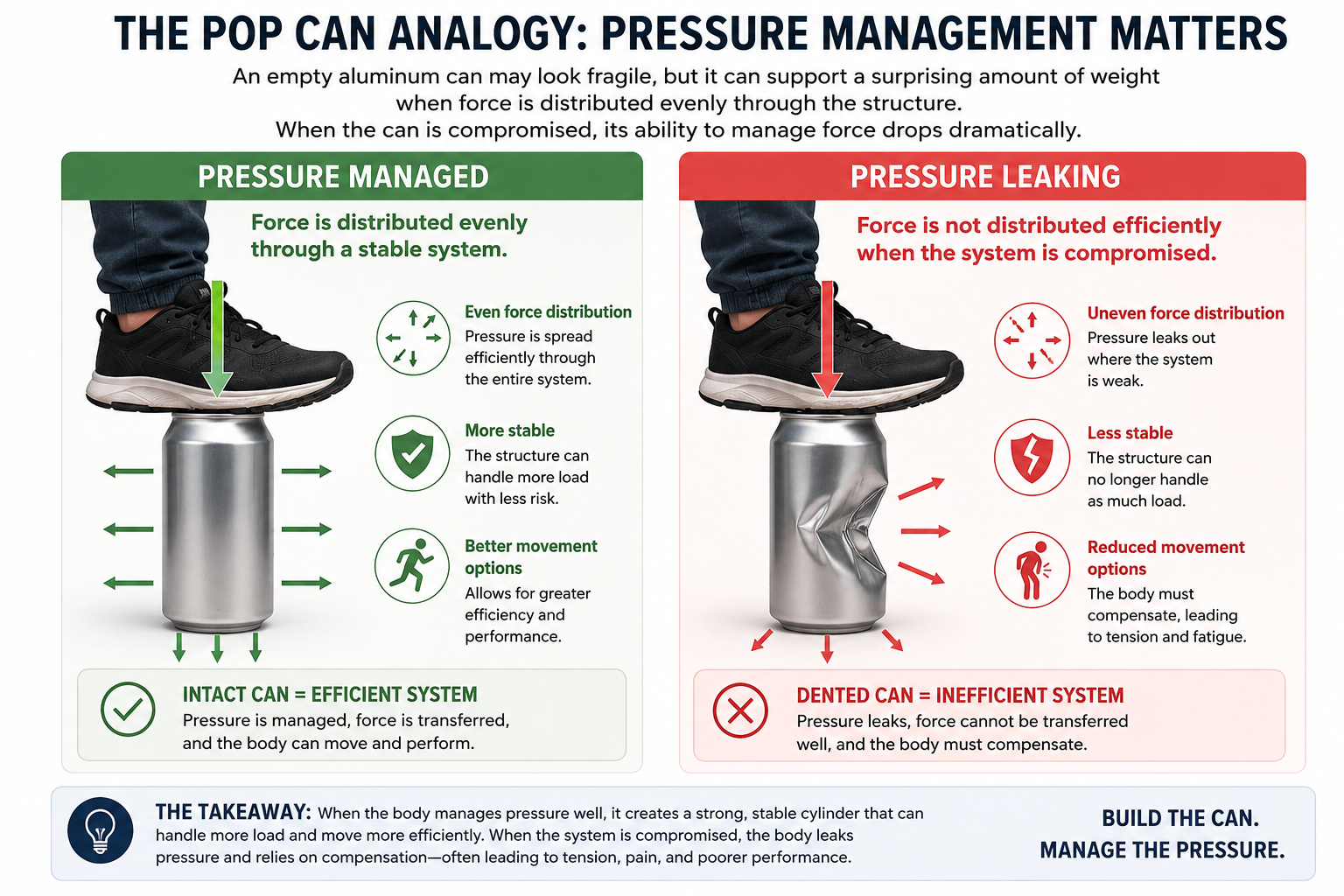
When pressure management is compromised, the body may begin relying on compensatory strategies to create stability and movement.

The stack is not the solution to every problem, but it often provides the foundation that allows other solutions to work.

How the Stack Affects Breathing

Breathing is much more than simply getting air into the lungs.

Effective breathing requires coordination between the diaphragm, rib cage, abdominal wall, and pelvic floor. Together, these structures help create and manage pressure throughout the trunk, providing a foundation for both movement and stability.

When the rib cage and pelvis are positioned well relative to one another, the diaphragm is able to function more effectively. One reason for this is a concept known as the Zone of Apposition, which refers to the area where the diaphragm sits against the inner surface of the lower rib cage.

While the details are beyond the scope of this article, the important takeaway is that the position of the rib cage influences the position and function of the diaphragm.

When the rib cage becomes excessively elevated or flared, the diaphragm may lose some of its mechanical advantage. As a result, the body often begins relying more heavily on accessory muscles of respiration, including muscles of the neck, upper chest, and lower back.

This is one reason why individuals who struggle with breathing mechanics frequently report chronic tension through the neck, shoulders, or low back.

A complete exhalation is often one of the simplest ways to improve this relationship. Exhaling fully helps bring the rib cage down and in, allowing the diaphragm to return to a more advantageous position and creating a better starting point for the next inhale.

When the stack is present, we should see expansion occur throughout the rib cage and abdominal canister rather than exclusively through the chest, shoulders, neck, or belly.

This includes expansion through the front, sides, and back of the rib cage, as well as coordinated movement of the diaphragm and pelvic floor. This is often referred to as 360-degree expansion.
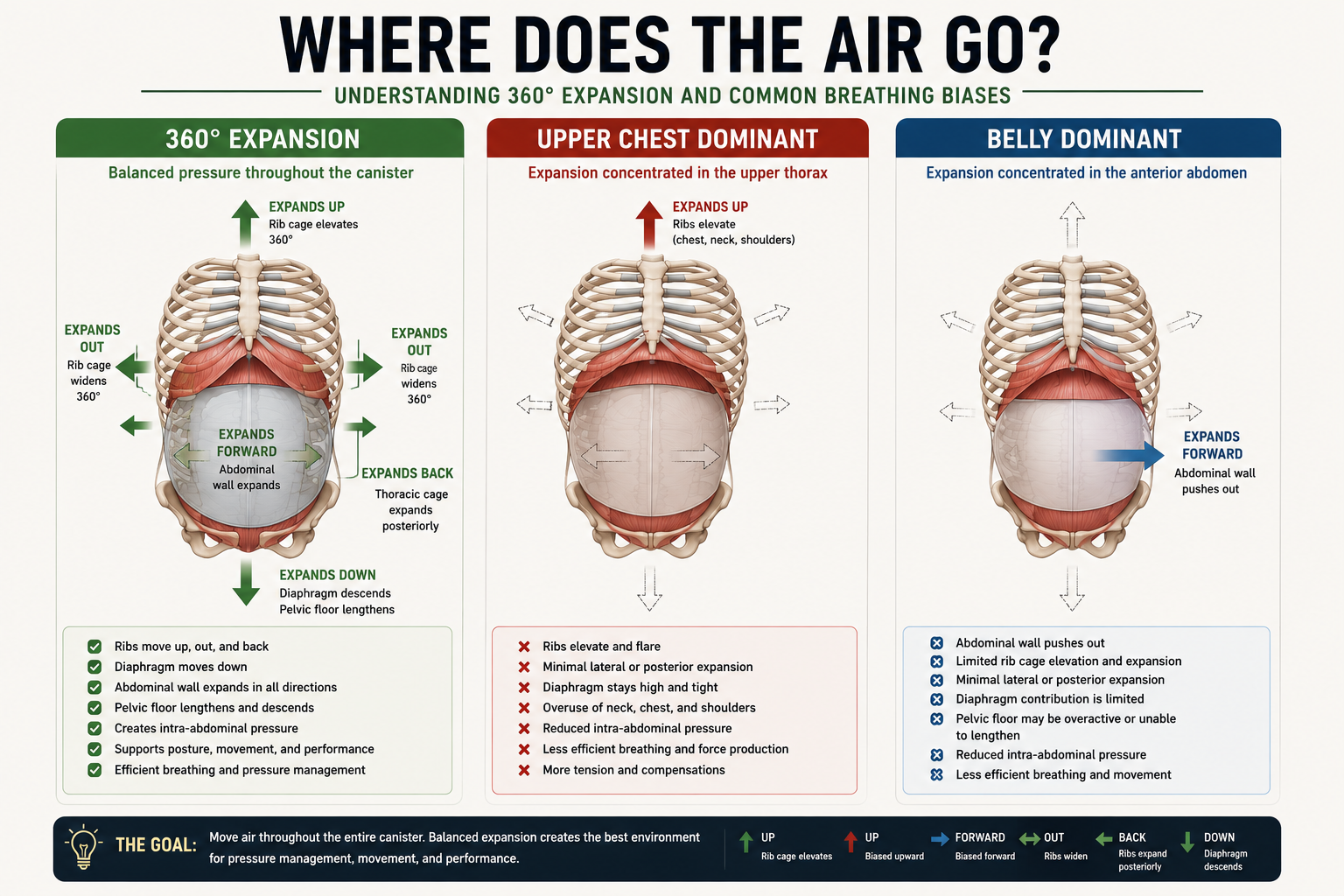
The rib cage itself is designed to move in multiple directions during respiration. As we inhale, the ribs expand and rotate to accommodate incoming air. As we exhale, they return toward a more neutral position. These movements help distribute pressure throughout the system and allow breathing to support movement rather than interfere with it.

When the stack is lost, these expansion patterns can become biased toward a particular region. Some individuals become upper-chest dominant, relying heavily on the neck and shoulders to breathe. Others primarily expand through the front of the abdomen while gaining little expansion through the sides and back of the rib cage.

Our goal is not simply to breathe into the chest or the belly. Our goal is to create balanced expansion throughout the entire canister, allowing the body to efficiently manage pressure, move well, and perform at its best.

How the Stack Affects Mobility

One of the most common misconceptions in fitness is that mobility limitations are always the result of tight muscles.

While tissue restrictions can certainly exist, many mobility limitations are influenced by joint positioning and pressure management.

The body is often reluctant to access movement that it cannot control.

When the rib cage and pelvis are poorly positioned relative to one another, the body may lose access to certain movement options.

This can influence hip internal rotation, thoracic rotation, shoulder motion, and other ranges of motion throughout the body.

As a result, an individual may feel stiff or restricted despite spending significant amounts of time stretching.

In some cases, restoring a better stack can immediately improve movement quality without any traditional stretching at all.

This doesn't mean stretching is unnecessary. Rather, it highlights the importance of addressing the underlying positional and pressure-management strategies that influence movement.

At Avos Strength, we frequently assess movement both before and after breathing and positional interventions. It is not uncommon to see meaningful changes in mobility once the body is placed in a position that allows it to better manage pressure.

How the Stack Affects Strength and Performance

Strength is ultimately the ability to produce and transfer force.

The stack plays an important role in both.

When the rib cage and pelvis are positioned effectively, the body is often better able to transfer force between the upper and lower extremities.

This can influence performance in squatting, deadlifting, pressing, carrying, sprinting, jumping, and change-of-direction activities.

The stack also influences the body's center of mass.

An individual's ability to shift, rotate, accelerate, and decelerate depends in part on where their mass is positioned and how effectively they can manage it.

When the body relies heavily on compensatory strategies, force production may become less efficient and movement options may become more limited.

This is one reason why we frequently revisit the stack during both rehabilitation and performance-focused training.

How We Help Clients Find Their Stack

For most clients, learning the stack begins with breathing.

One of the simplest ways to improve the relationship between the rib cage and pelvis is through a full exhalation. By fully exhaling, the ribs are able to move down and in, allowing the diaphragm, abdominal wall, and pelvic floor to work together more effectively.

If you'd like to try this yourself, watch our short video demonstrating how to find a stacked position from standing.

For some individuals, finding this position can be challenging while standing. In these situations, positional drills may be useful. Exercises such as a 90-90 Hip Lift can help reduce the influence of gravity and provide the body with a simpler environment in which to learn how to manage pressure and find a stacked position.

From there, we gradually integrate these concepts into movement.

This may involve developing awareness of rib cage position, pelvic position, foot pressure, breathing mechanics, and how these factors influence movement quality.

The appropriate strategy depends on the individual.

Our goal is not to force every client into the same posture. Rather, we aim to improve their ability to manage pressure, access movement options, and move efficiently.

As clients become more aware of these relationships, they often develop a greater understanding of how breathing, mobility, strength, and movement quality are interconnected.

Final Thoughts

The stack is not a magic position.

Nor is it a position that we aim to maintain at all times.

Movement is dynamic. Athletes constantly move through flexion, extension, rotation, and lateral movement depending on the demands of the task in front of them. The goal is not to remain perfectly stacked at all times or to create a rigid posture. Rather, the stack provides a foundation from which movement can occur. When the body can effectively organize the relationship between the rib cage and pelvis, it is often better able to transition into and out of different positions while maintaining efficient breathing, pressure management, and force production.

The stack simply provides a foundation.

It is a position from which the body can effectively manage pressure, breathe efficiently, and access movement options when needed.

When the rib cage and pelvis work together effectively, the body is often able to breathe better, manage pressure more efficiently, access movement options, and transfer force more effectively.

For that reason, the stack remains one of the most important concepts we teach at Avos Strength.

Whether the goal is improved mobility, greater strength, athletic performance, or simply moving and feeling better, the stack provides a foundation upon which all of those qualities can be built.

The Limb Arc Model: Why You Should Train the Range of Motion You Actually Own

Written by Evelyn Calado, MKin, CSCS, RKin

If you’ve ever wondered why:

  • Your knees cave in at the bottom of a squat

  • Your low back extends when the weight gets heavy

  • One hip always feels “stuck” at 90°

  • Or mobility drills don’t seem to transfer to strength

…you’re probably running into a concept explained by the Limb Arc Model.

This model, commonly attributed to Bill Hartman, describes how rotational bias changes across ranges of joint flexion — particularly at the hip. And once you understand it, exercise selection becomes dramatically more logical.

Let’s break it down.


What Is the Limb Arc Model?

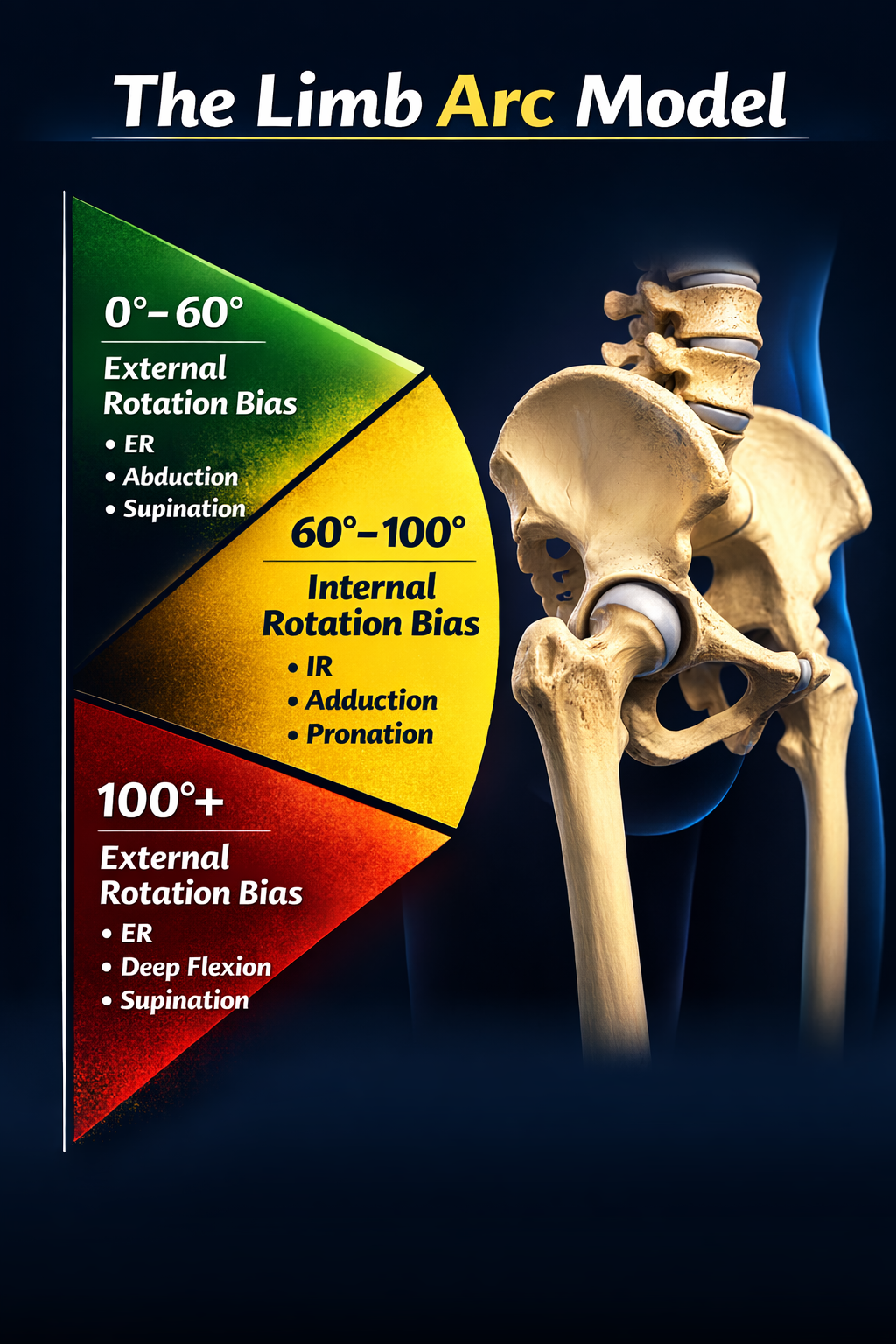
The Limb Arc Model proposes that rotational leverage changes as a joint moves through flexion.

At the hip specifically:

  • Early flexion favors external rotation (ER)

  • Mid-range flexion favors internal rotation (IR)

  • Deep flexion returns to an external rotation bias

This is not arbitrary. It reflects changes in joint geometry, length tension relationships, and moment arms.

Most people train hip flexion as if it is one continuous quality. It is not. It is three mechanically distinct regions.

That shift matters for:

  • Squats

  • Deadlifts

  • Split squats

  • Gait mechanics

  • Sport performance

  • Injury risk

The Hip Flexion Arc Explained

Here’s the simplified breakdown:

0–60° Hip Flexion → External Rotation Bias

In early hip flexion, the joint favors:

  • External rotation

  • Abduction

  • Supination at the foot

  • Sacral counternutation

In gait, this corresponds most closely with early stance, when the heel has contacted the ground and the pelvis is relatively externally rotating as load is being accepted.

In the gym, this is the top portion of a squat or the early phase of a hinge.

External rotators and abductors have favorable leverage here.

60–100° Hip Flexion → Internal Rotation Bias

Around 90° hip flexion:

  • Internal rotators and adductors have improved leverage

  • Length–tension relationships favor IR

  • The piriformis shifts moment arm toward IR

  • The sacrum moves toward nutation

  • The foot transitions toward pronation

In gait, this corresponds most closely with mid stance, when the pelvis is internally rotating on the femur and vertical ground reaction forces are highest.

In a squat, this is typically around parallel.

100°+ Hip Flexion → Returns to External Rotation Bias

As you approach deep hip flexion:

  • The system transitions back toward ER

  • Supination strategies often reappear

  • External rotators regain leverage

This helps explain why some people feel “better” deep in a squat even if they struggle at parallel. They are returning to a range where external rotation leverage increases again.


Why Internal Rotation at 90° Matters

Most loaded bilateral lower-body exercises demand control around 60–100° hip flexion.

If internal rotation is limited in that range, common compensations show up:

  • Knee valgus

  • Lumbar extension

  • Butt wink

  • Hip shifting

  • Over-pronation

  • Gripping with toes

This is not always a strength problem.

It’s often a relative motion problem.

The joint is being asked to produce force in a range it does not control. When the femur is not internally rotating relative to the pelvis, the pelvis, spine, or foot moves instead.


“Train within the Range You Own”

Here’s where this becomes practical.

Owning a range means:

  • You can access it

  • You can control it

  • You can breathe in it

  • You can maintain joint relationships without compensating

If you lack IR at 90°, loading it heavily won’t fix it.

It may:

  • Reinforce compensations

  • Drive orientation strategies (like anterior pelvic tilt)

  • Increase compressive strategies instead of restoring motion

Instead, you might need:

  • Split squats that bias mid-stance

  • Exercises emphasizing medial arch contact

  • Internal rotation control drills

  • Breathing-based repositioning work

  • Heel references to restore early stance mechanics

Force production should follow motion restoration — not precede it. Ie; Restore control first. Then add load.


How This Applies to Programming

The Limb Arc Model gives you a filter for exercise selection.

The question is not whether someone “has internal rotation.”

The question is where in the arc they lose control.

If Control Breaks Down Between 0 and 60 Degrees

You will see:

  • Difficulty accepting load at the top of the squat

  • Poor heel contact

  • Immediate external rotation gripping

  • Early lumbar extension

In this case, reinforce early stance mechanics.

Use closed chain drills that emphasize heel reference and controlled external rotation.
Keep the hip in the zero to sixty degree range and teach load acceptance without extension strategies.

The goal is stable external rotation control in early hip flexion.

If Control Breaks Down Between 60 and 100 Degrees

You will see:

  • Knee valgus at parallel

  • Hip shift at ninety degrees

  • Lumbar extension at the sticking point

  • Loss of medial arch control

This is the most common presentation.

Here, you bias time spent in sixty to one hundred degrees of hip flexion in closed chain.


Split squat variations are useful when organized correctly because they allow:

  • Pelvis on femur relative motion

  • Clear stance leg reference

  • Control of hip flexion angle

  • Moderate load that does not overwhelm internal rotation capacity

The key is managing support and load so that the pelvis can internally rotate on the femur without defaulting into orientation strategies such as anterior pelvic tilt or lateral shift.

This is not about making someone balance harder.

It is about placing them in the internal rotation biased window and allowing them to control it.

If Control Breaks Down Beyond 100 Degrees

You will see:

  • Instability or collapse in deep squat

  • Over reliance on passive structures

  • Loss of tension in the bottom

In this case, gradually expose the athlete to deeper flexion under controlled conditions, restoring external rotation leverage without compensatory lumbar flexion.


Why This Model Is Powerful

The Limb Arc Model connects:

  • Gait

  • Breathing mechanics

  • Pelvic motion

  • Squat depth

  • Performance

  • Compensation patterns

It explains why:

  • One depth feels strong and another feels unstable

  • Deep squats don’t fix mid-range weakness

  • “Mobility” doesn’t always transfer to strength

Because leverage changes as joint angles change.

And if you don’t own the transition between those zones, the body will compensate.


Final Takeaway

The Limb Arc Model isn’t about stretching more.

It’s about understanding that:

Rotational demands shift as joints move through flexion.

And if you load a range you don’t own, your body will borrow motion from somewhere else.

Train the range you control.

Then expand it.

That’s how you build durable strength.

Learn more about how we assess movement and build individualized programs at Avos Strength.


Why “Evidence-Based Training” Means Nothing Without Real Coaching

Written by Evelyn Calado, MKin, CSCS, RKin

The term “evidence-based training” gets thrown around a lot. But what actually makes a coach evidence-based? Reading studies? Having a kinesiology degree? Posting PubMed screenshots on Instagram?

True evidence-based practice goes far beyond quoting research. It is about combining the best available evidence with real-world experience and applying it to the needs of the person in front of you. Too often, that third piece gets ignored.

Foundations First: Coaching Is a Skill, Not a Certificate

You cannot replace lived experience and movement literacy with citations. A coach should know how to move well, demonstrate patterns clearly, and teach with purpose. That takes time under the bar, time on the floor, and years of refining their craft.

You can have a kinesiology degree and still not know how to coach a hinge or assess a client’s squat depth.

At Avos Strength, every junior coach goes through a structured three-month mentorship. They do not just learn protocols. They shadow real sessions, practice cueing, and refine how they coach. Because knowing the “why” is not enough. You also need to know how to deliver the “how.”

Shadowing Matters: Who You Learn From Shapes How You Coach

There is nothing wrong with being new. But good coaches are forged through time, mentorship, and reps.

I shadowed for years without getting paid. Why? Because that is how you build the craft.

Watching seasoned coaches, asking questions, getting feedback, and coaching real people is where you truly grow.

If you are looking to work with a coach, ask:

  • Who did they learn from?

  • Do they train themselves?

  • Do they continue to shadow and learn?

Education without application is just theory.

Yes, the Research Matters. But Know What It Really Says

Let’s be clear. The research is valuable. But it must be understood in context.

Take hypertrophy. For years, people believed you had to train in the 6 to 12 rep range to build muscle. But newer research shows you can build muscle at a wide variety of rep ranges, as long as effort and volume are managed properly.

That means the “best” rep range is the one that fits the person’s goals, experience, and recovery capacity. That is where coaching comes in.

The Bottom Line: Coaching Comes First

Evidence-based is not a title. It is a practice. And that practice only works when you have coaches who understand movement, know how to teach it, and apply research with intention.

If you are a client, look for a coach who:

  • Moves well and teaches movement clearly

  • Understands the research but does not hide behind it

  • Has put in time shadowing and learning from experienced professionals

  • Tailors training to your needs, not just to a textbook

If you are a coach, do the real work. Don’t just quote studies. Learn to coach.

Want to Train with Coaches Who Walk the Talk?

At Avos Strength, we believe in continuous learning and real-world coaching. Every coach trains hard, studies smart, and stays on the floor. We do not just say we are evidence-based. We prove it in every session.

Click to Start Training with Us

We Don’t Use These Gym Cues Anymore—Here’s Why!

In the world of fitness, certain cues and phrases have become ingrained in our minds over time. They've been passed down from coach to coach, from gym to gym, becoming gospel for many. But what if I told you that some of these cues might not be as effective as we once thought?

At Avos Strength, we've started to challenge the old ways of thinking when it comes to coaching movements and exercises. We believe that questioning these common cues is essential for helping our clients achieve optimal performance and prevent injury.

Let's take a closer look at some of these cues and why we've started to reconsider them:

  1. "Squeeze the glutes." While this cue is meant to activate the glutes, it can often lead to pelvic dumping and improper alignment. Instead, we encourage our clients to focus on pushing through the medial arch of the foot, which helps engage the glutes while maintaining proper pelvic position.

  2. "Squeeze your shoulder blades together." This cue, commonly used during back exercises like rows, can create unnecessary compression between the T5-7 area of the spine. Instead, we cue our clients to lead with the elbow, which promotes optimal glenohumeral rhythm (shoulder blade movement) and reduces the risk of over-compression in the upper back.

  3. "Squeeze/brace your abs." While activating the core is important for stability, simply squeezing/bracing down on the abs can lead to an over-reliance on the rectus abdominis and neglect other core muscles. Instead, we teach our clients to brace the core by maintaining a neutral pelvis and using a full exhale to engage the deep core muscles, such as the transverse abdominis and obliques.

By questioning these common cues and adopting a more nuanced approach to coaching, we've seen incredible results with our clients. They move more efficiently, reduce their risk of injury, and achieve their fitness goals more effectively.

So, if you've been told these cues in the past or are currently using them as a coach, we encourage you to ask yourself why. Is there a better way to cue the movement? Is there a more effective way to help your clients achieve their goals? By challenging old paradigms and embracing new perspectives, we can continue to evolve and improve the fitness industry for the benefit of both coaches and clients alike.

Understanding Your Body: The Role of a Kinesiologist in Personal Fitness

Embarking on a fitness journey is a commendable decision that can positively impact various aspects of your life. Whether you're aiming to shed a few pounds, build muscle, or enhance overall well-being, understanding your body is a crucial first step. In this pursuit, a key ally can be found in the expertise of a kinesiologist. In this blog post, we will delve into the pivotal role a kinesiologist plays in personal fitness, shedding light on the science behind movement and the benefits of seeking professional guidance.

Understanding Kinesiology:

Kinesiology is the study of human movement, encompassing anatomy, physiology, biomechanics, and neuroscience. A kinesiologist is a specialist in this field, possessing a deep understanding of how the body moves and functions. Their knowledge extends beyond mere exercise routines, focusing on the science behind movement patterns, muscle function, and the intricate interplay between various physiological systems.

Assessment and Individualized Programs:

One of the primary roles of a kinesiologist is to conduct a comprehensive assessment of an individual's physical condition. This may involve evaluating posture, flexibility, strength, and identifying any imbalances or limitations. Through these assessments, a kinesiologist gains valuable insights into a person's unique physiological profile, allowing them to create personalized fitness programs tailored to specific needs and goals.

Avos Strength Comprehensive Assessment guides program design specific to you

Preventing and Rehabilitating Injuries:

Understanding the body's mechanics enables kinesiologists to identify potential areas of vulnerability and design exercise regimens that minimize the risk of injuries. Moreover, for individuals recovering from injuries, a kinesiologist plays a crucial role in rehabilitation by implementing targeted exercises to restore strength, flexibility, and functionality. This personalized approach aids in a faster and more effective recovery, reducing the likelihood of recurring injuries.

Enhancing Performance:

Whether you're an athlete seeking to improve performance or an individual aiming for optimal fitness, a kinesiologist can be a game-changer. By analyzing movement patterns and biomechanics, they can fine-tune training programs to maximize efficiency and boost overall performance. This not only helps in achieving fitness goals but also enhances the enjoyment and sustainability of the exercise routine.

Educating and Empowering Clients:

In addition to designing exercise programs, kinesiologists play a vital role in educating clients about the importance of proper movement and the impact of physical activity on overall health. Armed with this knowledge, individuals are empowered to make informed choices about their fitness journey, fostering a long-term commitment to a healthy lifestyle.

In the realm of personal fitness, the guidance of a kinesiologist can be a transformative force. Their expertise in understanding the intricacies of the human body goes beyond traditional fitness training, providing a holistic approach to health and well-being. By working with a kinesiologist, individuals can unlock their body's full potential, reduce the risk of injuries, and embark on a journey towards sustainable, lifelong fitness. So, if you're looking to truly understand your body and optimize your fitness experience, consider the invaluable partnership with a kinesiologist – the key to unlocking the full potential of your physical well-being. Contact Avos Strength today to book a Free on boarding call to discuss how we can help you reach your goals.

What Goes into Developing a Tailored Program for an Athlete?

Part 1: The Needs Analysis

The first thing that is done is a Needs Analysis which is a process that is used to determine qualities that are important for the athlete and sport.

This includes a Sport Analysis. Here the S&C coach identifies the demands of the sport including the Key Performance Indicators (KPIs). This requires knowledge of the sport, including the demands of the sport and a deep dive into the literature.  

3 Questions that a coach asks when doing the needs analysis:

  1. What are the metabolic demands of the sport?

  2. What are the biomechanical movements of the sport?

  3. What are the common injuries observed in the sport?


From here the coach needs to determine the athletes current status which is achieved by doing an Athlete Analysis. This includes profiling the athlete, performance testing and goals.

Next the coach needs to determine what is required to bridge the gap between the current status of the athlete and what they need to do to achieve their goal - i.e. the Gap Analysis

From here the coach can implement the plan based on the Gap Analysis.


Part 2: The Yearly Training Plan (YTP)

First, the coach needs to take a look at the big picture in terms of competition schedule and the entire season. This requires the coach to develop a Yearly Training Plan (YTP).  A YTP is not only done by S&C coaches, but should also be done by the sport coach too; for developing technical and tactical skills specific to the sport.  When major tournaments are placed in the calendar the S&C coach can work backwards to develop the program.

 With the KPIs in mind, the plan can be written to make sure that the athlete is developing the right attributes to peak for the major competitions.  Coaches will use periodization, which is the systematic planning of long- and short-term training programs.

Periodization

The YTP with major competitions in mind, can be broken down into macrocycles, mesocycles and microcycles where the specific training sessions are designed, working to develop specific athletic abilities within the larger picture of the current training phase.

Strategic periodization involves intentional peaking for matches or events based on their perceived greatest priority or difficulty throughout a competitive season.  This is accomplished by the deliberate manipulation of training loads and recovery in the lead-up to targeted matches.

It should be noted that during the season, coaches need to be flexible, because schedules often change. However the YTP serves as the primary framework that guides the training season.