shoulder rehab

Why You Should Rethink How You Row: The Truth About Shoulder Blade Cues

Written by Evelyn Calado, MKin, CSCS, RKin


You’ve probably heard it before:
"Pull your shoulder blades together.”
It’s a cue that’s been passed around gyms and group classes for years.

But here’s the truth: overemphasizing scapular retraction during pulling exercises — like rows and pulldowns — can limit shoulder health, breathing mechanics, and strength development.

If you care about moving better, not just lifting more, it's time to rethink how you row.

1. Over-Retraction Limits Ribcage Expansion

When you cue scapular retraction too forcefully during a row or pulldown, you compress your upper back and limit ribcage movement. This restricts natural thoracic mobility and can impact your ability to breathe and move efficiently under load.

👉 See more on mobility training

2. It Disrupts Scapulohumeral Rhythm

The scapula and humerus are designed to move together in a fluid, coordinated rhythm. Forcing the shoulder blades into retraction first interrupts that sequence. This increases joint stress and decreases the efficiency of your movement — especially in horizontal pulling patterns.

3. You Miss Out on Serratus Activation and Posterior Expansion

When you stop at scapular retraction, you lose out on the benefits of a full reach — which promotes serratus anterior engagement and helps open up the back of the ribcage. This reach improves shoulder function and breathing capacity, particularly for clients struggling with postural restrictions or breathing mechanics.

4. It Reinforces Compensatory Movement Patterns

Cues like "pinch your shoulder blades" often drive people into extension-based strategies — excessive lumbar arching, rib flaring, and overuse of the lats and lower back.

Instead, focus on staying stacked: ribs over pelvis, neutral spine, and movement that flows from a stable foundation.

👉 Learn more about injury prevention strategies

What Proper Row and Pulldown Mechanics Look Like

  • Elbow leads the movement — not the scapula

  • Scapula glides naturally with the arm

  • Reach at the start and end for full range

  • Spine stays neutral, not overextended

  • Breathing stays consistent throughout the set

Better Cues to Use Instead

  • “Elbow to back pocket.”

  • “Let the shoulder blade follow the arm.”

  • “Reach at the end — don’t stop at the shoulder blade.”

  • “Stack your ribs over your hips.”

Want to train smarter?

If you’re tired of outdated cues and want coaching that prioritizes biomechanics, breathing, and real-world strength — we can help.

👉 Explore our Personal Training or Hybrid Coaching Programs

Let’s build strength that lasts.
Contact Us to get started.

Uncovering the Hidden Cause of Scapular Winging: A Comprehensive Approach

Have you ever noticed your shoulder blade sticking out awkwardly? This is called scapular winging. You might have been told that it’s due to a problem with your serratus anterior and that reaching or punching exercises are the key to fixing it.

However, there’s more to the story. Most advice on scapular winging overlooks a critical element that can make all the difference.

The Overlooked Role of the Scapulothoracic Joint

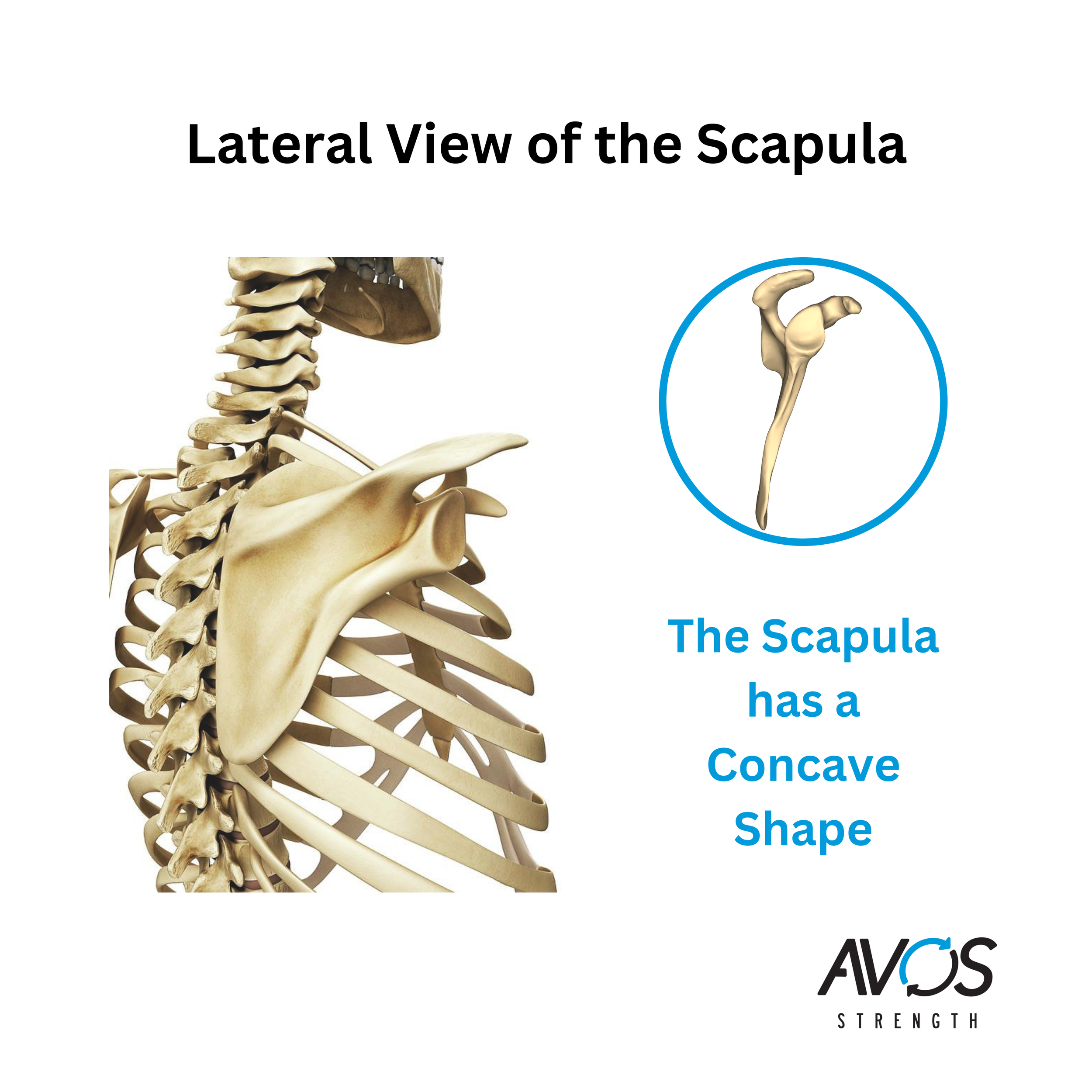
While much attention is given to the muscles surrounding the scapula, the ribcage, which acts as their stage, is often ignored. The scapula is concave, needing a convex surface to move smoothly. This surface is provided by the ribcage.

But what happens when there are restrictions in the ribcage? The ribcage might position itself forward in relation to the scapula, creating the appearance of scapular winging. This isn’t a problem with the scapula itself; rather, the shoulder blade lacks a stable platform to move upon.


The Rotator Cuff’s Dual Function

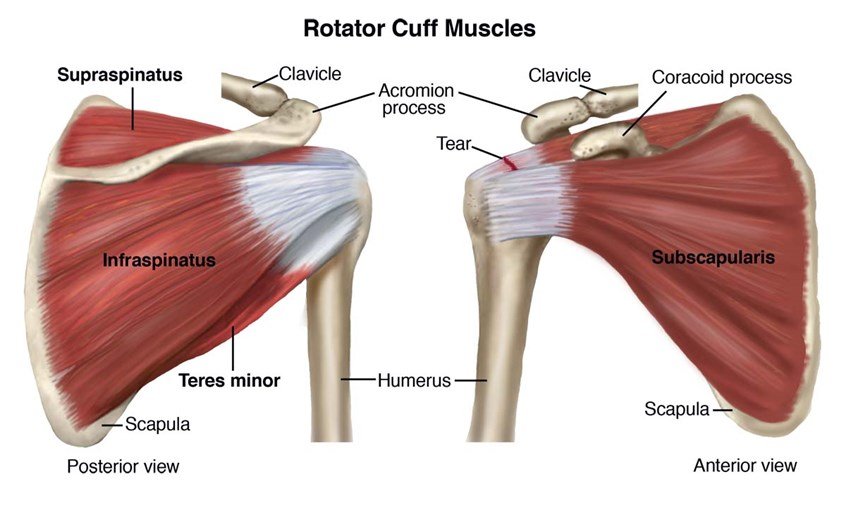
Commonly, the rotator cuff is thought to solely influence the shoulder joint. Yet, these muscles also play a significant role in moving the scapula. The posterior rotator cuff muscles, specifically the infraspinatus and teres minor, facilitate internal rotation of the scapula. This movement can make the inner border of the scapula lift away from the ribcage, mimicking scapular winging.

When there is insufficient space between the scapula and the thorax, these muscles are forced to multitask, acting on both the humerus and the scapula.

Understanding Ribcage Expansion

The relationship between the thorax and scapula is well-documented. Poor posture, which often limits ribcage expansion, can greatly reduce shoulder mobility. When the ribcage doesn't expand adequately, it restricts scapular movement and places additional stress on the humerus. Therefore, enhancing ribcage expansion is crucial to improving overall shoulder function including scapular winging.

Step by Step Process to Help Improve Ribcage Expansion

To effectively address scapular winging, we must enhance ribcage dynamics through a specific sequence of exercises:

1. Increase Front-to-Back Thoracic Shape (Anterior and Posterior Expansion)

2. Fill the Gap Between the Ribs and Shoulder Blade (Upper Back Expansion)

3. Retrain Scapular Gliding (Chest Expansion and Glenohumeral Mechanics)

Step 1: Front-to-Back Expansion

Enhancing the front-to-back dimension of the ribcage can be achieved through a side-lying position with a foam roller:

Setup: Position a foam roller at the middle third of your ribcage, approximately at chest height. Use a pillow for comfort if necessary to support your head.

Position: Lie on your side with your knees stacked.

Action: Roll forward and slightly sidebend over the foam roller, you can reach forward as shown in the video or reach your top arm toward the ceiling while looking at your hand. You can even hold a dumbbell or kettlebell in an arm bar position while on the roller.

Breathing: Inhale silently through your nose. On the exhale, relax into the foam roller.

Reps: Perform 2-3 sets of five breaths, twice daily for 2-4 weeks

Step 2: Upper Back Expansion

Next, we aim to create space between the ribs and the shoulder blade by driving upper-back expansion: (Rolling drills are great for achieving this)

Setup: Set up depends on the variation, for the first variation, sit on the floor with both feet in front of you.

Position: Hold onto your legs by grabbing behind your knees, keeping your eyes forward.

Action: Inhale and roll backward, then exhale and roll forward, keep a nice rhythmic tempo.

Reps: Do 3 sets of 8-12 rolls (per side), a few times daily for 2-4 weeks.

Step 3: Chest Expansion

To facilitate proper scapular movement, we need to expand the front of the chest. The "pump handle" action of the ribcage can be stimulated using a downward dog position:

Setup: Begin on your hands and knees with hands below shoulders and knees below hips.

Contact Points: Focus on the pisiform (small wrist bone) and the base of the index finger.

Action: Exhale and lift your hips upward while keeping weight on your hand points and looking toward your feet.

Breathing: Inhale silently through your nose. On the exhale, press more heavily through the hand points.

Note: unlike the video you can also pause and breathe in the top position.

Reps: Perform 2-3 sets of five breaths breathing in the hips up position, then do 6-12 reps of the bear to down dog. Perform twice daily for 2-4 weeks.

Conclusion

Scapular winging is not solely a scapular issue. It's a complex interaction between the scapula and the ribcage. Addressing ribcage expansion can provide a stable base for the scapula to glide efficiently, reducing undue stress on the rotator cuff muscles.

By focusing on improving the dynamics of your ribcage, you can create a better environment for your shoulder blade, leading to enhanced mobility and reduced discomfort. Remember, a well-supported scapula is key to healthy shoulder function.