Written by Evelyn Calado, MKin, CSCS, RKin
Every parent wants the best for their child.
A chance to make the top team.
A scholarship.
A future in sport.
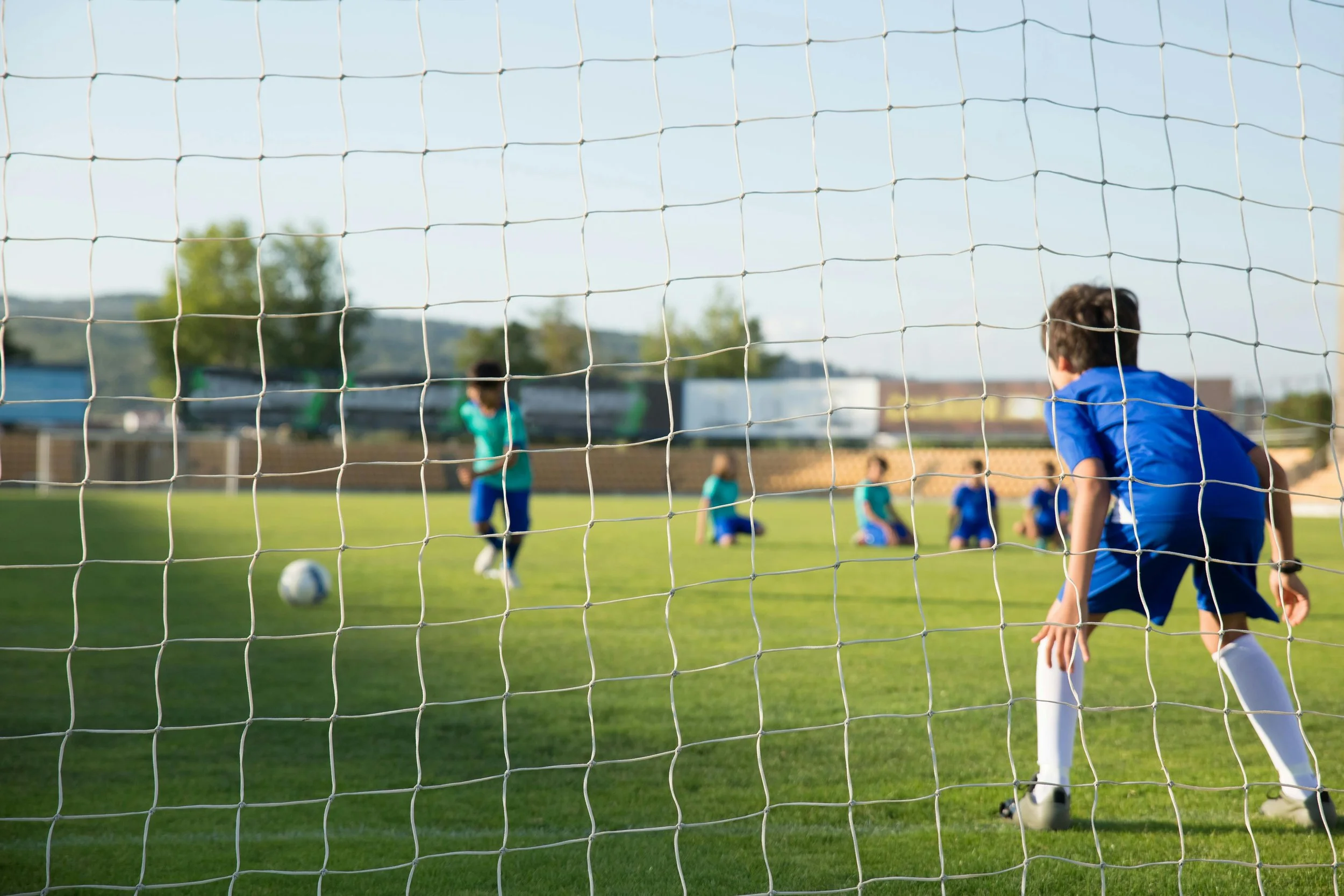
And because of that hope, many families fall into the same trap: more camps, more private sessions, more tournaments, more exposure. Summer schedules become nonstop. Kids bounce from training block to training block with no real break.
But more sport is not the same as better development.
Kids are not mini professionals. They are growing humans. And when young athletes are pushed into year-round specialization without a physical foundation, the outcomes are predictable: burnout, recurring injuries, stalled progress, and a quiet loss of joy for the game.
The goal of youth sport is not to peak at 12 or 13.
The goal is to build a base that allows athletes to keep improving at 16, 18, and beyond.
That is where long-term athlete development matters.
What long-term athlete development actually means
In Canada, Sport for Life’s Long-Term Development framework is very clear: athletes need to do the right things at the right time.
Early stages such as Active Start, FUNdamentals, and Learn to Train focus on physical literacy before puberty. Physical literacy includes fundamental movement skills like running, jumping, landing, throwing, catching, climbing, rotating, balancing, and reacting.
This physical foundation is what allows athletes to specialize later if they choose. It is not a delay. It is preparation.
When kids skip these stages and jump straight into high volumes of sport-specific training, they often get good at the sport temporarily, until their body becomes the limiting factor.
The real cost of early sport specialization
Early sport specialization is heavily marketed. Parents are told that year-round commitment and early focus are the path to success.
Research and real-world coaching experience tell a different story.
Early specialization and high training volume are associated with:
Higher rates of overuse injuries
Increased burnout and mental fatigue
Decreased long-term participation in sport
Recurrent pain that becomes “normal” far too early
If a child is always sore, always tight, or always tired, that is not a badge of dedication. That is a signal.
We are now seeing stress fractures, chronic tendon pain, and ACL injuries in middle school athletes. That should concern everyone involved in youth sport.
Kids should still be kids (and this matters for performance)
One of the most overlooked pieces of youth development is unstructured movement.
Kids need time to:
Run fast without a stopwatch
Jump and land naturally
Skip, hop, and change direction
Throw and catch objects of different shapes and weights
Wrestle, climb, crawl, and play games
Solve movement problems without constant instruction
This type of movement exposure builds coordination, adaptability, and resilience. It also builds better athletes later.
The best long-term performers are rarely the ones who only did one sport year-round from childhood. They are often the kids who played multiple sports, played outside, and developed broad athletic skills early.
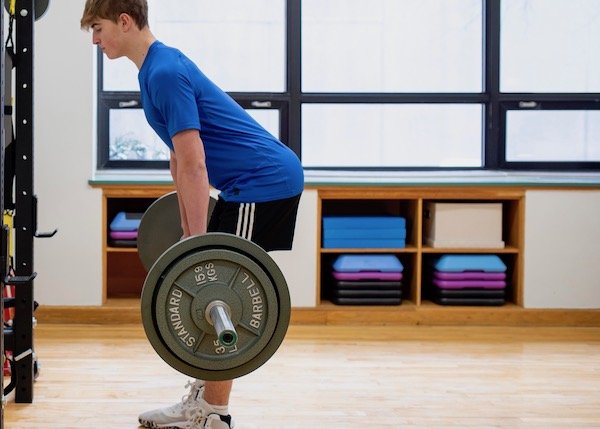
Strength training is not the problem. It is part of the solution.
One of the most persistent myths in youth sport is that strength training is dangerous for kids.
When strength training is age appropriate, coached properly, and focused on movement quality, it is not only safe, it is one of the most effective tools we have.
For youth athletes, strength training helps:
Improve sprinting and jumping ability
Build tendon and joint resilience
Improve posture and body control
Reduce injury risk
Build confidence and competence in movement
Strength training does not mean maximal lifting or adult programs scaled down. It means learning how to move well under load, progressing gradually, and respecting growth and recovery.
The issue is not strength training.
The issue is poor coaching and poor programming.
Youth training guidelines
When parents ask what a balanced approach actually looks like, I lean on five clear guidelines from the Australian Institute of Sport. These guidelines help protect young athletes while still allowing them to develop.
1. Two days off structured sport per week
Young athletes should have two days off organized sport each week.
This does not mean inactivity. It means a break from formal practices, games, and competitions.
No more than three structured training days in a row is a good rule of thumb.
Days off are used for recovery, light movement, and general athletic development, not more sport volume.
2. Minimum 24 hours between intense sessions
Intense sessions include impact, contact, sprints, and jumps.
If today is a hard practice or game, tomorrow should not be another high-intensity day whenever possible. Tissues and the nervous system need time to recover.
3. Fatigue reduction matters
If a kid is constantly sore, tired, or emotionally flat, something needs to change.
Priorities include:
Adequate nutrition
Sleep, often 9 or more hours for youth
Monitoring total load, including practices, games, extra training, camps, and school stress
Fatigue is not always physical. Academic and emotional stress count too.
4. Strength training 2 to 3 times per week
Strength training should be a consistent part of youth development.
This builds the foundation for speed, power, tissue resilience, and confidence. The focus should always be on quality movement, not chasing numbers.
5. Adjust training during stressful life periods
During exams, growth spurts, poor sleep, emotional stress, or unusually busy weeks, training volume should be reduced.
Pulling back is not falling behind. It is smart coaching.
What a balanced training week can look like
This will vary based on age, maturity, sport, and season, but a general structure might look like:
Two days off structured sport
Two to three sport practices or games
Two strength training sessions
Intense days separated by at least 24 hours
Strength sessions adjusted in volume during heavy competition weeks
This approach supports development without constantly pushing kids into a recovery deficit.
What parents should look for in youth training
Youth physical development is largely unregulated, which makes it hard for parents to know what to look for.
At minimum, a coach working with youth should have:
Education in kinesiology, exercise science, or a related field
Training in growth, motor development, and youth exercise prescription
A clear philosophy aligned with long-term athlete development
Safe Sport or ethics training
Insurance and proper business practices
The ability to adjust training when a child is tired, sore, or growing rapidly
Being a former high-level athlete does not automatically make someone qualified to guide youth physical development.
Good intentions are not enough.
The long-term goal is bigger than sport
There will be a last game every athlete plays.
Sport is finite. Strength, movement skill, and confidence in the body are not.
When kids learn to move well, build strength, recover properly, and respect their body, they carry those habits into adulthood. Whether they pursue elite sport or not, they win.
The goal is not to create robots who grind year-round.
The goal is to build adaptable, resilient humans who can handle sport, stress, and life.
That starts by building the athlete first.
How We Support Youth Athletes
If you are a parent in Vancouver and want a smarter approach that supports your child’s sport without piling on more volume, Avos Strength works with youth athletes using a long-term development model that prioritizes health, performance, and longevity.
References
Australian Institute of Sport. (n.d.). Youth and junior athlete development principles. Australian Sports Commission.
https://www.ais.gov.au
Balyi, I., Way, R., & Higgs, C. (2013). Long-term athlete development. Human Kinetics.
Faigenbaum, A. D., Kraemer, W. J., Blimkie, C. J. R., Jeffreys, I., Micheli, L. J., Nitka, M., & Rowland, T. W. (2009). Youth resistance training: Updated position statement from the National Strength and Conditioning Association. Journal of Strength and Conditioning Research, 23(Suppl 5), S60–S79.
https://doi.org/10.1519/JSC.0b013e31819df407
International Olympic Committee. (2015). Youth athletic development: IOC consensus statement. British Journal of Sports Medicine, 49(13), 843–851.
https://doi.org/10.1136/bjsports-2015-094962
Jayanthi, N. A., LaPrade, R. F., Meeuwisse, W. H., Oberlander, T. F., & Patel, D. R. (2015). Sports-specialized intensive training and the risk of injury in young athletes: A clinical case-control study. American Journal of Sports Medicine, 43(4), 794–801.
https://doi.org/10.1177/0363546514567292
LaPrade, R. F., Agel, J., Baker, J., Brenner, J. S., Cordasco, F. A., Côté, J., Engebretsen, L., Feeley, B. T., Gould, D., Hainline, B., Hewett, T. E., Jayanthi, N., Kocher, M. S., Myer, G. D., Nissen, C. W., Philippon, M. J., Provencher, M. T., & Sanchez, G. (2016). AOSSM early sport specialization consensus statement. Orthopaedic Journal of Sports Medicine, 4(4).
https://doi.org/10.1177/2325967116644241
Lubans, D. R., Morgan, P. J., Cliff, D. P., Barnett, L. M., & Okely, A. D. (2010). Fundamental movement skills in children and adolescents: Review of associated health benefits. Sports Medicine, 40(12), 1019–1035.
https://doi.org/10.2165/11536850-000000000-00000
O’Kane, J. W., Neradilek, M., Polissar, N., Sabado, L., Tencer, A., & Schiff, M. A. (2017). Risk factors for lower extremity overuse injuries in female youth soccer players. Orthopaedic Journal of Sports Medicine, 5(10).
https://doi.org/10.1177/2325967117733963
Sport for Life. (n.d.). Long-term development framework.
https://sportforlife.ca