creatine

The Only Two Supplements Most Athletes Actually Need

Written by Evelyn Calado, MKin, CSCS, RKin


Walk into any supplement store and it’s overwhelming. Rows of pre-workouts, amino acids, test boosters, fat burners, and other shiny tubs promising to change your game overnight. But the truth is, most of it is noise.

At Avos Strength, we keep it simple. If you’re training hard and want to support performance, recovery, and overall health, there are only two supplements that actually matter.

And they aren’t flashy.

1. Protein Powder: The Most Underrated Tool in the Game

You don’t need protein powder to build muscle, but it can make it a lot easier to get enough protein — especially if you're busy, training often, or just not eating enough.

Protein is the building block of muscle. Without it, recovery slows down and progress stalls.

The general recommendation for active individuals and athletes is 1.6 to 2.0 grams per kilogram of body weight per day. If you're trying to put on muscle or training at a high volume, aim for the higher end of that range.

This means a 70-kilogram athlete should be getting 112 to 140 grams of protein daily. That’s a lot of chicken breast and Greek yogurt — and that’s where a high-quality protein powder can help.

Look for a product that:

  • Lists all essential amino acids (a complete protein)

  • Contains at least 20 to 25 grams of protein per serving

  • Comes from a reputable source like whey isolate, casein, or a solid plant-based blend with a full amino acid profile

If you are a competitive athlete, make sure your product is third-party tested and carries a Safe for Sport stamp such as NSF Certified for Sport or Informed Sport. This ensures there are no banned substances and that what's on the label is actually in the product.

Using protein powder post-training or to fill in gaps throughout the day is one of the easiest and most cost-effective ways to hit your daily targets.

2. Creatine: The Most Researched Supplement in the World
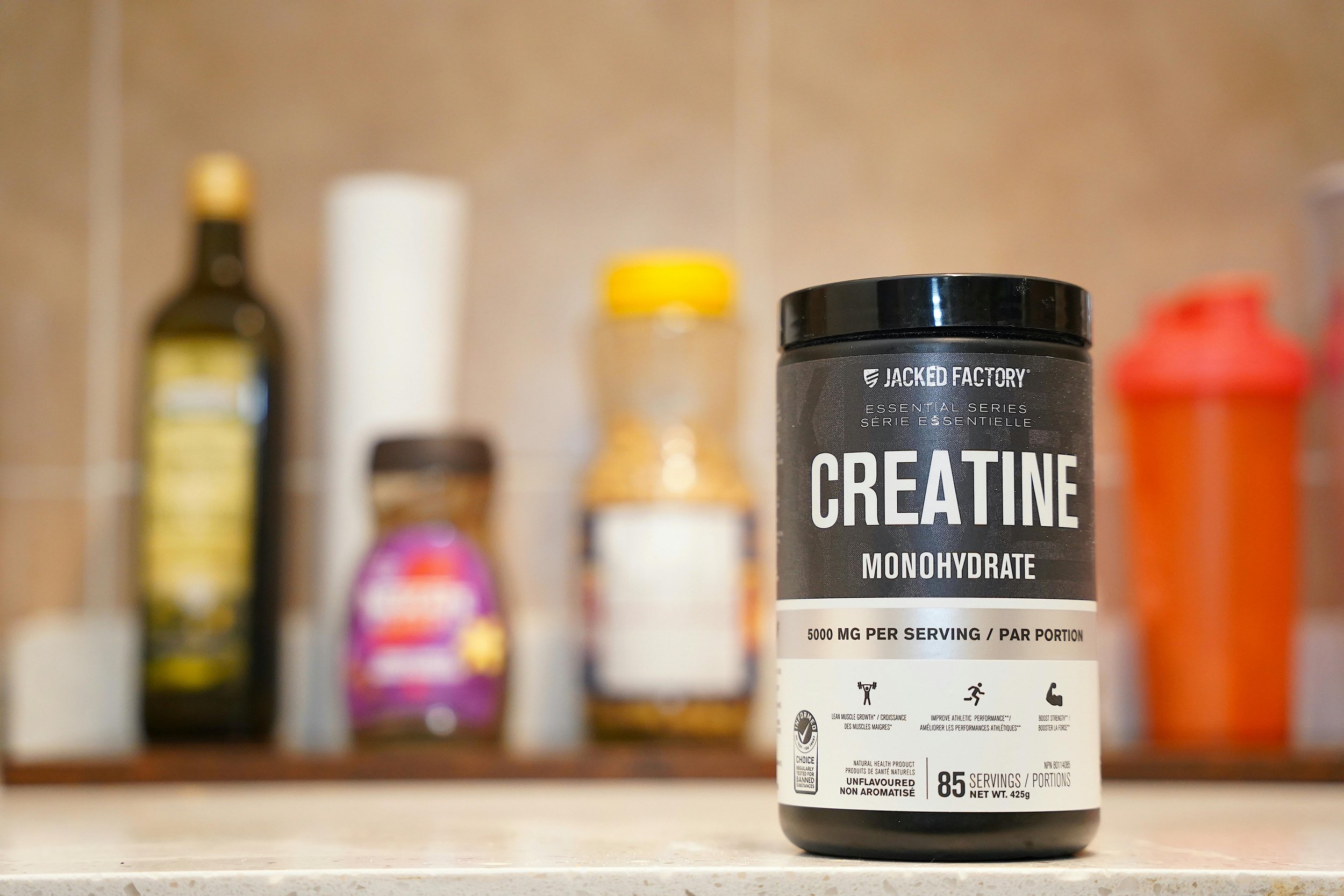
Creatine is a naturally occurring compound made from three amino acids: arginine, glycine, and methionine. It’s stored in your muscles and used to quickly regenerate ATP, the energy source your body relies on for short, powerful efforts like lifting, sprinting, and jumping.

If there’s one supplement that lives up to the hype, it’s creatine. It's been studied for over 30 years and is backed by more peer-reviewed research than any other supplement on the market.

Creatine helps you:

  • Perform more reps at a given load

  • Recover faster between explosive efforts

  • Improve high-intensity performance over time

What’s even more exciting is the emerging research around brain health. Studies now suggest creatine may improve cognitive function, especially under sleep deprivation or mental fatigue, and may play a protective role in aging populations.

How to Take It

  • For muscle saturation: Take 5 grams of creatine monohydrate per day. No need to load or cycle it.

  • For brain health benefits: Newer research suggests 10 to 20 grams per day may be more effective, though higher doses should be discussed with a healthcare provider or sport nutritionist.

As with protein powder, if you're a competitive athlete, use a creatine product that is NSF Certified for Sport or Informed Sport. This ensures the supplement is free from banned substances and batch tested for safety.

Creatine is:

  • Safe

  • Inexpensive

  • Naturally occurring (your body makes it, and you also get it from meat and fish)

  • Non-hormonal

  • Effective for both men and women

Just take it consistently. It doesn’t need to be timed perfectly with your workout, and you don’t need a fancy pre-workout mix to get the benefits.

Don’t Get Caught in the Supplement Hype

BCAAs, pre-workouts, collagen, fat burners — they all have their place in the marketing stream, but they are not essential.

If you’re on a budget or just want to stick with what works, protein and creatine will give you the most return on your investment. Everything else is secondary.

And most importantly, no supplement replaces hard training, smart programming, and real food.

Build your foundation first. Let supplements support that — not define it.

Supporting Young Athletes: Nutrition and the Role of Creatine

As youth athletes strive to enhance their performance, understanding proper nutrition and supplementation becomes essential. For young athletes involved in intense training, the right dietary choices can make a significant difference in their athletic development. Here, we’ll explore the importance of nutrition for muscle growth, the role of creatine, and considerations for its safe use.

The Importance of Nutrition for Young Athletes

Youth athletes often face high training demands, balancing school, sports, and recovery. Meeting nutritional needs is crucial for optimal performance and muscle development.

  1. Macronutrient Breakdown: To support lean muscle mass, a well-rounded diet should include adequate protein, carbohydrates, and fats:

    • Protein: Aim for 1.4-2.0 grams per kilogram of body weight. Protein aids in muscle repair and growth, which is essential for resistance training sessions.

    • Carbohydrates:

      • For athletes training 1-3 hours per day, a target of 6-10 grams per kilogram of body weight is beneficial to ensure adequate energy levels.

      • For those training approximately 60 minutes per day, a target of 5-7 grams per kilogram of body weight is usually sufficient to support energy needs.

    • Fats: Healthy fats should make up about 25-30% of total daily caloric intake, supporting overall health and hormone production.

  2. Hydration: Staying well-hydrated is crucial, particularly when engaging in intense training sessions. Proper hydration supports recovery and performance.

  3. Recovery: Emphasizing rest and recovery is essential for young athletes. Quality sleep and active recovery days help the body adapt and grow stronger.

The Role of Creatine

Creatine is one of the most researched supplements in sports nutrition, known for its potential to enhance strength and muscle mass. While typically associated with older athletes, creatine can be safe and beneficial for youth athletes when used responsibly.

  1. Safety and Dosage: Recent research indicates that a daily dose of 3-5 grams of creatine monohydrate is sufficient for young athletes. Unlike previous recommendations, a loading phase is no longer necessary. It’s important to monitor hydration levels, as creatine can cause muscles to retain water.

  2. Benefits: For young athletes, creatine can support:

    • Increased power output during resistance training.

    • Improved recovery between training sessions.

    • Enhanced overall performance in sports.

  3. Consultation: Before starting any supplementation, it's wise to consult with a healthcare professional to ensure it aligns with individual health needs and training goals.

ConclusioN

For young athletes committed to improving their performance, nutrition plays a pivotal role in their development. By focusing on a balanced diet and considering safe supplementation options like creatine, young athletes can effectively support their training and growth.

Note: These recommendations are general and may not be suitable for everyone. It's always best to consult with a registered dietitian or healthcare professional to tailor nutrition plans to individual needs.

Maintaining a foundation of proper nutrition, hydration, and recovery is crucial to long-term success in sports.

The Power of Creatine: A Must-Have Supplement for All

Introduction

In the dynamic landscape of fitness and wellness, one supplement consistently outshines the rest in terms of proven benefits: creatine. This blog post will delve into the intricacies of creatine, demystifying its nature, examining the optimal dosage—taking into account the evolving research and highlighting why it holds the prestigious title of the safest and most extensively researched supplement in history. We will also explore its pivotal role in mitigating sarcopenia (muscle loss) among older adults, the groundbreaking research suggesting positive impacts on brain health and cognition, the remarkable synergy it shares with strength training, and its association with potentially improving bone health, particularly in defying the aging process.


Creatine 101: Navigating the Basics

Creatine, a naturally occurring compound found in certain foods and synthesized within the body, has become a cornerstone in the fitness world. Its primary function lies in energy production during high-intensity activities by replenishing adenosine triphosphate (ATP), the body's energy currency.


Proper Dosage: A Shift in Perspective

Traditionally, creatine supplementation has involved a loading phase, where individuals consume higher doses for a brief period before settling into a maintenance phase. However, recent research challenges this approach. Current findings suggest that a loading phase may not be necessary, and individuals can achieve optimal creatine levels through a consistent, lower daily dosage—typically in the range of 3-5 grams.


Safety First: The Gold Standard of Supplements

Creatine's safety profile is unparalleled in the world of supplements. Extensive research supports its long-term use, with minimal side effects, often limited to mild gastrointestinal discomfort in some users. As a testament to its safety, creatine has become a staple not only for athletes but also for those seeking a reliable and risk-free supplement to enhance their overall well-being.


Sarcopenia and Creatine: Defying the Aging Process

Before delving into creatine's role, let's understand sarcopenia. Sarcopenia is the age-related loss of muscle mass and strength, a condition that can significantly impact an individual's mobility, independence, and overall quality of life. The synergy between creatine supplementation and resistance training proves instrumental in preserving muscle mass, strength, and functional capacity in the elderly. This not only addresses the physical aspects of aging but can also contribute to a higher quality of life by reducing the risk of falls and fractures associated with muscle weakness.


Defying the Aging Process: A Boost for Bone Density

In the quest to defy the aging process, creatine's benefits extend beyond muscle preservation. Recent research suggests a positive association between creatine supplementation and improved bone health in the elderly. While the effects may not be pronounced with low doses and without resistance training, higher doses and the implementation of an appropriate resistance training program could prove to be the missing link. The potential for enhanced bone density adds another layer to creatine's role in promoting overall skeletal health, complementing its established benefits in muscle preservation.


Unlocking Strength: The Synergy of Creatine and Strength Training

When it comes to maximizing strength gains and optimizing performance, few natural combinations prove as potent as creatine supplementation paired with strength training. This dynamic duo has garnered attention and acclaim for its remarkable synergistic effects, offering a multitude of benefits that go beyond what either element can achieve in isolation.

1. Enhanced Muscle Creatine Phosphate Stores:

Creatine is stored in muscles as creatine phosphate, a crucial component in the rapid production of adenosine triphosphate (ATP), the primary energy currency of cells. Supplementing with creatine increases the muscle's creatine phosphate stores, enabling more rapid and sustained energy production during high-intensity activities such as strength training. This heightened energy availability translates into increased power and endurance, allowing for more prolonged and intense training sessions.

2. Improved Strength and Power Output:

Strength training aims to stimulate muscle growth and increase power and force production. Creatine supplementation complements these goals by enhancing the muscle's ability to generate energy, leading to improved strength and power output. Athletes and fitness enthusiasts often experience an increase in the number of repetitions they can perform and the amount of weight they can lift, ultimately contributing to more significant gains in muscle mass and overall strength.

3. Faster Recovery and Reduced Fatigue:

Intense strength training sessions can induce muscle fatigue and delayed onset muscle soreness (DOMS). Creatine's role in replenishing ATP rapidly aids in recovery between sets and workouts. Individuals supplementing with creatine often report reduced muscle soreness, allowing for quicker return to training and overall better adherence to a consistent training routine.

4. Increased Lean Muscle Mass:

Strength training, combined with creatine supplementation, becomes a potent catalyst for muscle growth. The increased workload and enhanced recovery provided by creatine contribute to the development of lean muscle mass. This not only improves physical appearance but also boosts metabolism, promoting a more efficient calorie burn and supporting long-term weight management goals.

5. Adaptations at the Cellular Level:

Creatine's impact extends beyond immediate energy production. It triggers cellular adaptations, such as increased water content in muscle cells (cell volumization), which creates an optimal environment for muscle growth. Additionally, creatine has been shown to promote the synthesis of certain proteins involved in muscle repair and hypertrophy.

6. Versatility in Training Modalities:

Whether engaged in traditional weightlifting, bodyweight exercises, or a particular sport, creatine proves versatile in enhancing various forms of training and sports performance. Its benefits are not limited to a specific training style, making it a valuable asset for individuals pursuing diverse fitness and athletic goals.


Unlocking Cognitive Potential: Creatine and Brain Health

Beyond its physical benefits, creatine's influence extends to the realm of cognitive function and brain health. Recent studies suggest that creatine supplementation may enhance memory, attention, and overall cognitive performance. The neuroprotective properties of creatine make it a promising avenue for preventing neurodegenerative diseases and addressing age-related cognitive decline.


Conclusion

In the realm of supplements, few have endured the scrutiny of time like creatine. With over 30 years of rigorous research vouching for its safety and effectiveness, there's practically no reason not to consider creatine as a fundamental part of your routine.

To sum it up, creatine's established history includes muscle preservation, potential cognitive benefits, improvements in bone health and an enhancement in physical performance when coupled with strength training. With a safety profile that stands out, creatine monohydrate emerges as a straightforward choice for those seeking its benefits.

In essence, creatine isn't a miracle worker; it's a tried-and-true companion, helping you inch closer to your health and fitness goals by contributing to a healthier, stronger, and more resilient you.