Recovery & Physiology

Why Leucine Matters Most for Muscle Growth and Recovery

Written by Evelyn Calado, MKin, CSCS, RKin

Why Leucine Matters Most for Muscle Growth and Recovery

Let’s talk about protein. More specifically, let’s talk about leucine.

Whether you're working to build strength, improve endurance, or maintain lean muscle as you age, your ability to recover and grow depends on one key trigger: muscle protein synthesis. And one amino acid plays the leading role in that process.


What Is Leucine and Why Does It Matter?

Leucine is one of the essential branched-chain amino acids (BCAAs). It acts as the “on switch” for muscle repair by activating a molecular pathway called mTOR, which tells your body to start rebuilding muscle tissue after training.

Without enough leucine, even a high-protein meal may not fully trigger muscle protein synthesis. This is why protein quality and amino acid composition matter just as much as hitting your total protein intake.


Why It’s Especially Important for Women

Women tend to have lower baseline rates of muscle protein synthesis compared to men, partly due to hormonal differences. For example, muscle breakdown increases during the luteal phase of the menstrual cycle, just before your period.

This is one area where Dr. Stacy Sims' work is helpful. In her book ROAR, she highlights the importance of choosing leucine-rich protein sources, especially after strength training or during high-hormone phases when recovery can be compromised.

The research supports this. For both performance and recovery, women benefit from being more deliberate with post-training protein intake.

What to aim for: At least 2.5 grams of leucine in your post-training meal or shake. This is typically the minimum needed to fully activate muscle repair pathways.


How Much Protein Do You Actually Need?

For active individuals, the research-supported recommendation is about 1.8 to 2.2 grams of protein per kilogram of body weight per day.

That protein should be spaced throughout the day across three to five meals, with roughly 20 to 40 grams of protein per meal depending on your size, goals, and training demands.

For both men and women, leucine still matters. If you don’t hit the leucine threshold in a meal, your body may not initiate the repair process efficiently, even if you meet your total daily intake.


What Plant-Based Athletes Need to Know

If you follow a plant-based or vegan diet, this is something to pay attention to. Many common plant-based protein sources like pea, rice, and hemp contain less leucine per serving than whey or other animal-based proteins.

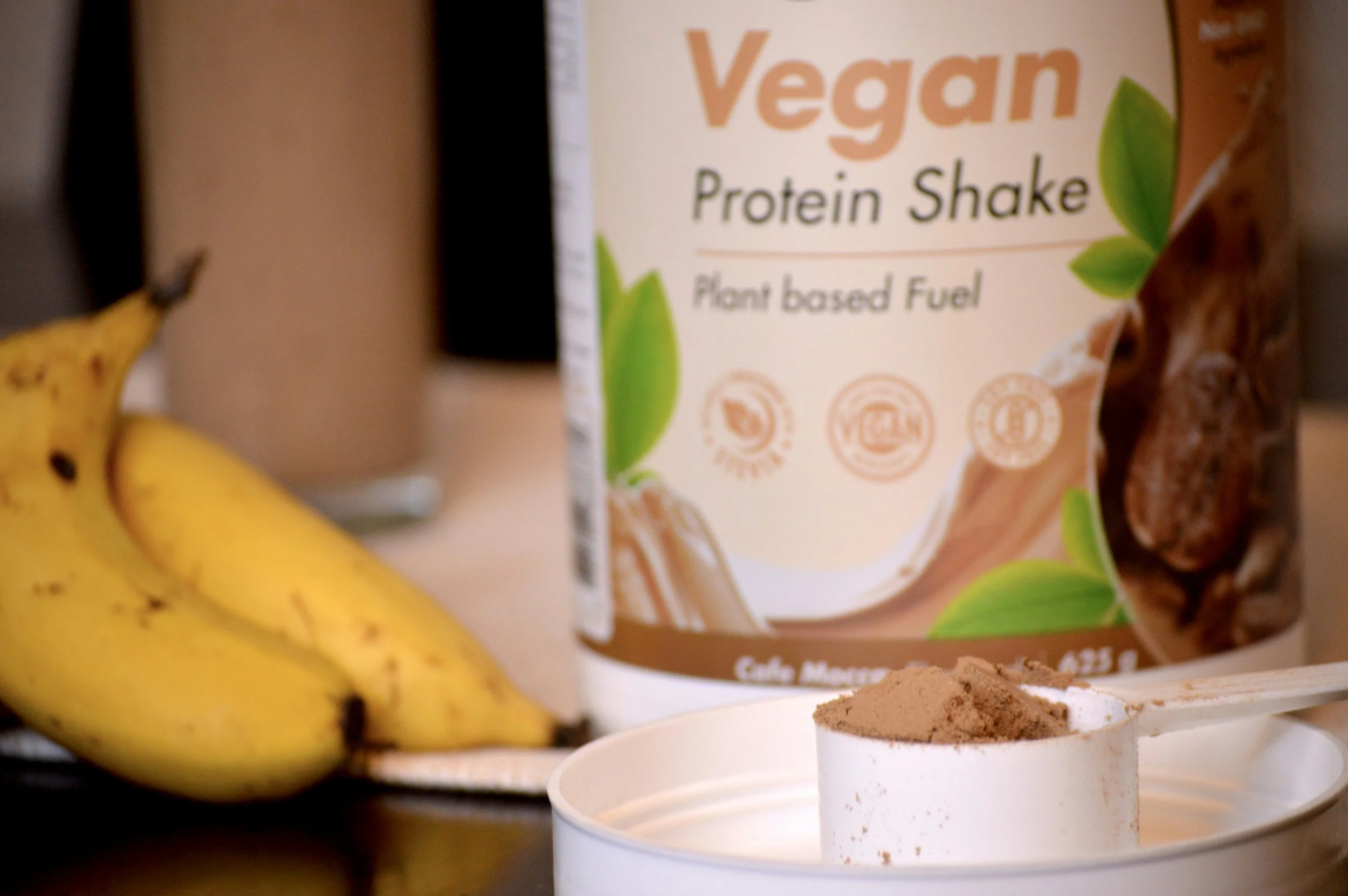
Some vegan protein powders contain only 1 to 1.5 grams of leucine per serving. That is not enough to reach the 2.5-gram mark that research suggests is needed to trigger muscle protein synthesis effectively.

If your protein label doesn’t list leucine content, check the brand’s website or reach out to the company directly. You may need to supplement with isolated leucine powder or choose a blend that brings you closer to that threshold.
Simple Strategies That Work

  • If you are not vegan, choose a high-quality whey isolate after training. Most servings contain around 2.7 grams of leucine.

  • If you are vegan, look for blends that list leucine content and get close to 2.5 grams, or add free-form leucine to your post-workout shake.

  • Do not rely on BCAAs alone. Always aim for a complete protein source after lifting or intense training.

  • For women, be especially strategic about recovery nutrition during the luteal phase, when muscle breakdown is elevated.


The Bottom Line

Leucine is not just another buzzword. It is one of the most important amino acids for recovery and muscle growth.

Whether you eat animal protein, plant-based protein, or a combination of both, what matters most is that you are getting enough leucine to support the work you are putting in at the gym or on the field.

If you want to build muscle, maintain strength as you age, or support your training with purpose, start by paying attention to your post-workout protein. Total intake matters, but leucine matters even more.

Train. Play. Repeat.

Do You Really Need to Be Sore to Make Progress in the Gym?

Written by Evelyn Calado, MKin, CSCS, RKin


There’s a common belief that if you’re not sore after a workout, you didn’t train hard enough. You’ll hear it all the time:

“No pain, no gain.”

But here’s the truth: muscle soreness is not a reliable indicator of progress, and in many cases, it can actually get in the way of consistent, effective training.

Anyone Can Make You Sore—That’s Not the Goal

Let’s be honest: anyone can make you sore.
You don’t need a good coach for that. You just need someone to throw a thousand burpees at you or load you up with a ridiculous amount of volume and novel movements.

But that’s not training—that’s just stimulus for the sake of it.

A smart, well-designed program is about progress, not punishment. And if your trainer’s goal is to leave you crawling out of the gym or unable to sit in a meeting the next day; you might want to reconsider who you're working with.

The goal should never be to make the client sore.

Yes, soreness can happen, especially:

  • In Week 1 of a new training block

  • When exposed to new exercises or higher volume

  • During deload-to-load transitions or push weeks

But soreness is a byproduct, not a training objective.

If I make a high-level athlete so sore they can’t train, move well, or compete, I’ve failed them. I’ve taken away their ability to perform; and that’s a disservice, not a badge of honor.

What Is DOMS—and What Causes It?

DOMS stands for Delayed Onset Muscle Soreness. It typically begins 12 to 48 hours after training, especially when:

  • You’ve done a high volume of work

  • You’re introducing new or unfamiliar exercises

  • You’ve emphasized eccentric movements (slowing down the lowering portion)

DOMS is the result of microtrauma to muscle fibers and connective tissues. This triggers inflammation, increased sensitivity, and a bit of stiffness during the recovery process.

It’s not caused by lactate buildup.
And it’s not always a sign of an effective workout.

Athlete stretching or resting after training session, representing recovery and the myth of soreness being required for progress.

Soreness ≠ Progress

Being sore doesn’t mean you had a better session. And not being sore doesn’t mean the session wasn’t effective.

In fact, experienced trainees often feel less sore over time—even as they get stronger, faster, and more conditioned. Their bodies adapt more efficiently, and recovery becomes more seamless.

What builds muscle and drives performance isn’t soreness—it’s:

  • Mechanical tension (how hard the muscle works)

  • Metabolic stress (accumulation of fatigue within the muscle)

  • Progressive overload (gradually increasing stimulus over time)

You don’t have to feel wrecked to be progressing.
You have to be consistent, intentional, and able to do it again next session.

So How Do You Know You’re Progressing?

Stop measuring your training by soreness. Start tracking metrics that actually reflect adaptation:

  • Are your loads increasing?

  • Are you doing more volume or better quality reps?

  • Are you recovering better between sessions?

  • Is your movement improving?

  • Do you feel more capable, resilient, and consistent?

These are signs that you’re training well—not how wrecked your legs feel after squats.

When Soreness Might Be a Red Flag

Soreness that sticks around for multiple days or disrupts your ability to train again isn’t a sign of effectiveness—it’s a warning sign.

Watch for:

  • Soreness that interferes with performance

  • Postural compensation due to stiffness

  • Constant soreness from session to session

  • A lack of clear progress due to under-recovery

Chronic or extreme soreness usually means something’s off; either in your programming, recovery, or load management.

The Bottom Line

You don’t need to chase soreness. You need to chase consistency, progression, and execution.

Yes, soreness might show up here and there, especially when you introduce something new or push intensity. But if the main goal of your program—or your coach—is to leave you limping out of every session, it’s probably time to look elsewhere.

Train. Play. Repeat.

Want programming that actually respects recovery, performance, and progress? Book a session at Avos Strength and let’s build something that lasts.

Lactic Acid Isn’t the Bad Guy: What’s Really Behind Muscle Burn and Fatigue

Written by Evelyn Calado, MKin, CSCS, RKin


You’ve probably heard it before—“My legs are full of lactic acid,” or “It’s the lactic acid that makes me sore.”
But here’s the truth: lactic acid isn’t to blame for muscle soreness or fatigue—and in fact, it’s not even the enemy. It’s time to clear this up once and for all.

What Actually Happens During Exercise?

When you train—especially at moderate to high intensities—your body breaks down carbohydrates to produce energy. This process is called glycolysis, and it produces two main byproducts:

  • Pyruvate, which can be used to produce energy

  • Hydrogen ions (H⁺), which increase acidity in the muscle

Here’s the key thing to understand:

Hydrogen ions make your muscles feel acidic—not lactate.

As hydrogen ions build up, they lower the pH in the muscle (pH is a scale that measures how acidic or basic something is—lower pH means more acidic). This increased acidity can interfere with how your muscles contract and lead to that familiar burning sensation during hard efforts.

So What Is Lactate?

Lactate (often confused with “lactic acid”) is actually a helpful byproduct, not a waste product. When the rate of glycolysis increases and hydrogen ions start to accumulate, lactate is formed when pyruvate binds with those hydrogen ions.

This is a good thing. Lactate formation actually helps buffer the acidity by mopping up excess hydrogen ions. This slows down the drop in pH and helps you keep going longer.

So instead of being the villain, lactate is your body’s way of protecting itself from fatigue.

Myth-Busting: Lactate ≠ Muscle Soreness

Muscle soreness, especially the kind that shows up 24–48 hours later, is known as DOMS (Delayed Onset Muscle Soreness). It’s caused by microdamage to muscle tissue, inflammation, and the repair process—not by lactate.

The lactate-muscle soreness myth was debunked decades ago. Yet it continues to live on in gym talk, group classes, and even outdated training certifications.

We Produce Lactate All the Time

Contrary to popular belief, lactate isn’t just made during intense training. Your body is constantly producing and clearing lactate—even at rest.

It’s used as:

  • A fuel by the heart, brain, and slow-twitch muscle fibers

  • A precursor to glucose in the liver through the Cori cycle

  • A signaling molecule for adaptation and recovery

Far from being a waste product, lactate is essential to energy production and endurance performance.

Why Lactate Threshold Matters

Your lactate threshold refers to the highest intensity at which your body can produce and clear lactate at the same rate. Once you exceed that threshold, lactate begins to accumulate—but not because it’s causing fatigue. It’s a sign that your body is working hard and relying more on anaerobic metabolism.

What matters is that:

  • Lactate is a proxy for effort, not the cause of failure

  • The better trained you are, the more efficiently you can clear lactate, which allows you to sustain high output for longer

This is why aerobic base training and well-planned intervals are so valuable—they help improve your body’s ability to manage lactate and stay out of deep fatigue.

The Bottom Line

MythRealityLactic acid causes sorenessMuscle soreness comes from tissue damage, not lactateLactate makes you fatigueLactate buffers fatigue and helps you continueLactate is a waste productIt’s a valuable fuel and performance toolHigh lactate = badIt reflects effort—not failure

So next time you feel the burn or hear someone say “it’s the lactic acid,” you’ll know better: Lactate isn’t making you slow down—it’s helping you stay in the game.

Train. Play. Repeat.
Want to learn how to build your aerobic base, improve lactate clearance, and train smarter—not just harder? Book a session at Avos Strength and we’ll break it down.