longevity

How Tongue Position and Jaw Function May Improve Strength, Balance, and Breathing

Part 1 of the Improving Force Production and Movement From Head to Toe Series

Written by Michael Crawley, BSc, BPT, CSCS

Introduction

When people think about improving strength and force production, attention is usually directed toward the obvious areas: the legs, hips, trunk, and shoulders. Rarely does anyone consider the tongue or jaw.

At first glance, this seems reasonable. The tongue is typically associated with speech, swallowing, and airway function rather than athletic performance. However, emerging research suggests that tongue position, tongue strength, and jaw function may influence force production, balance, coordination, and respiratory mechanics.

While strength is often viewed as a product of the arms, legs, and trunk, force is rarely generated by a single muscle or body part. Instead, it is transferred throughout the body as multiple regions work together. Understanding these connections may provide additional opportunities to improve performance, movement quality, and long-term health.

This article is the first in a series examining how different regions of the body contribute to force production and movement quality. We will begin at the top, exploring the tongue and jaw, before working downward through the diaphragm and foot.

Series Breakdown

This series will explore three often-overlooked contributors to force production, movement quality, and long-term function:

  1. The tongue and jaw

  2. The diaphragm and bracing

  3. The foot and pressure distribution

Together, these concepts provide additional tools that may help an individual break through a plateau in a lift, improve their strategies to strength train, or attenuate some of the deficits and systemic problems which develop with age.

The Tongue & Jaw: Pressure and Position

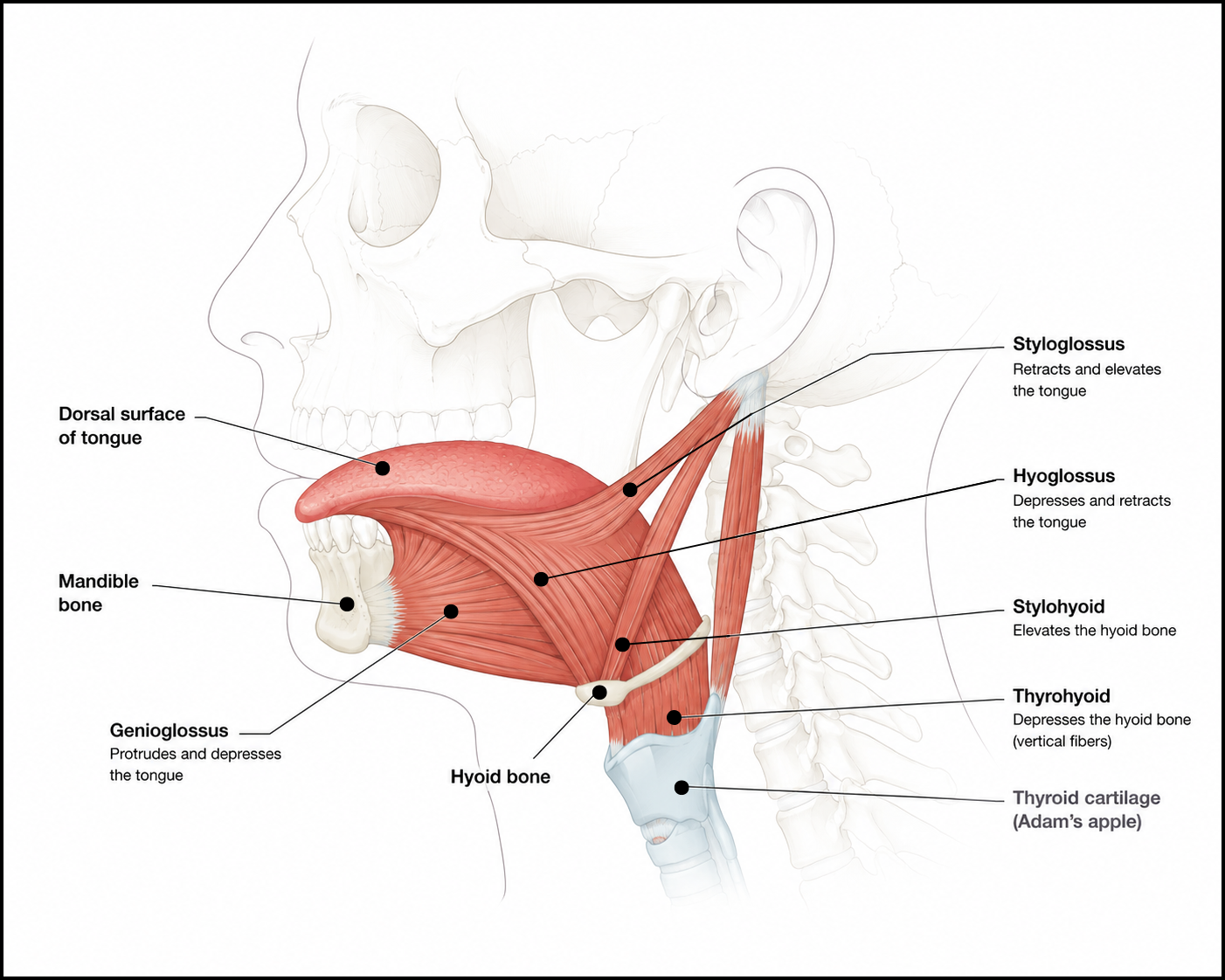
The embryological development and anatomy of the tongue can shed light on how it is a forgotten piece in strength training and human function beyond mastication and speech. The tongue consists of intrinsic and extrinsic muscle connections. This allows an intricate dance where the complex can adapt its activation and position differently during breathing and swallowing (Fregosi and Ludlow 2014).

The tongue has the same neural origins as the hyoid bone and associated musculature involved in head and neck stabilization. The hyoid bone is a floating bone acting as an interface for the origin of the tongue and connector of important neck and jaw muscles.

There is a functional relationship between the tongue and diaphragm, demonstrated through the coordinated activation of specific extrinsic tongue muscles during respiration (Sokoloff 2004). As a result, tongue function can influence how easily air moves through the airway and how efficiently we breathe. This will really be hammered home in Part 2 regarding the diaphragm and bracing.

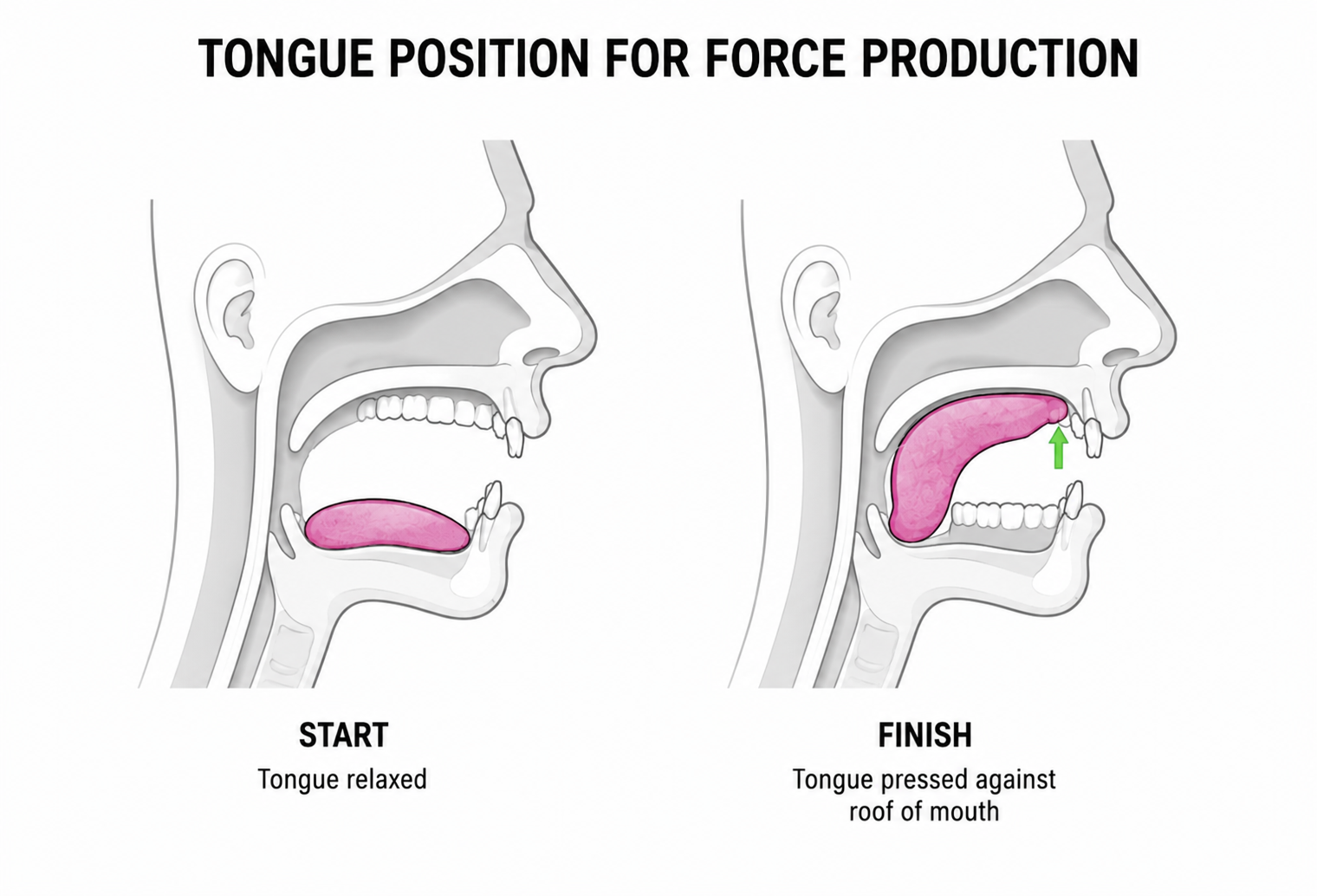
The tongue and jaw do not operate independently. Resting tongue position helps influence both jaw alignment and head posture, with the ideal resting position being the tongue gently placed against the roof of the mouth.

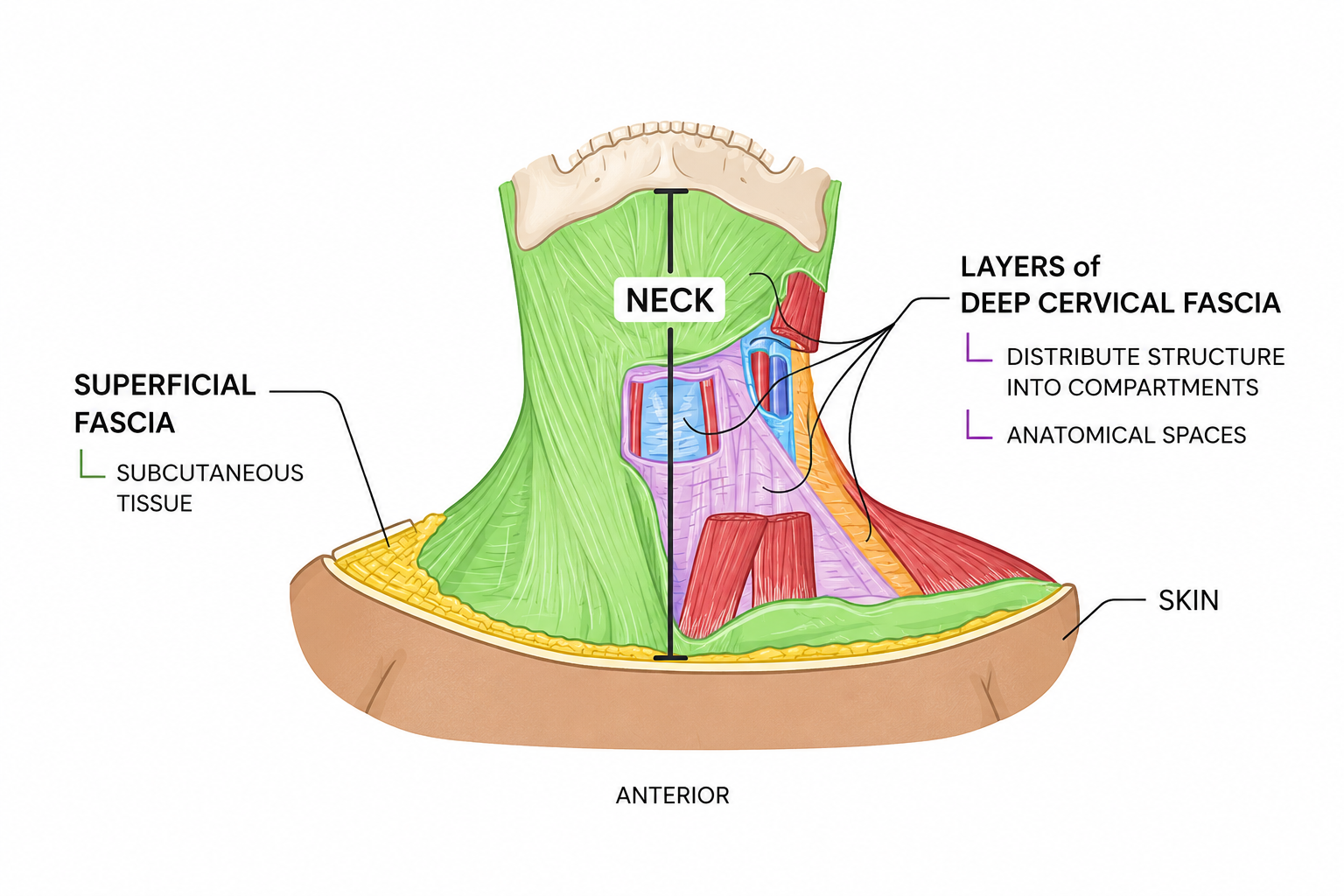
The jaw is also closely connected to the neck and upper body through muscles, nerves, and connective tissues (Silveira et al. 2015). Because of these connections, changes in jaw position can influence how the head, neck, and shoulders work together.

This is important because force is rarely generated by a single muscle or body part. Instead, it is transferred throughout the body as multiple regions work together. The tongue and jaw may seem far removed from exercises such as squats, deadlifts, or carries, but their connections to the neck and upper body suggest they can still influence posture, stability, and force production.

The image below highlights some of the tissues that link the jaw, neck, and shoulder region. Next, we will discuss how tongue function changes over time and why this may be particularly important for the older athlete.

Importance of Tongue Function in the Older Athlete

When most people think about age-related muscle loss, they think of weaker legs, reduced grip strength, or difficulty getting up from a chair. What is often overlooked is that the tongue also loses strength and muscle mass with age.

This decline in tongue function has been associated with several important health concerns, including impaired swallowing, increased risk of aspiration, and poorer balance (Bordoni et al. 2018). In other words, tongue function may influence much more than speech or eating.

For older athletes and gym-goers, this creates an interesting opportunity. Maintaining tongue strength and awareness may be a simple strategy to support both performance and long-term health. While it is unlikely to be the most important piece of the puzzle, it may be one of the easier ones to address. Similar to strength training itself, small improvements maintained over time can have a meaningful impact on long-term health, balance, and independence.

This could be as simple as applying firm tongue pressure to the roof of the mouth during heavier lifts or practicing proper resting tongue position while performing breathing exercises and warm-up activities.


Evidence of Tongue Pressure and Strength Performance

At this point, it is reasonable to ask whether tongue position and tongue pressure actually influence strength and movement, or whether this is simply an interesting anatomical discussion.

While the research in this area is still developing, several studies have demonstrated improvements in force production, balance, and movement performance when tongue position or tongue stimulation is altered.

Some examples include:

  • Saito et al. (2022) demonstrated that the rate of force development (RFD) of tongue pressure was strongly correlated with knee extensor strength and single-leg stand time in adults over 65.

  • di Vico et al. (2013) found that tongue position significantly impacted knee flexor strength test performance. Participants generated approximately 30% greater force when the tongue was pressed against the roof of the mouth compared to a resting position.

  • Wildenberg et al. (2010) found improvements in balance and postural sway following external tongue stimulation in older adults.

Taken together, these findings suggest that tongue function may influence more than just speech, swallowing, and breathing. It may also play a role in force production, balance, and coordination.

This does not mean tongue position should become the primary focus of a training program. Rather, it may represent another small but useful strategy that can be incorporated alongside sound strength training principles.

The diagram below demonstrates the recommended tongue position, with the tongue resting against the roof of the mouth and the tip sitting just behind the upper front teeth. The next question is why these changes might influence performance in the first place.

Why Might the Tongue and Jaw Influence Performance?

At this point, the obvious question is: why would tongue position or jaw activity affect strength, balance, and movement quality in the first place?

The honest answer is that we do not know exactly. While the relationship between tongue position and breathing is well established, the mechanisms behind its apparent influence on force production and coordination are still being investigated.

Several theories have been proposed, including changes in nervous system activation, interactions between cranial nerves involved in coordination, and connective tissue links between the tongue, neck, and chest (Bordoni et al. 2018). Regardless of the exact mechanism, multiple studies have demonstrated improvements in strength, balance, and movement performance when tongue position, tongue pressure, or jaw activity are altered.

Similar findings have been reported with jaw clenching. Research has demonstrated improvements in force production, grip strength, jumping performance, rowing strength, and balance when a jaw clench is incorporated during testing (Allen et al. 2017; Buscà et al. 2016; Alghadir et al. 2015).

However, there is an important trade-off. Unlike tongue position, excessive or habitual jaw clenching can contribute to issues such as teeth grinding (bruxism) and temporomandibular joint (TMJ) irritation. For that reason, I generally place greater emphasis on tongue position and tongue strength than aggressive jaw clenching. The potential benefits appear similar, while the downside risk is lower.

The broader lesson is that force production is not simply a function of the muscles directly involved in a lift. The body operates as an integrated system, and seemingly small factors such as tongue position, breathing strategy, and jaw position may influence how force is generated and transferred throughout the body.

This is one reason why movement assessments should look beyond individual muscles and joints. At Avos Strength, our assessment process examines how multiple systems work together to influence movement quality, performance, and long-term function.

Summary

The tongue and jaw may influence more than speech, swallowing, and chewing. Research suggests they can also affect breathing, balance, coordination, and force production.

While these factors are unlikely to be the primary drivers of performance, they represent simple strategies that may improve movement quality and strength expression when combined with sound training principles.

For older adults, maintaining tongue function may also have benefits beyond the gym, supporting balance, respiratory function, and overall quality of life.

Takeaways

  • Pressing the tongue firmly against the roof of the mouth may help improve force production during strength exercises.

  • Resting the tongue gently against the roof of the mouth can support an open airway and efficient breathing during mobility, warm-up, and recovery work.

  • Jaw clenching may improve strength, jumping performance, and balance, but excessive or habitual clenching can contribute to jaw irritation and teeth grinding.

  • If choosing between the two strategies, tongue position is likely the lower-risk and more practical place to start.

  • These concepts should be viewed as small pieces of the puzzle, not replacements for sound strength training, recovery, and exercise technique.

Next Up

In Part 2, we will move one step lower and examine the diaphragm, breathing, and bracing.

Topics will include:

  • Basic diaphragm anatomy and function

  • The relationship between breathing and trunk stability

  • Bracing strategies for strength training performance

  • Practical applications for both performance and long-term health

References

Alghadir, A. H. et al. 2015. Effect of three different jaw positions on postural stability during standing. Funct Neurol 30(1), pp. 53-57.

Allen, C. et al. 2017. The Effects Of Jaw Clenching And Jaw Alignment Mouthpiece Use On Force Production During Vertical Jump And Isometric Clean Pull. Journal of Strength and Conditioning Research 32, p. 1. doi: 10.1519/JSC.0000000000002172

Bordoni, B. et al. 2018. The Anatomical Relationships of the Tongue with the Body System. Cureus 10. doi: 10.7759/cureus.3695

Buscà, B. et al. 2016. Effects of Jaw Clenching While Wearing a Customized Bite-Aligning Mouthpiece on Strength in Healthy Young Men. The Journal of Strength & Conditioning Research 30(4).

di Vico, R. et al. 2013. The acute effect of the tongue position in the mouth on knee isokinetic test performance: a highly surprising pilot study. Muscles Ligaments Tendons J 3(4), pp. 318-323.

Fregosi, R. F. and Ludlow, C. L. 2014. Activation of upper airway muscles during breathing and swallowing. J Appl Physiol 116(3), pp. 291-301. doi: 10.1152/japplphysiol.00670.2013

Miró, A. et al. 2023. Acute effects of jaw clenching while wearing a customized bite-aligning mouthguard on muscle activity and force production during maximal upper body isometric strength. Journal of Exercise Science & Fitness 21(1), pp. 157-164. doi: https://doi.org/10.1016/j.jesf.2022.12.004

Saito, S. et al. 2022. Relationship between Rate of Force Development of Tongue Pressure and Physical Performance. J Clin Med 11(9). doi: 10.3390/jcm11092347

Silveira, A. et al. 2015. Jaw dysfunction is associated with neck disability and muscle tenderness in subjects with and without chronic temporomandibular disorders. Biomed Res Int 2015, p. 512792. doi: 10.1155/2015/512792

Sokoloff, A. J. 2004. Activity of tongue muscles during respiration: it takes a village? Journal of Applied Physiology 96(2), pp. 438-439. doi: 10.1152/japplphysiol.01079.2003

Wildenberg, J. C. et al. 2010. Sustained cortical and subcortical neuromodulation induced by electrical tongue stimulation. Brain Imaging Behav 4(3-4), pp. 199-211. doi: 10.1007/s11682-010-9099-7

Is Two Days per Week of Strength Training Enough for Longevity?

Written by Evelyn Calado, MKin, CSCS, RKin

If you look at most public health guidelines, the answer seems straightforward. Adults are advised to perform muscle-strengthening activities at least two days per week. This recommendation appears in Canadian, American, and international guidelines and applies to both adults and older adults.

But this raises an important question.

Is two days per week simply the minimum needed to check a health box, or is it actually enough to support long-term health, independence, and longevity?

The short answer is that two days per week can be enough, but only under specific conditions. Frequency alone does not determine whether strength training meaningfully impacts longevity. The quality and intensity of the stimulus matter far more than the number of days on a calendar.

What the Guidelines Actually Mean

Public health recommendations are designed for populations, not individuals. Their goal is to identify the lowest effective dose of activity that meaningfully reduces disease risk at a broad scale.

When guidelines recommend strength training twice per week, they are not suggesting that this is optimal for strength, muscle mass, or performance. They are identifying a threshold below which health risks increase, particularly as we age.

In other words, two days per week is a floor, not a ceiling.

Strength Training and Longevity: What the Research Actually Shows

Research consistently shows that resistance training is associated with lower all-cause mortality, reduced cardiovascular disease risk, and improved long-term health outcomes. From a public health perspective, even relatively small amounts of strength training appear to provide meaningful benefit.

However, it is important to be precise about what these findings actually represent.

Most large-scale longevity studies are designed to identify the minimum effective dose of strength training required to reduce population-level risk. They are not designed to define what is optimal for building strength, preserving muscle mass, or maximizing physical capacity across the lifespan.

In this context, it is true that one to two well-performed strength training sessions per week capture a substantial portion of the longevity benefit observed in epidemiological research. Beyond that point, additional sessions do not appear to reduce mortality risk in a simple, linear fashion.

This does not mean that training more is unnecessary, nor does it suggest that strength beyond a certain point stops being valuable. It simply reflects how longevity is measured in large populations.

For individuals interested in aging well, remaining strong, and protecting themselves against injury, disability, and loss of independence, the goal should not be to meet the minimum dose, but to build and maintain as much usable strength as possible over time.

Longevity vs Capacity: Two Different Goals

It is worth separating two concepts that are often conflated.

Training for longevity focuses on reducing disease risk and maintaining basic function. Training for capacity focuses on building strength, muscle mass, power, and resilience.

While two strength sessions per week may be sufficient to support longevity-related outcomes and can improve strength and muscle mass, they are often not the most effective approach for maximizing those qualities long term, particularly in trained individuals or as we age.

From a coaching perspective, the objective is not to do the least amount of work required to stay alive. The objective is to build a body that remains capable, robust, and adaptable for decades.

That typically requires more than the minimum.

Grip Strength, Brain Health, and Why Strength Is More Than Muscle

One of the most compelling demonstrations of strength’s relationship to long-term health comes from research on grip strength.

A large prospective study using data from nearly 500,000 adults in the UK Biobank examined the association between hand grip strength and dementia incidence. Grip strength, often used as a proxy for overall muscular strength, was found to be strongly and inversely associated with dementia risk.

Individuals in the lowest quartile of grip strength had a 72 percent higher incidence of dementia compared to those in the highest quartile.

This finding is important for two reasons.

First, it reinforces that muscular strength is closely tied to neurological and cognitive health, not just physical capability.

Second, it highlights that simple, measurable indicators of strength can reflect deeper systemic health. This is one reason grip strength is included in assessments such as the Avos Performance Battery. It provides insight into overall robustness, not just hand function.

Strength training, when performed with sufficient intensity, appears to play a meaningful role in preserving mobility, independence, and long-term brain health.

Strength Still Matters Even When Cardio Is “Good Enough”

Another frequently overlooked point is that strength contributes to longevity independently of cardiovascular fitness.

A long-term study following approximately 1,500 men over the age of 40 with hypertension for nearly 18 years examined the relationship between muscular strength, cardiorespiratory fitness, and mortality risk.

The findings were striking.

Even among men who were only in the bottom half of cardiorespiratory fitness, those in the top third for muscular strength had an almost 48 percent lower risk of all-cause mortality compared to those in the lowest strength group.

In other words, being strong mattered, even when aerobic fitness was not exceptional.

The lowest mortality risk was observed in individuals who were both strong and aerobically fit, but strength alone still provided a substantial protective effect. This reinforces the idea that resistance training is not optional if longevity is the goal.

Is Two Days per Week Enough in Practice?

This is where nuance matters.

For many adults, particularly those with limited time, two well-designed strength training sessions per week can meaningfully support long-term health. When performed with sufficient intensity and progression, this approach can maintain and often improve key outcomes such as:

  • Muscular strength

  • Muscle mass (particularly in untrained individuals or those returning to training)

  • Bone health

  • Joint capacity and tissue tolerance

  • Metabolic health

  • Overall function and independence as you age

However, outcomes depend on the goal, training history, and how the sessions are structured.

If an individual’s goal includes maximizing lean muscle mass, strength, power, or creating a larger buffer against age-related decline, training more than twice per week is often useful. This is not because two days “doesn’t work,” but because additional sessions often make it easier to accumulate more high-quality weekly training volume, practice key movement patterns, and progress without excessively long sessions.

Frequency alone does not determine effectiveness. What matters is whether training provides enough mechanical tension, effort, and progression to challenge the tissues that decline most rapidly with age.

Using five-pound dumbbells indefinitely, avoiding effort, or treating strength training as light activity rather than progressive overload is unlikely to produce meaningful adaptation.

Two high-quality sessions can outperform several low-effort ones. But for many people seeking to age strong, three to four sessions per week can be a practical way to accumulate more total weekly work and drive continued progress, especially once the “beginner gains” phase has passed.

Aging Changes the Equation

As we age, muscle protein synthesis becomes less responsive, strength declines faster than endurance, and power loss accelerates. This means that intensity and intent become increasingly important over time.

For older adults, two days per week may still be sufficient, but only if:

  • Exercises are appropriately loaded

  • Movements challenge balance and coordination

  • Strength is trained through meaningful ranges of motion

  • Progression is maintained where possible

Training “often enough” is not the same as training “effectively.”

Strength Training for Longevity: Staying Active, Capable, and Competitive as You Age

Written by Evelyn Calado, MKin, CSCS, RKin


For most people, aging means slowing down, getting injured more often, and gradually stepping away from the sports or activities they once loved.
But it doesn’t have to be that way.

At Avos Strength, one of our core goals is helping people stay active and strong enough to keep doing what they love. Whether that’s playing hockey, hiking, running around with grandkids, or competing in tennis well into their seventies.

Longevity isn't just about living longer. It's about being able to play longer.

Strength Training Is the Foundation

The research is clear: strength training is one of the most powerful tools for healthy aging.

The Canadian Physical Activity Guidelines recommend that adults engage in strength training at least two times per week. Not just walking. Not just stretching. Strength work.

Why?

Because as we age, we naturally lose:
• Muscle mass (sarcopenia)
• Bone density (osteopenia)
• Balance and coordination
• Speed and power

None of that is inevitable if you stay consistent and take action early.

Strength training helps maintain lean mass, reinforce bone density, improve joint integrity, and significantly reduce the risk of falls, fractures, and injuries. It improves your ability to move, lift, rotate, decelerate, and react. These skills matter whether you’re skiing or just stepping down a curb.

Our Clients Are Proof

We work with clients in their sixties, seventies, and beyond who are still playing high-level sports. Hockey. Tennis. Pickleball. Soccer.

They’re not outliers because of genetics. They’re still going because they’ve trained consistently for years. They’ve built capacity and resilience. And now they’re seeing all their peers slow down, drop off, or get injured while they’re still showing up and performing.

That’s not luck. That’s training age, smart coaching, and commitment.

It's Never Too Late to Start

You don’t need to start in your thirties or forties to benefit from strength training.

We’ve seen people start in their sixties and still build muscle, improve balance, regain confidence, and feel better than they have in years.

The science backs this up. You still have the ability to increase strength, coordination, and motor control at any age. What matters is that you start now and do it with support and structure.

The Right Attitude Is Just as Important

Training isn’t just physical. It’s mental. And the attitude you bring into the gym matters just as much as the exercises you do.

We don’t work with clients who say things like:
"I can’t do that."
"I’m too old."
"That’s not for someone like me."

Because the more you say you can’t, the more you won’t.

You still have the ability to wire new movement patterns, build new neural pathways, and develop new skills. Research shows that your brain and body are capable of adapting well into later life. You just have to give them the opportunity.

We will always coach you safely and program with purpose. But you need to be willing to try.

The clients who see long-term success are the ones who stay curious, open, and engaged. They say yes more than they say no. That mindset carries them forward.

This Is a Lifestyle, Not a 3-Month Fix

At Avos Strength, we don’t believe in quick fixes or short-term programs. This isn’t a three-month transformation. This is long-term development.

Strength training is not just about lifting weights. It’s about:
• Building confidence in your body
• Staying resilient against injury
• Learning skills that stay with you
• Creating structure in your week
• Building meaningful relationships with coaches and teammates who support you

Our clients train with us because they want to live well and play hard for as long as possible. And they enjoy the process along the way.

The Bottom Line

Strength training is one of the best investments you can make for your future self.

Whether you're trying to stay in the game, reduce your injury risk, or simply move better and feel stronger, it’s never too late to start. What matters is that you stay consistent, train with intention, and surround yourself with people who care about your long-term success.

Train. Play. Repeat.

If you're ready to build a strong, capable version of yourself, we’re here for that.
Book a session with Avos Strength and let’s get started.