
Written by Evelyn Calado, MKin, CSCS, RKin
If you leave a training session injured, something has gone wrong.
That is not normal. It should not be expected. And it is not part of “training hard.”
I have been in this industry for over a decade, and I have seen far too many situations where clients get hurt in the weight room. Not because of bad luck, but because of poor decisions.
The Gym Should Be One of the Safest Places You Train
Think about it.
The weight room is a controlled environment.
You control the load
You control the movement
You control the pace
You control the rest
Compare that to sport, where there are opponents, unpredictable movements, and variables you cannot control.
In theory, your injury risk in the gym should be extremely low.
That does not mean training is easy. You should still be challenged. You should still push your limits.
But it should be done in a controlled and intentional way.
Where Things Go Wrong
Most training-related injuries are not random. They come from avoidable mistakes.
1. Ego-Based Training
This is one of the biggest issues.
A client walks in, maybe they look strong or athletic, and the session becomes about proving something. The load goes up too quickly, technique breaks down, and fatigue is ignored.
That is how people get hurt.
2. No Plan
This is more common than people think.
Clients come in and have no idea what they are doing that day. The trainer is choosing exercises on the spot with no structure, no progression, and no record of previous sessions.
Without a plan, there is no progression. Without progression, there is no direction. And without direction, you are just accumulating risk.
3. Poor Exercise Sequencing
Fatigue matters.
If someone is pushed to the point of exhaustion through their legs and core, and then asked to perform a heavy compound lift, that is a problem.
That is not “hard training.” That is poor decision-making.
4. Ignoring the Individual
Not every client should move the same way.
Mobility, injury history, movement patterns, and training experience all matter. If those are ignored, you are forcing someone into positions they are not prepared for.
That is where breakdown happens.
Soreness Is Not the Goal
Another misconception is that a good session should leave you unable to move.
If your trainer’s goal is to completely destroy you, that is a red flag.
You should not struggle to sit at your desk
You should not be unable to walk for days
You should not feel worse instead of better
Anyone can make you tired.
It takes skill to build a program that challenges you, progresses you, and still allows you to function.
What Good Training Actually Looks Like
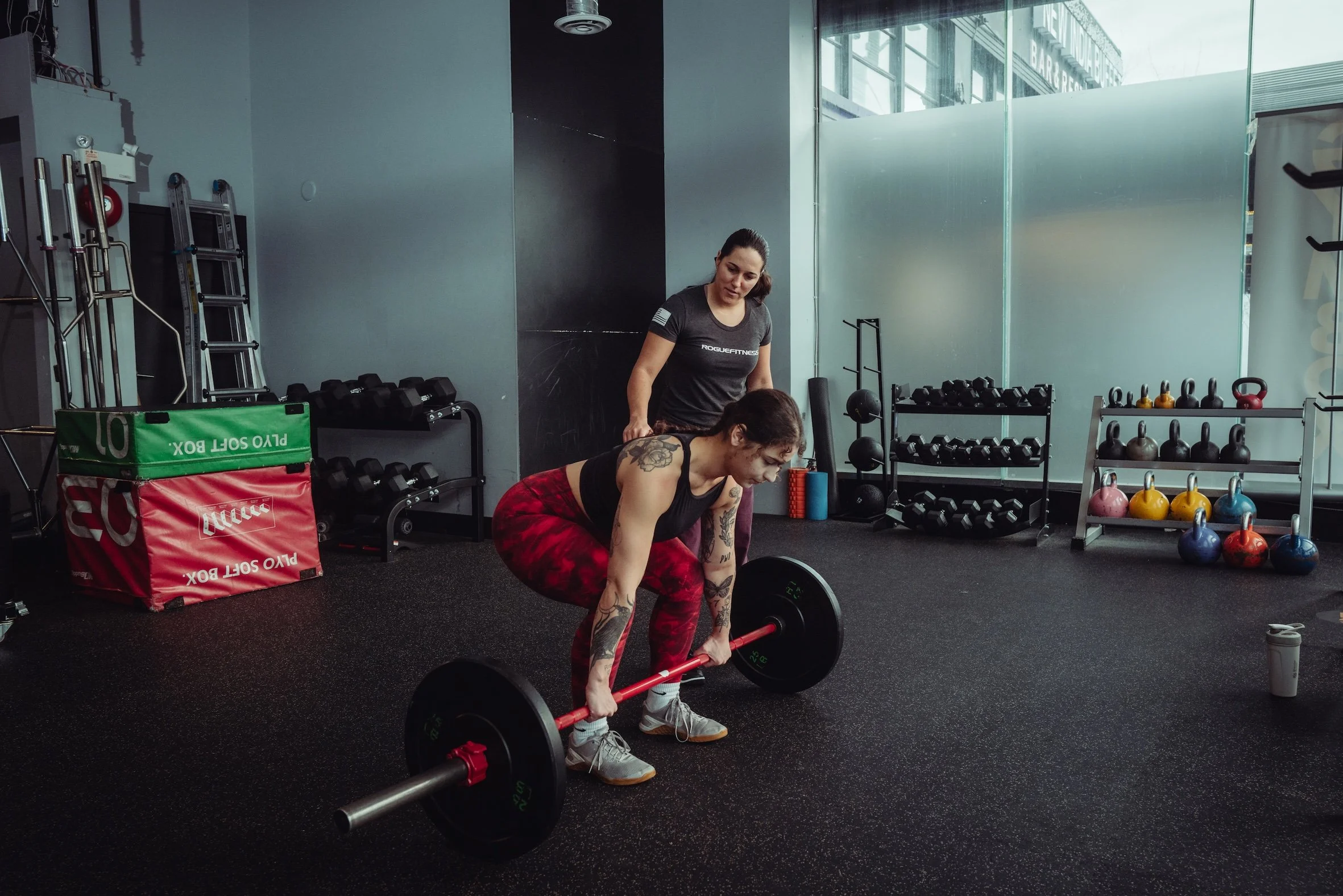
Good training is not random. It is structured.
There is a clear plan
There is progression over time
Your loads and performance are tracked
Exercises are selected for a reason
Intensity is managed, not guessed
You are pushed, but within your capacity.
You improve, without being completely broken down in the process.
Playing the Long Game
At Avos Strength, the focus is simple:
Train. Play. Repeat.
The goal is not to win a single session. The goal is to keep you training consistently, improving over time, and continuing to do the things you enjoy.
That means:
Checking your ego at the door
Building progressively
Respecting your current capacity
Training with intention
The Bottom Line
The gym should not be where you get injured.
Can things happen occasionally? Yes. But injuries should be rare, not expected.
If you have worked with a trainer and felt unsafe, unsupported, or left sessions worse than when you walked in, that is not something you should accept.
You deserve better coaching than that.