
Why Your Training Program Won’t Work Without Sleep, Nutrition, and Recovery
Written by Evelyn Calado, MKin, CSCS, RKin
One of the hardest things for coaches to accept is this:
You can write the most detailed, individualized, evidence-informed training program possible, and it still may not work if the big rocks are not in place.
I’ve seen this over and over again throughout my coaching career.
The athlete is committed.
They show up consistently.
They follow the sets, reps, tempos, and rest periods.
They train hard.
They genuinely want results.
But outside the gym?
They’re sleeping five hours a night.
Their stress is through the roof.
They barely drink water.
Their nutrition is inconsistent.
They rely on caffeine to survive the day and supplements to try to “fix” the problem.
At some point, the body stops being able to recover.
And recovery is where adaptation actually happens.
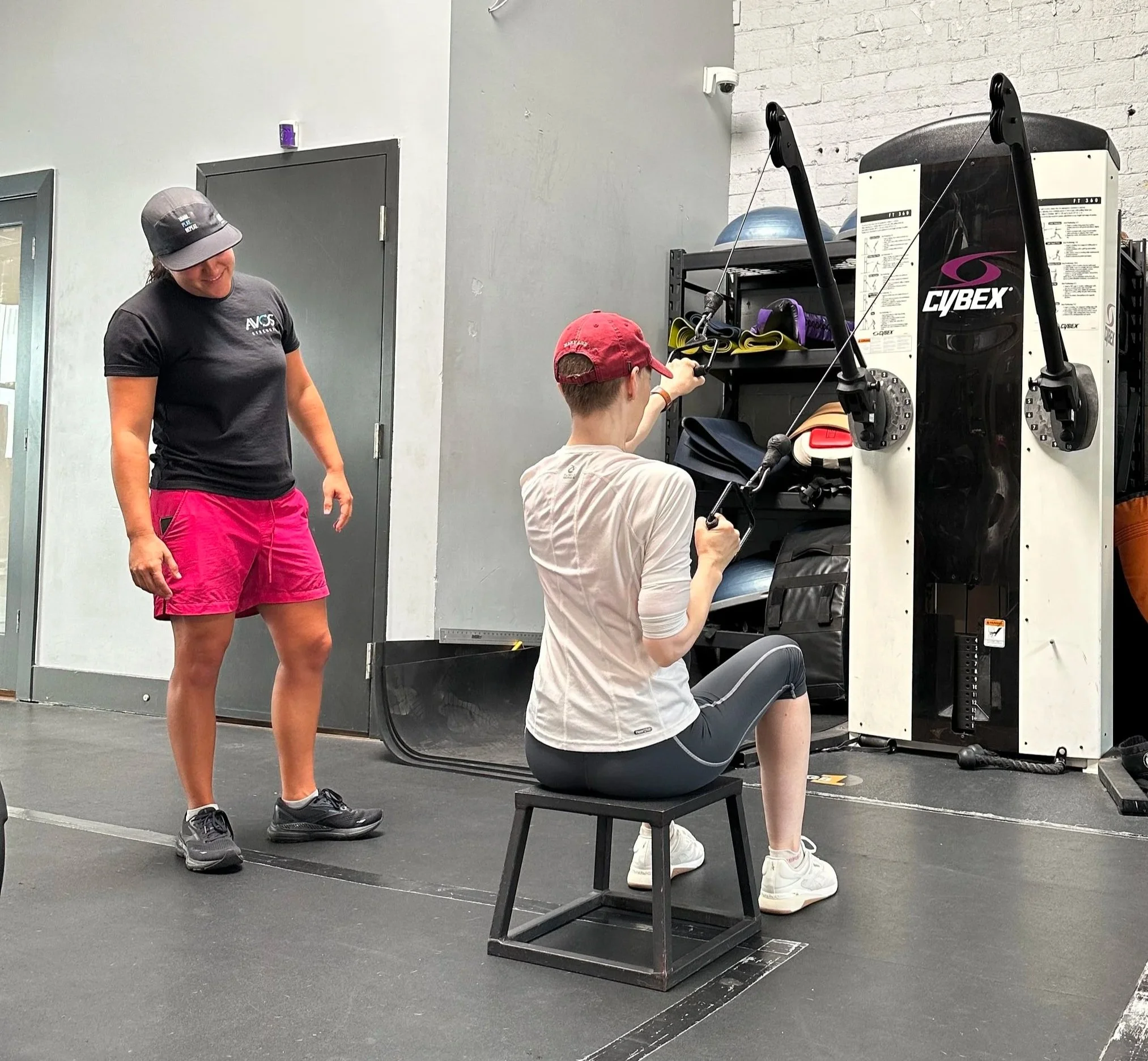
You Don’t Get Better During Training
Training is the stimulus.
Recovery is where the body adapts.
That means if you’re constantly exhausted, under-fueled, dehydrated, stressed, or running on poor sleep, your body has a much harder time repairing tissue, building muscle, improving conditioning, regulating hormones, and recovering from the demands of training.
This is one of the reasons why two people can follow the exact same program and get completely different results.
The program matters.
But the foundation matters more.
This is also why progress in strength, muscle growth, and conditioning often takes longer than people expect. Adaptation requires recovery capacity. How Long Does It Take to See Results from Training
Sleep Is One of the Biggest Performance Enhancers We Have
This is probably the most common issue I see.
People want better energy, better recovery, improved body composition, more muscle mass, lower pain levels, and better athletic performance, but they’re sleeping poorly every single night.
If you constantly wake up throughout the night, struggle with insomnia, or spend most of your day exhausted, your recovery capacity drops significantly.
Sleep impacts:
Recovery from training
Muscle repair and growth
Hormonal regulation
Mood and mental health
Pain sensitivity
Cognitive function
Energy levels
Immune function
You cannot out-train chronic poor sleep.
And no supplement stack is going to replace it.
Recovery Is More Than Just Taking a Rest Day
A lot of people think recovery simply means taking a day off from training.
But recovery is much bigger than that.
Recovery includes:
Sleep quality
Nutrition
Hydration
Stress management
Recovery between training sessions
Nervous system regulation
Overall lifestyle habits
You cannot continuously add more stress to the system without giving the body the resources it needs to recover and adapt.
Sometimes the issue is not the program itself.
Sometimes the body simply has no remaining capacity to tolerate additional stress.
Stress Is Still Stress
This is another major piece people underestimate.
Your body does not separate “life stress” from “training stress.”
Heavy training is a stressor.
Long work hours are a stressor.
Financial pressure is a stressor.
Relationship issues are a stressor.
Anxiety is a stressor.
It all contributes to your total stress load.
One book I often recommend is the Why Zebras Don't Get Ulcers by Robert Sapolsky, which discusses how humans often stay stuck in a chronic fight-or-flight state.
A lot of people are constantly “on.”
Their nervous system never really gets a chance to downshift.
Then they wonder why they feel exhausted, inflamed, sore, unmotivated, or unable to recover.
Nutrition Is Not Optional
You cannot build a high-performing body without giving it the raw materials it needs.
Protein matters.
Micronutrients matter.
Overall calorie intake matters.
Hydration matters.
If most of your diet consists of highly processed foods, takeout, chips, candy, and energy drinks, your recovery, energy levels, body composition, and performance are going to suffer.
That does not mean you need to eat “perfectly.”
But your body still needs adequate nutrients and amino acids to:
Build and maintain muscle
Recover from training
Support connective tissue health
Improve body composition
Regulate energy levels
Support overall health and longevity
Supplements can support a good foundation.
They cannot replace one.
Creatine is great.
Protein powder can be helpful.
Certain supplements absolutely have value.
But supplements cannot compensate for chronic sleep deprivation, poor nutrition, dehydration, and unmanaged stress.
If you want a deeper breakdown on the supplements that actually matter most for recovery and performance, check out The Only Two Supplements Most Athletes Actually Need.
Hydration Is More Important Than People Think
This is another one that gets overlooked constantly.
The number of people I meet who drink one or two glasses of water per day is honestly surprising.
Many people function almost entirely on coffee and caffeine.
Hydration impacts:
Performance
Recovery
Energy
Cognition
Joint comfort
Muscle function
Cardiovascular function
Even mild dehydration can negatively affect how you feel and perform.
Coaches Cannot Do The Work For You
As coaches, we can guide you.
We can educate you.
We can build individualized programs.
We can adjust your training loads.
We can help create structure and accountability.
But we cannot sleep for you.
We cannot manage your stress for you.
We cannot hydrate for you.
We cannot make your nutritional choices for you.
If we see you twice per week in person, that’s two hours out of a 168-hour week.
The other 166 hours matter.
A lot.
This is one of the reasons why our initial assessment process focuses on more than just exercises and sets and reps. Understanding lifestyle, recovery, stress, injury history, and daily habits matters when building an individualized plan. What Actually Happens During an Initial Assessment?
The Big Rocks Come First
People often search for advanced solutions before they’ve mastered the fundamentals.
They want the perfect program.
The perfect supplement stack.
The perfect recovery gadget.
The perfect optimization strategy.
Meanwhile:
They sleep poorly
They are chronically stressed
They barely eat protein
They drink almost no water
They recover inconsistently
The basics are not boring.
The basics are foundational.
And honestly, these “big rocks” are not just important for performance or body composition goals. They are fundamental for living a healthier, more energetic, and more resilient life.
That’s one of the reasons why strength training and recovery habits become increasingly important as we age. Strength Training for Longevity: Staying Active, Capable and Competitive as You Age
Training matters.
Strength matters.
Conditioning matters.
But none of it works as well if the foundation underneath it is unstable.
Get the big rocks in place first.
Everything else works better after that.
At Avos Strength, we focus on individualized coaching that takes into account your training history, recovery capacity, lifestyle, stress levels, and long-term goals. Training is important, but sustainable progress comes from addressing the full picture.
If you’re looking for guidance with strength training, recovery, performance, or long-term health, you can learn more about our coaching and assessment services here.