
Written by Evelyn Calado, MKin, CSCS, RKin
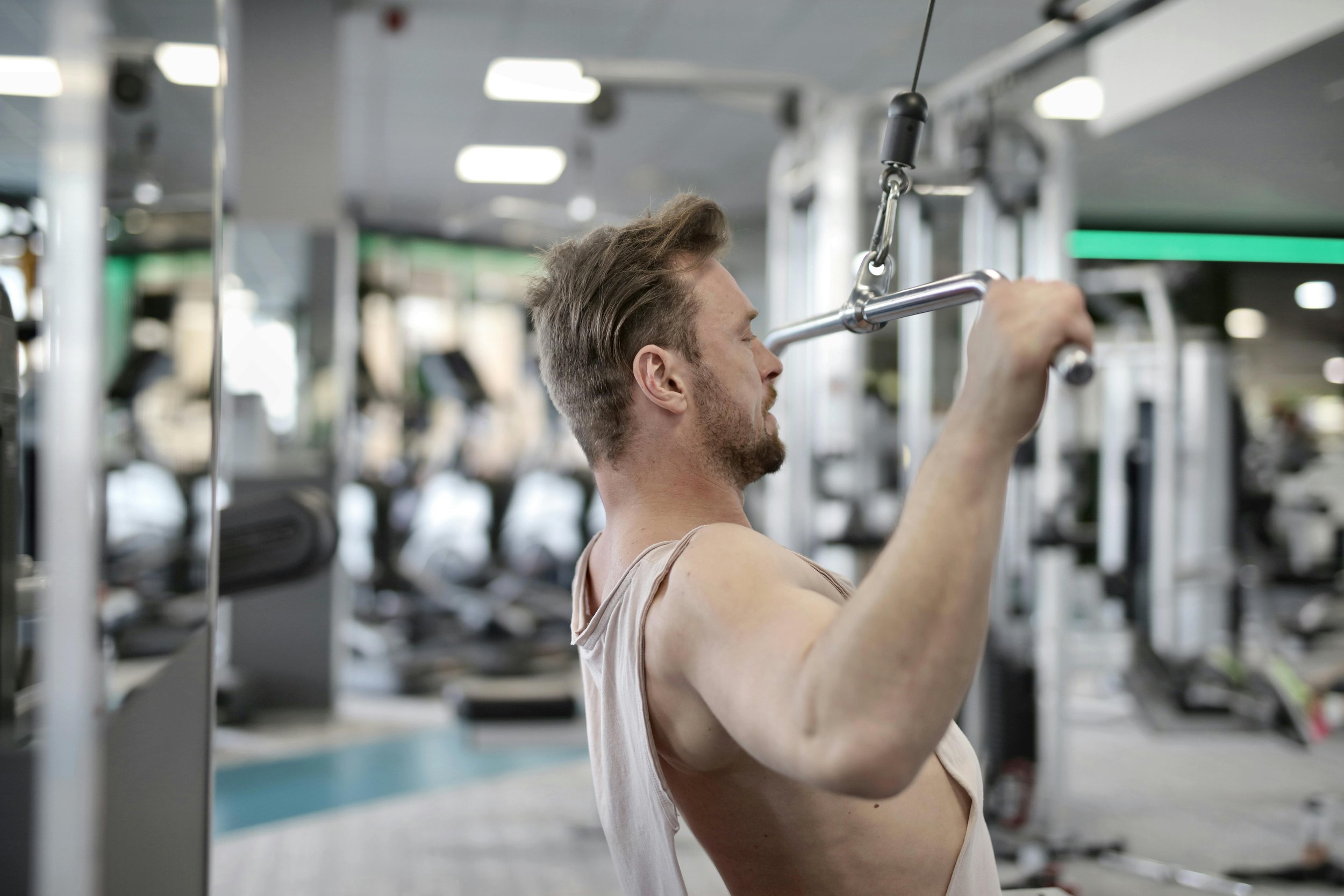
If you look at most public health guidelines, the answer seems straightforward. Adults are advised to perform muscle-strengthening activities at least two days per week. This recommendation appears in Canadian, American, and international guidelines and applies to both adults and older adults.
But this raises an important question.
Is two days per week simply the minimum needed to check a health box, or is it actually enough to support long-term health, independence, and longevity?
The short answer is that two days per week can be enough, but only under specific conditions. Frequency alone does not determine whether strength training meaningfully impacts longevity. The quality and intensity of the stimulus matter far more than the number of days on a calendar.
What the Guidelines Actually Mean
Public health recommendations are designed for populations, not individuals. Their goal is to identify the lowest effective dose of activity that meaningfully reduces disease risk at a broad scale.
When guidelines recommend strength training twice per week, they are not suggesting that this is optimal for strength, muscle mass, or performance. They are identifying a threshold below which health risks increase, particularly as we age.
In other words, two days per week is a floor, not a ceiling.
Strength Training and Longevity: What the Research Actually Shows
Research consistently shows that resistance training is associated with lower all-cause mortality, reduced cardiovascular disease risk, and improved long-term health outcomes. From a public health perspective, even relatively small amounts of strength training appear to provide meaningful benefit.
However, it is important to be precise about what these findings actually represent.
Most large-scale longevity studies are designed to identify the minimum effective dose of strength training required to reduce population-level risk. They are not designed to define what is optimal for building strength, preserving muscle mass, or maximizing physical capacity across the lifespan.
In this context, it is true that one to two well-performed strength training sessions per week capture a substantial portion of the longevity benefit observed in epidemiological research. Beyond that point, additional sessions do not appear to reduce mortality risk in a simple, linear fashion.
This does not mean that training more is unnecessary, nor does it suggest that strength beyond a certain point stops being valuable. It simply reflects how longevity is measured in large populations.
For individuals interested in aging well, remaining strong, and protecting themselves against injury, disability, and loss of independence, the goal should not be to meet the minimum dose, but to build and maintain as much usable strength as possible over time.
Longevity vs Capacity: Two Different Goals
It is worth separating two concepts that are often conflated.
Training for longevity focuses on reducing disease risk and maintaining basic function. Training for capacity focuses on building strength, muscle mass, power, and resilience.
While two strength sessions per week may be sufficient to support longevity-related outcomes and can improve strength and muscle mass, they are often not the most effective approach for maximizing those qualities long term, particularly in trained individuals or as we age.
From a coaching perspective, the objective is not to do the least amount of work required to stay alive. The objective is to build a body that remains capable, robust, and adaptable for decades.
That typically requires more than the minimum.
Grip Strength, Brain Health, and Why Strength Is More Than Muscle
One of the most compelling demonstrations of strength’s relationship to long-term health comes from research on grip strength.
A large prospective study using data from nearly 500,000 adults in the UK Biobank examined the association between hand grip strength and dementia incidence. Grip strength, often used as a proxy for overall muscular strength, was found to be strongly and inversely associated with dementia risk.
Individuals in the lowest quartile of grip strength had a 72 percent higher incidence of dementia compared to those in the highest quartile.
This finding is important for two reasons.
First, it reinforces that muscular strength is closely tied to neurological and cognitive health, not just physical capability.
Second, it highlights that simple, measurable indicators of strength can reflect deeper systemic health. This is one reason grip strength is included in assessments such as the Avos Performance Battery. It provides insight into overall robustness, not just hand function.
Strength training, when performed with sufficient intensity, appears to play a meaningful role in preserving mobility, independence, and long-term brain health.
Strength Still Matters Even When Cardio Is “Good Enough”
Another frequently overlooked point is that strength contributes to longevity independently of cardiovascular fitness.
A long-term study following approximately 1,500 men over the age of 40 with hypertension for nearly 18 years examined the relationship between muscular strength, cardiorespiratory fitness, and mortality risk.
The findings were striking.
Even among men who were only in the bottom half of cardiorespiratory fitness, those in the top third for muscular strength had an almost 48 percent lower risk of all-cause mortality compared to those in the lowest strength group.
In other words, being strong mattered, even when aerobic fitness was not exceptional.
The lowest mortality risk was observed in individuals who were both strong and aerobically fit, but strength alone still provided a substantial protective effect. This reinforces the idea that resistance training is not optional if longevity is the goal.
Is Two Days per Week Enough in Practice?
This is where nuance matters.
For many adults, particularly those with limited time, two well-designed strength training sessions per week can meaningfully support long-term health. When performed with sufficient intensity and progression, this approach can maintain and often improve key outcomes such as:
Muscular strength
Muscle mass (particularly in untrained individuals or those returning to training)
Bone health
Joint capacity and tissue tolerance
Metabolic health
Overall function and independence as you age
However, outcomes depend on the goal, training history, and how the sessions are structured.
If an individual’s goal includes maximizing lean muscle mass, strength, power, or creating a larger buffer against age-related decline, training more than twice per week is often useful. This is not because two days “doesn’t work,” but because additional sessions often make it easier to accumulate more high-quality weekly training volume, practice key movement patterns, and progress without excessively long sessions.
Frequency alone does not determine effectiveness. What matters is whether training provides enough mechanical tension, effort, and progression to challenge the tissues that decline most rapidly with age.
Using five-pound dumbbells indefinitely, avoiding effort, or treating strength training as light activity rather than progressive overload is unlikely to produce meaningful adaptation.
Two high-quality sessions can outperform several low-effort ones. But for many people seeking to age strong, three to four sessions per week can be a practical way to accumulate more total weekly work and drive continued progress, especially once the “beginner gains” phase has passed.
Aging Changes the Equation
As we age, muscle protein synthesis becomes less responsive, strength declines faster than endurance, and power loss accelerates. This means that intensity and intent become increasingly important over time.
For older adults, two days per week may still be sufficient, but only if:
Exercises are appropriately loaded
Movements challenge balance and coordination
Strength is trained through meaningful ranges of motion
Progression is maintained where possible
Training “often enough” is not the same as training “effectively.”