
For decades, salt has been treated as one of nutrition’s greatest villains. People have been told to avoid it, purchase low-sodium products, and assume that consuming less is always better.
In my opinion, this conversation has become far too simplistic.
Salt is not merely something we sprinkle on food. Sodium is an essential electrolyte required for life. It helps regulate fluid balance, maintain blood volume, transmit nerve impulses, and support muscle contraction.
Even in hospitals, saline solutions containing salt and water are used in potentially life-saving situations. That does not mean more salt is always better, but it does demonstrate just how important sodium and water are to normal human physiology.
Hydration is not simply about drinking as much plain water as possible. Water matters, but so do the minerals that help the body use and regulate it.
Water Is Essential, but Electrolytes Matter Too
Plain water hydrates you. However, water is only one part of the body’s fluid-balance system.
Electrolytes are electrically charged minerals that help regulate fluid movement, nerve signalling, muscle contraction, and normal cellular function.
Sodium is the main electrolyte in the fluid outside our cells. Potassium is found primarily inside our cells. Magnesium, calcium, and chloride also contribute to normal nerve, muscle, and cellular function.
Most people obtain the electrolytes they need through food. However, electrolyte needs may increase when someone loses a significant amount of fluid through:
Prolonged or intense exercise
Heavy sweating
Hot weather
Vomiting or diarrhea
Certain illnesses or medications
In these situations, plain water may not replace everything that has been lost. Replacing sodium alongside fluid can help restore fluid balance and support water retention.
The goal is not to consume as much sodium as possible. The goal is to consume an appropriate amount for your body, activity level, diet, environment, and health.
Salt and Athletic Performance
Salt becomes especially relevant during prolonged activity, heavy sweating, and exercise in hot conditions.
Sodium is lost through sweat, but the amount varies considerably from person to person. Some athletes lose relatively little sodium, while others lose enough to leave visible salt marks on their clothing or skin.
Alongside adequate fluid and nutrition, sodium can help:
Replace sodium lost through sweat
Support fluid retention
Maintain blood volume
Support nerve signalling
Support normal muscle function
Reduce the risk of excessively diluting blood sodium with large amounts of plain water
This does not mean every workout requires an electrolyte drink.
Someone completing a short training session in a climate-controlled gym may not need anything beyond water and a balanced diet. Someone exercising for several hours in the heat may have very different needs.
Body size, climate, exercise intensity, duration, acclimatization, diet, genetics, sweat rate, and sweat-sodium concentration all influence how much sodium someone may require.
The goal is not maximum sodium intake. The goal is to replace an appropriate amount of what has been lost.
Do Not Overdo Electrolyte Products
Electrolytes have become one of the biggest trends in wellness and sports nutrition. Powders, tablets, drops, packets, and premixed beverages are now everywhere.
Some of these products can be useful. Others are unnecessary for the situation in which they are being consumed.
Electrolyte drinks should not automatically replace all the plain water someone drinks throughout the day. Products vary considerably in their sodium, potassium, magnesium, sugar, and total mineral content.
Someone using several electrolyte products while also eating a high-sodium diet may consume much more than they realize.
Both underhydration and overhydration can be dangerous. Drinking excessive amounts of plain water can dilute blood sodium. Consuming too many highly concentrated electrolyte products can create a different kind of imbalance.
More is not always better.
Use electrolyte products intentionally. Consider:
How long and intensely you are exercising
The temperature and humidity
How heavily you sweat
Your regular diet
The concentration of the product
Your medical history
Whether you are already using other electrolyte products
Hydration is about balance, not consuming the maximum possible amount of water or electrolytes.
What About Everyday Hydration?
You do not need to be an endurance athlete for hydration to matter.
While you sleep, you normally go several hours without drinking. During that time, your body continues losing water through breathing, perspiration, and urine production.
That does not mean everyone wakes up clinically dehydrated. However, it is normal to wake with some fluid to replace, especially if you did not drink enough the previous day.
Drinking water after waking is a simple way to begin replacing that fluid.
I personally add a small pinch of quality salt to my morning water. For an otherwise healthy person without a medical reason to restrict sodium, I see this as a simple optional morning practice.
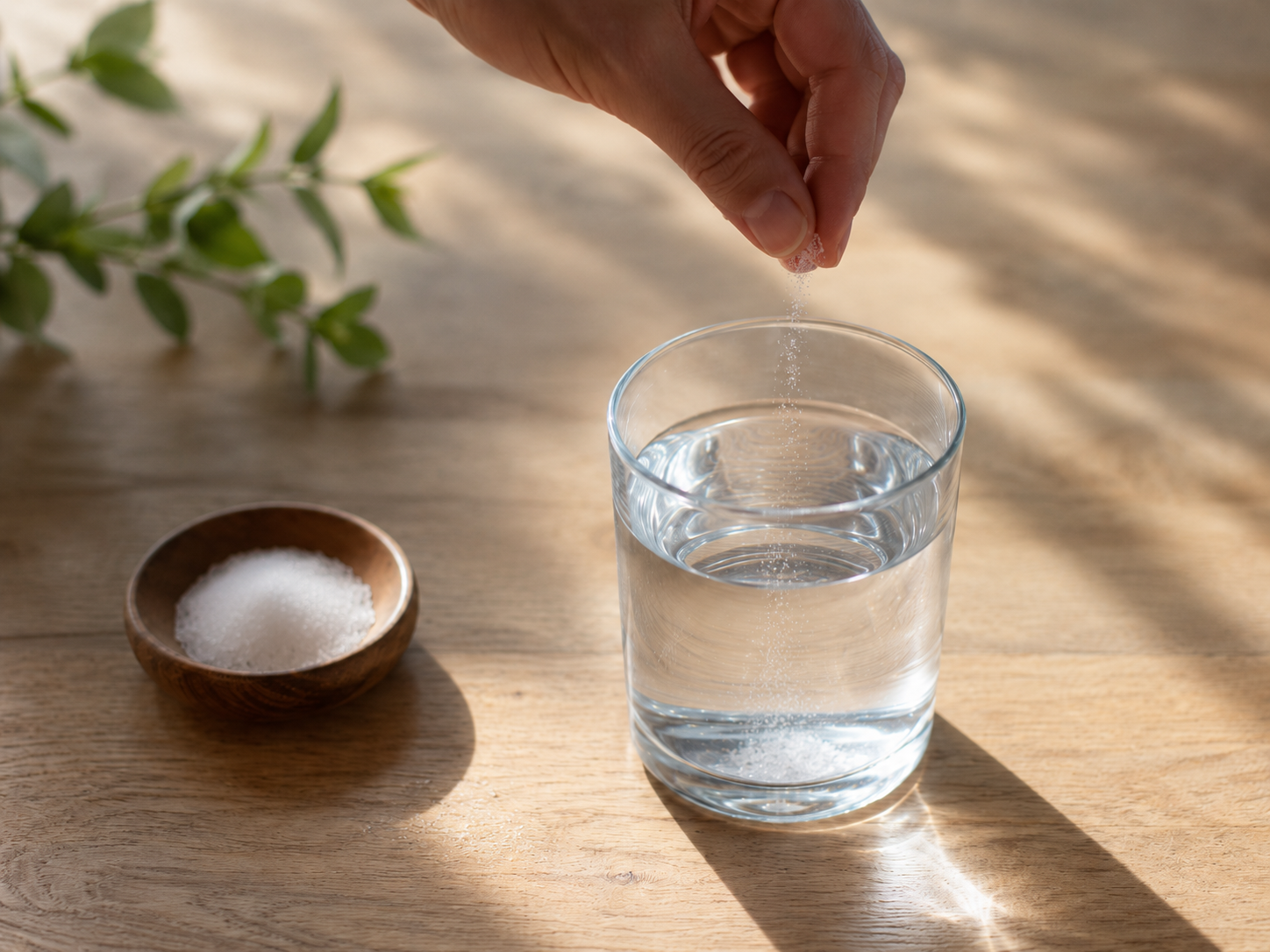
Does everyone require salted water when they wake up? No. Plain water still hydrates, and many people obtain plenty of sodium through food.
However, a modest pinch of salt in a full glass of water provides a small amount of sodium alongside the water you are already drinking.
Could Salt Water Help with Headaches, Low Energy, Brain Fog, or Cramps?
Headaches, low energy, brain fog, difficulty focusing, and muscle cramps can have many different causes.
These may include:
Insufficient sleep
Inadequate food intake
Stress
Illness
Medication effects
Dehydration
Electrolyte imbalances
Muscular fatigue
Changes in caffeine intake
Salt is not a cure for every symptom.
However, inadequate fluid or electrolyte intake can sometimes contribute to how a person feels. When fluid intake has been low, drinking water with a small amount of salt may be a simple option to try.
When I develop a headache or realize I have not consumed much fluid during the day, the first thing I often try is a glass of water with some salt. I personally find that it helps me.
That is my personal experience, not a promise that it will work for everyone.
For a generally healthy person without hypertension, kidney disease, heart disease, or another reason to restrict sodium, a modest amount of salt in water may be worth trying when fluid or electrolyte intake may have been inadequate.
It should not replace identifying the underlying cause. Symptoms that are severe, persistent, unusual, or recurring should be discussed with a qualified medical practitioner.
Muscle Cramps Are More Complicated Than They Seem
Muscle cramps are often blamed entirely on dehydration or sodium loss, but the reality is more complex.
Fatigue, training load, conditioning, heat, neuromuscular factors, and individual fluid and electrolyte losses may all contribute.
Sodium is not the only electrolyte involved in normal muscle function. Magnesium also plays an important role in muscle contraction, relaxation, nerve signalling, and energy production. In some cases, inadequate sodium, magnesium, fluid, or overall nutrition may contribute to cramping, but cramps should not automatically be assumed to result from a single deficiency.
For some people, replacing sodium or magnesium may help when their intake has been inadequate. For others, the primary issue may be fatigue, training load, conditioning, or another underlying factor.
This is another reason why there is no universal hydration or cramp-management strategy.
Context matters.
Are Natural and Himalayan Salts Better?
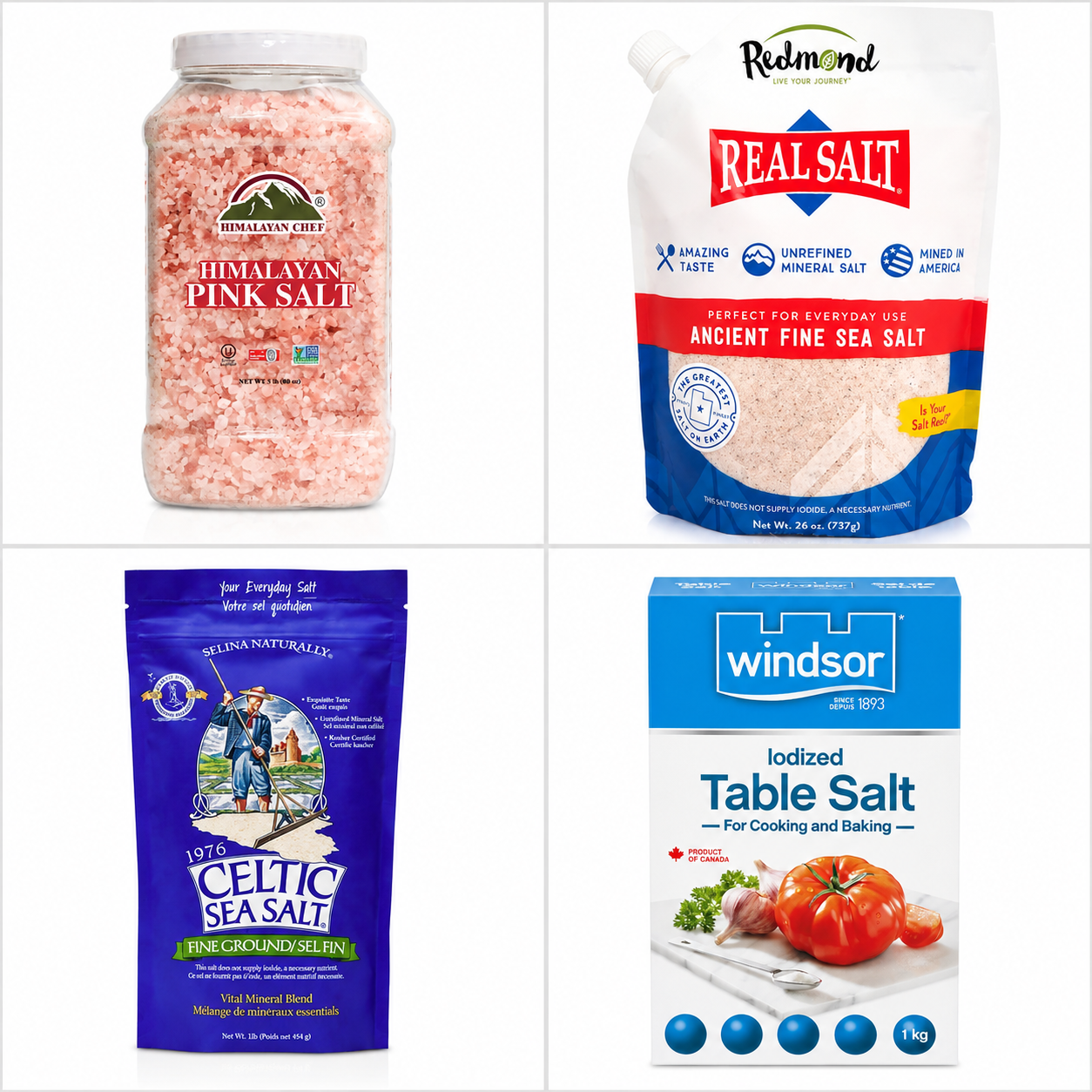
I personally choose minimally processed, naturally sourced salts. I commonly use Redmond Real Salt, although this article is not sponsored by or affiliated with the company. I have also purchased salt directly from mines in Peru.
I value knowing where my salt comes from, and I prefer the flavour and texture of natural salt.
Natural salts may contain trace amounts of minerals such as iron, magnesium, calcium, and potassium. However, these minerals are usually present in amounts too small to make salt a major source of daily nutrition.
Choose a salt you enjoy from a reputable source, but obtain most of your essential minerals through nutritious foods.
It is also important to understand that pink salt does not automatically mean genuine Himalayan salt.
Colour alone does not verify:
Where the salt came from
How it was processed
Whether it is pure
Whether it is high quality
Most commercial Himalayan pink salt comes from ancient salt deposits in Pakistan’s Salt Range, particularly around the Khewra region.
The term Himalayan is partly geographical and partly marketing. It does not mean the salt was collected directly from Himalayan mountain peaks.
Read the packaging and look for transparent sourcing rather than relying only on colour or branding.
What About Iodized Table Salt?
Iodized salt is table salt with added iodine. Iodine is required for producing thyroid hormones and supporting normal thyroid function.
However, iodized salt is not the only source of iodine.
Iodine can also be obtained from foods such as:
Fish and shellfish
Dairy products
Eggs
Seaweed
Foods prepared with iodized salt
People who obtain sufficient iodine through their diet may not need to rely on iodized salt. However, natural, sea, kosher, and Himalayan salts do not necessarily provide meaningful iodine unless the product has specifically been iodized.
Anyone who exclusively uses non-iodized salt should be aware of where their iodine is coming from.
More iodine is not automatically better. Both inadequate and excessive iodine intake can be problematic, particularly for people with certain thyroid conditions.
Salt, Sugar, and Processed Food
In my opinion, salt has received a disproportionate amount of blame compared with sugar.
That does not mean that everyone should consume unlimited amounts of salt or that all sugar must be completely avoided. My point is that salt is often treated as the greater nutritional threat, when I believe added sugar deserves far more scrutiny.
It is also important to consider where most dietary sodium and sugar are coming from. Many people are not consuming most of their sodium through a small pinch of quality salt added to a home-cooked meal.
They are consuming it through:
Packaged snacks
Fast food
Processed meats
Sauces
Frozen meals
Restaurant food
Those foods may also contain high amounts of added sugar, refined carbohydrates, low-quality fats, and very little fibre or nutritional variety.
The quality of the overall diet matters.
I do not believe natural salt should be treated as the enemy while the effects of excessive added sugar and a heavily processed diet are ignored.
At the same time, calling a salt natural does not mean unlimited consumption is harmless. Natural salt still contains sodium.
The amount, source, individual, activity level, health status, and overall dietary pattern all matter.
The Bottom Line
Salt is not simply a flavour enhancer, nor is it a substance that should automatically be feared.
Sodium is an essential electrolyte involved in:
Fluid balance
Blood-volume regulation
Nerve transmission
Muscle contraction
Normal cellular function
Exercise and heat-related hydration
Plain water hydrates, and most people do not require electrolyte drinks throughout the entire day.
However, there are circumstances in which water alone may not replace all the fluid and sodium someone has lost.
I personally begin my morning with water containing a small pinch of quality salt. I also often try water with salt when I develop a headache or realize I have not consumed much fluid that day. This is a routine that works well for me.
You may find that plain water works perfectly well for you. You may also find that a small amount of salt or an appropriately formulated electrolyte drink is helpful under certain circumstances.
The key is to stop thinking in extremes.
Salt is not a miracle cure, but it is also not inherently the enemy. It is an essential nutrient whose effects depend on the amount consumed, the person consuming it, their diet, activity, fluid losses, and overall health.
Medical Disclaimer
This article is intended for general educational purposes only and does not constitute medical advice, diagnosis, or treatment.
Sodium and fluid requirements vary between individuals. People with hypertension, kidney disease, heart disease, fluid-retention disorders, endocrine conditions, or other medical concerns, as well as those taking medications that affect blood pressure or fluid and electrolyte balance, should consult their physician or another qualified healthcare practitioner before deliberately increasing salt or electrolyte intake.
Seek medical assessment for severe, recurring, persistent, or unexplained symptoms.