
Written by Evelyn Calado, MKin, CSCS, RKin
If you’ve ever hesitated to start training because you didn’t know what to expect from that first session, you’re not alone. At Avos Strength, we treat the initial assessment as one of the most important parts of the entire training process. Not because it’s a test, or something you can pass or fail, but because it lays the foundation for everything we do moving forward. It’s how we get to know you, your goals, your movement, and how we can best support you.
Here’s what actually happens during an initial assessment with us.
It’s a 55 Minute, One-on-One Session
Most initial assessments are done in person. We also offer virtual options for remote clients. Whether we’re working with you at the gym or through a screen, the goal is the same: get a clear picture of where you’re at so we can build something that’s right for you.
It Starts With a Conversation
Before we even get moving, we sit down together and go through your intake form. And yes, it’s detailed. We ask for it to be completed at least 24 hours in advance because we actually review it before the session.
We go over:
Your injury history and relevant medical conditions
Sports background, hobbies, and training experience
Your goals, both short-term and long-term
Any current pain, discomfort, or limitations
Your preferred training setup (in-person, hybrid, remote)
This isn’t just a checklist. It’s a conversation. We want to hear your story, understand what brings you in, and talk about how we can help. That also includes discussing which coach might be the best fit, based on your needs and our availability.
Movement Screen and Table Assessment
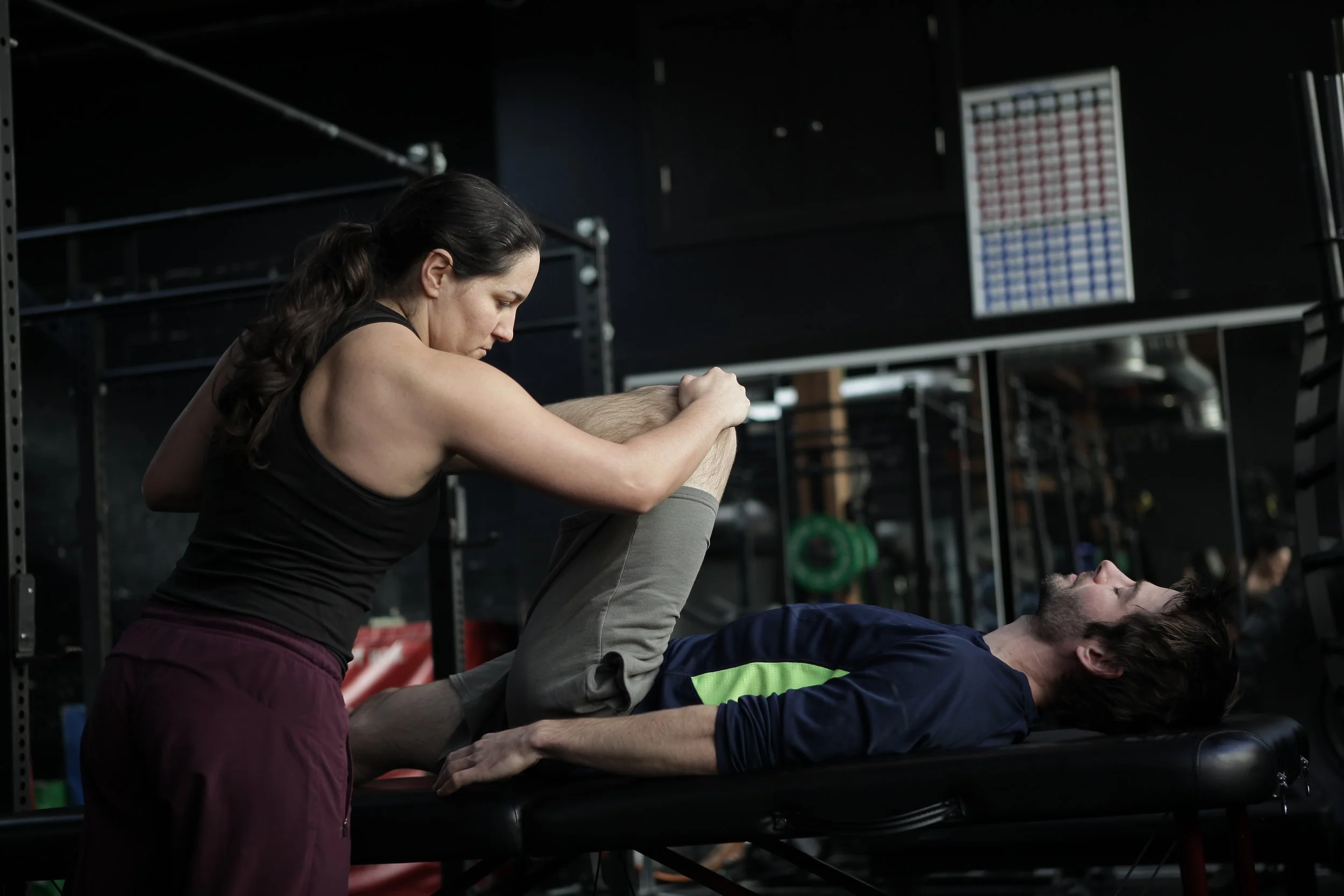
After the consult, we begin assessing movement.
We typically look at:
Posture and gait
Basic functional movements (like squats, toe touches, and rotation)
Joint mobility and range of motion on the table
This gives us an idea of how you move in space, where you may feel limited, and what patterns we should be aware of when designing your program. For remote assessments, this part is adapted as best we can based on your space and setup.
This Is Not the Avos Performance Battery
Our initial assessment is different from the Avos Performance Battery, which is a full 90 minute performance testing session that includes a written report. This assessment is about gathering foundational information, not performance metrics. It’s the first building block in your training process, not a test.
What Happens With the Remaining Time?
Depending on how the session flows, we may use the last 10 to 20 minutes to go through some light drills, address pain points, or suggest a few exercises to get you started.
Sometimes we’ll do a bit of strength or movement testing, just enough to give us some useful data without overwhelming you on day one.
Why We Do It This Way
Your initial assessment helps us:
Build rapport and trust
Understand how you move
Identify restrictions or red flags
Gather everything we need to design a personalized program
Without this step, we’d be guessing. And that’s not how we operate. Your coach takes the time before, during, and after this session to make sure we’re starting from the right place.
How You Should Feel After
You should walk away feeling heard. You should feel supported. Ideally, you feel excited, not nervous, to start training and build something that’s going to serve you long term.
Training is a skill. It’s a habit. It’s a way of taking care of your body so you can keep doing the things you love, whether that’s playing sports, being active with your family, or just moving better every day.
Common Misconceptions We Hear
“I feel like I’m being judged.”
You’re not. There are no wrong answers in this process. If your hips move a certain way, or your shoulder is limited, that’s all information we use to help you.
“I don’t think I’m fit enough to be assessed yet.”
That’s exactly why we do assessments. You don’t need to be fit. This is about meeting you where you are and giving us a starting point to work from.
“What if I fail?”
You can’t fail. This isn’t a test. It’s a snapshot of where you’re at today.
A Structured, Individualized Approach
Everything we collect goes into your client file, not a generic template. Your program is built from the ground up based on your movement, your goals, your limitations, and your training setup.
Every Avos coach follows this system. Our junior coaches go through a structured mentorship before ever leading assessments on their own, and we continue to support them with feedback and review to maintain high standards.
There are no shortcuts. And that’s the point.
The first session isn't about being perfect. It's about getting started the right way; with a coach who sees you, listens to you, and builds something with you.
If you're ready to take the next step, explore our training options to find the approach that best fits your goals.