
If you train, you probably have a sense of whether things are going well. You feel stronger. You recover faster. The weights seem lighter and your workouts feel easier.
But how do you know? Feelings are useful, however they can also be unreliable. A bad night’s sleep can make a great training block feel flat, and a good week can make a stalled one feel like progress.
A lot of people train for years without ever being tested. Many work with a personal trainer who has never measured anything beyond the weight on the bar. That is not a criticism of trainers. It is just a gap worth knowing about.
Why Guessing Falls Short
Most progress tracking is informal: the numbers in a training log, how a workout felt, what the mirror says. Those are all fine, but they only tell you how you did on the exercises you already train. They also say little about power, conditioning or mobility.
They do not tell you how you compare to where you were six months ago on the same standardized test. They also do not tell you which physical qualities are strong and which are lagging.
That second point matters. Someone can have a solid squat and poor power. Someone else can be strong and fit but limited by mobility. Without testing, those gaps stay invisible, and the training plan keeps working on whatever you already do well.
What Objective Testing Tells You
Performance testing measures physical qualities in a standardized way, so the results mean the same thing every time you repeat them. That gives you three things.
A baseline. You know where you are today, not where you think you are.
A way to find what is holding you back. Strength, power, conditioning and mobility all contribute to how you move and perform. Testing shows which one needs the most attention.
A way to measure change. When you retest, you can see whether your training is working, and by how much.
Why Strength and Power Are Worth Measuring
This is not only for athletes. Research suggests that how strong you are says something about your long-term health.
A large meta-analysis of nearly 1.9 million adults found that higher muscular strength was associated with a lower risk of death from any cause (García-Hermoso et al., 2018). This kind of research shows an association, not cause and effect, but it supports the idea that strength is worth tracking.
Power, which is how quickly you can produce force, is another quality worth watching. A review of the research reported that muscle power declines earlier and more steeply with age than strength does, and that low power was linked to a higher risk of mobility problems in older adults than low strength in one cohort (Reid & Fielding, 2012). If you only measure strength, you may miss that decline.
The Avos Performance Battery
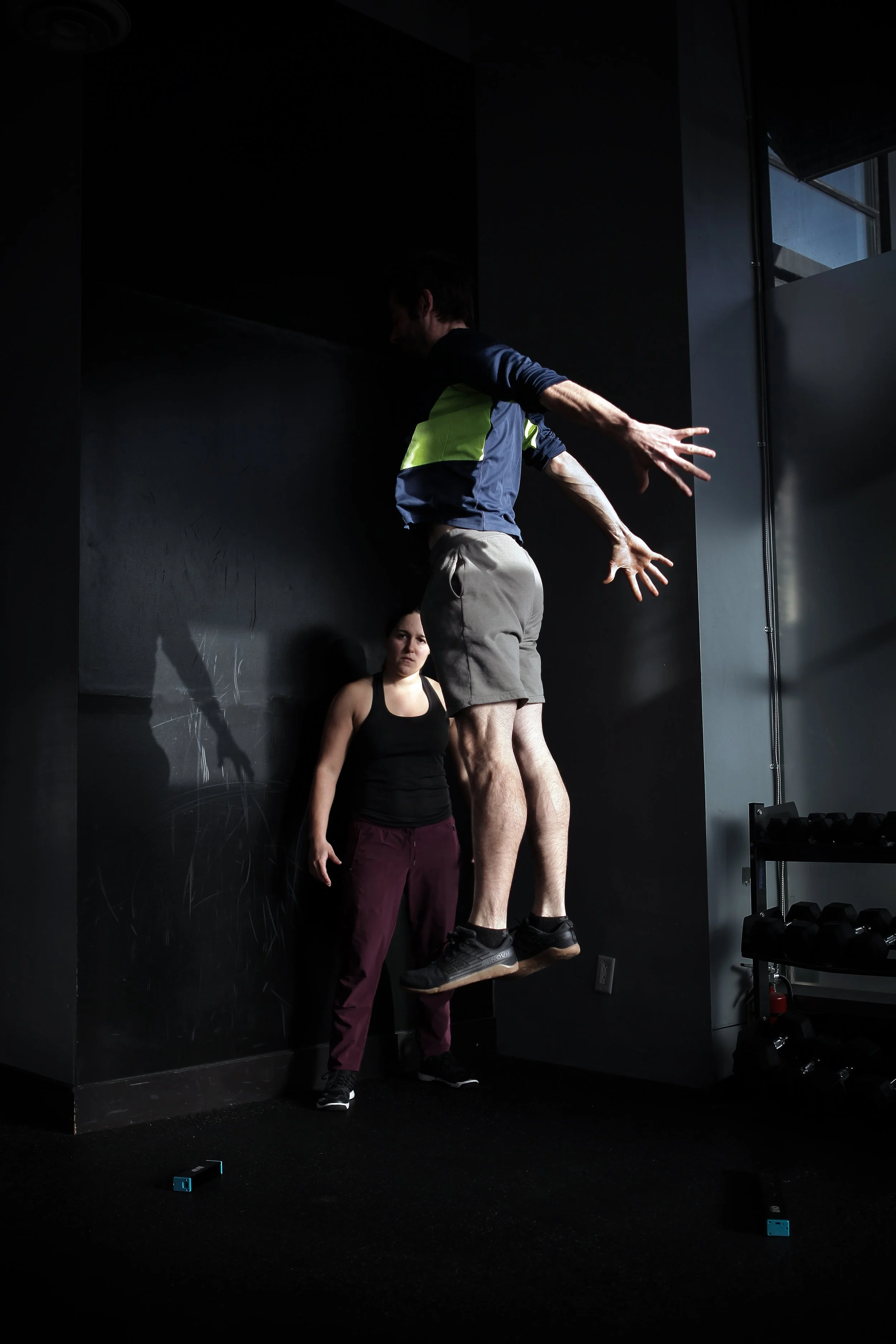
The Avos Performance Battery (APB) is our 90-minute testing session in Vancouver. It measures strength, power, endurance, conditioning and mobility using standardized, validated protocols, and it is run by certified Avos Strength coaches.
After testing, you receive personalized feedback. We go over your strengths, where you have room to improve, and what to do about it. You leave with benchmarks you can track over time.
It is not a casual fitness screen, and it is not only for competitive athletes. People who have trained for years, people who are newer to lifting, and people who have never been formally tested can all get something from it.
How Often Should You Retest?
For most people, retesting every 6 to 12 months shows clear progress without testing too often. If you are preparing for a competition or a specific goal, we can retest more frequently.
Testing also pairs well with consistent strength training. Our post on whether two days of strength training is enough is a good companion if you are deciding how often to train.
A Gift That Is Easy to Give
If you know someone who trains, whether they lift, run, play a sport or are just getting started, an APB assessment makes a useful gift. It gives them something concrete to work with, not another piece of gear. You can purchase it for someone else directly through our APB page.
Key Takeaways
Training logs and how a workout felt show effort, but not necessarily progress.
Standardized testing gives you a baseline, shows what is limiting you, and measures change over time.
Stronger adults tend to live longer in large observational studies, and power may decline earlier than strength with age.
The APB measures strength, power, endurance, conditioning and mobility in about 90 minutes, with personalized feedback.
Retesting every 6 to 12 months works for most people.
Ready to See Where You Stand?
Learn more about the Avos Performance Battery or book your assessment.
References
García-Hermoso, A., Cavero-Redondo, I., Ramírez-Vélez, R., Ruiz, J. R., Ortega, F. B., Lee, D.-C., & Martínez-Vizcaíno, V. (2018). Muscular strength as a predictor of all-cause mortality in an apparently healthy population: A systematic review and meta-analysis of data from approximately 2 million men and women. Archives of Physical Medicine and Rehabilitation, 99(10), 2100-2113. https://doi.org/10.1016/j.apmr.2018.01.008
Reid, K. F., & Fielding, R. A. (2012). Skeletal muscle power: A critical determinant of physical functioning in older adults. Exercise and Sport Sciences Reviews, 40(1), 4-12. https://doi.org/10.1097/JES.0b013e31823b5f13