Unveiling the Difference: Certified Strength and Conditioning Specialists vs. Personal Trainers

Are you seeking to embark on a fitness journey or enhance your athletic performance in Vancouver, BC? If so, you've probably come across two professionals who can help you achieve your goals: Certified Strength and Conditioning Specialists (CSCS) and Personal Trainers. While both play essential roles in fitness and wellness, there are significant differences between the two that can greatly impact your success and safety. In this blog post, we'll explore these distinctions and why choosing a CSCS, especially in a fitness-forward city like Vancouver, can be a game-changer for your fitness journey.


The Role of a Personal Trainer:

Personal trainers are undoubtedly valuable in helping individuals pursue their fitness aspirations. Many personal trainers are passionate about health and fitness, and they often hold basic certifications, typically requiring only a few days or weeks of education and practical training. They can assist clients with general fitness, weight loss, and basic exercise routines, making them suitable for people at various fitness levels.


The Expertise of a Certified Strength and Conditioning Specialist (CSCS):

On the other hand, Certified Strength and Conditioning Specialists are a different breed. CSCS professionals, like Evelyn, have undergone rigorous formal education, typically earning at least a bachelor's degree in exercise science, kinesiology, or a related field. Moreover, they must pass a challenging examination by the National Strength and Conditioning Association (NSCA). This in-depth preparation equips CSCS professionals with a deep understanding of anatomy, physiology, biomechanics, and exercise prescription. They specialize in improving athletic performance, injury prevention, and rehabilitation.


Why Choose a CSCS in Vancouver, BC:

1. Advanced Expertise: Vancouver is known for its active lifestyle, from hiking the Grouse Grind to enjoying the local beaches. CSCS professionals understand the demands of various sports and outdoor activities and can tailor programs to maximize your performance and minimize your risk of injury.

2. Injury Prevention: Vancouverites love to stay active, but with that comes an increased risk of injuries. CSCS professionals are well-versed in injury prevention strategies, ensuring that you can enjoy your favorite activities without unnecessary setbacks.

3. Personalized Training: CSCS professionals, with their extensive knowledge, can design highly personalized training programs that address your unique goals and limitations, helping you achieve results efficiently and safely.

4. Accountability and Long-term Success: Vancouver's fitness scene is competitive, but with a CSCS, you'll have a dedicated professional who's committed to your long-term success, ensuring that you stay motivated and continue progressing.


Conclusion:

While personal trainers have their place in the fitness industry, the depth of knowledge and expertise provided by a Certified Strength and Conditioning Specialist sets them apart, especially in a fitness-conscious city like Vancouver, BC. As a registered kinesiologist with over a decade of experience, Evelyn understands the importance of comprehensive education and specialized training. By choosing a CSCS for your fitness journey in Vancouver, you're investing in your health, performance, and overall well-being. Don't settle for one-day certifications when you can have the guidance and support of a highly qualified CSCS to help you achieve your fitness goals and enjoy a thriving life in this beautiful city.
Unleash Your Inner Athlete: Elevate Your Performance with Vancouver's Expert Strength and Conditioning Company

Welcome to our thriving strength and conditioning community in Vancouver, British Columbia! Whether you're a budding athlete, fitness enthusiast, or someone determined to achieve your peak physical potential, we're excited to be part of your fitness journey. With over a decade of experience in the industry, we take pride in offering a nurturing and inclusive environment where everyone can thrive. Our expertise is not just backed by formal education but also enriched by years of shadowing other high-level coaches in the industry, ensuring that you receive top-notch guidance and support. In this blog post, we'll explore the key aspects of our training approach, dedicated to unlocking your true athletic potential and celebrating your unique fitness achievements. Let's dive in!

Welcome to the pinnacle of strength and conditioning in Vancouver, British Columbia! Whether you are a budding athlete, fitness enthusiast, or someone determined to reach peak physical abilities, you've arrived at the perfect destination. Our cutting-edge strength and conditioning company is dedicated to helping you unleash your true athletic potential and achieve remarkable success. In this blog post, we will delve into the key aspects of our training approach, ensuring you discover the best in the industry and embark on an extraordinary fitness journey.


1. Personalized Strength Training Programs:

At the core of our success lies the commitment to offering tailored strength training programs. Our team of expert coaches conducts comprehensive assessments to understand your unique strengths, weaknesses, and aspirations. This data-driven approach empowers us to design a customized program that maximizes your potential for steady and sustainable progress.

2. Injury Prevention and Rehabilitation:

Safety and injury prevention are paramount concerns for fitness enthusiasts in Vancouver. Our highly qualified coaches prioritize your well-being during training and provide essential guidance to help you overcome any existing injuries. By incorporating targeted exercises and techniques into your program, we ensure you can train with confidence and focus on achieving your goals.

3. Sport-Specific Conditioning:

For athletes seeking a competitive edge, sport-specific conditioning plays a crucial role. Our Vancouver-based strength and conditioning company recognizes the importance of tailoring training to meet the unique demands of your sport. Whether you're a hockey player, soccer star, basketball enthusiast, or any other athlete, our specialized programs will elevate your performance, enhance agility, and refine the skills needed to excel in your chosen field.

4. Nutrition and Diet Guidance:

At our strength and conditioning company, we wholeheartedly believe that nutrition is a vital cornerstone of overall health and longevity. We are dedicated to providing you with guidance in this area, empowering you to make informed choices that fuel your workouts, aid in recovery, and optimize your athletic performance. By prioritizing nutrition, we aim to help you achieve lasting success on your fitness journey, both in the gym and in your daily life. We believe that proper nutrition is the foundation of optimal performance, to fuel your workouts, aid in recovery, and achieve peak athletic performance.


5. Community and Support:

Finally, our strength and conditioning company places a strong emphasis on community and support. We take pride in creating a nurturing and motivating environment where individuals of all fitness levels come together to inspire and uplift one another. Our community-based approach fosters a positive space where you can grow, push your limits, and achieve greatness together.


As a dedicated member of Vancouver's vibrant strength and conditioning community, our primary goal is to support you on your fitness journey, regardless of your background or experience level. With more than a decade of industry expertise, we bring a wealth of knowledge that goes beyond mere certifications. Our commitment to continuous learning and hands-on experience, shadowing other high-level coaches, empowers us to provide you with the best possible guidance and personalized training programs. Join us today and experience a welcoming and inclusive environment where you can unleash your athletic potential and achieve remarkable results. Together, we'll redefine what's possible for your fitness goals and celebrate every milestone you conquer along the way!

Training for Your Heart - Zone 2 Cardio Program

Before diving into the 8-week Zone 2 cardio program, let's briefly explore the different types of ventricular hypertrophy that can occur with strength training and cardiovascular training.

Ventricular hypertrophy is the enlargement and thickening of the heart muscle, specifically the left ventricle, in response to increased workload or stress. It is a natural adaptation of the heart to meet the demands placed upon it during different forms of exercise. However, the specific type of hypertrophy can vary based on the type of training.

https://www.researchgate.net/figure/Anatomy-of-the-heart-A-Cross-section-of-the-heart-wall-showing-the-various-layers-of_fig4_322636742

Strength Training Hypertrophy:

When engaging in regular strength training exercises, such as weightlifting, the heart responds by experiencing concentric hypertrophy. This type of hypertrophy involves an increase in the thickness of the left ventricular wall without a significant change in chamber size. Concentric hypertrophy is characterized by a reduced chamber volume and an increase in muscle mass, allowing the heart to generate more forceful contractions. This adaptation is beneficial for handling the increased resistance encountered during strength training exercises.


Cardiovascular Training Hypertrophy:

On the other hand, cardiovascular training, particularly endurance exercises like running, swimming, or cycling, typically leads to eccentric hypertrophy of the left ventricle. Eccentric hypertrophy involves an increase in the chamber size of the left ventricle while maintaining relatively normal wall thickness. This adaptation allows the heart to fill with a larger volume of blood during each contraction, leading to increased stroke volume and improved cardiovascular efficiency. Eccentric hypertrophy is commonly associated with aerobic endurance training and is considered a favourable adaptation for cardiovascular health.

It's important to note that both types of hypertrophy are normal and beneficial adaptations to the respective training stimulus. However, it's crucial to engage in a well-rounded training program that incorporates both strength training and cardiovascular training to ensure overall cardiovascular health and fitness.

8-week Zone 2 Cardio Program

 Zone 2 cardio training is focused on improving aerobic endurance and increasing the efficiency of your cardiovascular system. It involves training at a moderate intensity level where you can maintain a conversation without feeling too breathless. 

Below is a basic progression for an 8-week, 2-day-per-week, Zone 2 cardio program:

Weeks 1-2:

Day 1: 30 minutes of continuous aerobic exercise at Zone 2 intensity (e.g., brisk walking or incline treadmill walking, jogging, cycling, swimming).

Day 2: 30 minutes of cross-training (e.g., elliptical, rowing, stair climber) at Zone 2 intensity.

Weeks 3-4:

Day 1: 35 minutes of continuous aerobic exercise at Zone 2 intensity.

Day 2: 35 minutes of cross-training at Zone 2 intensity.

Weeks 5-6:

Day 1: 40 minutes of continuous aerobic exercise at Zone 2 intensity.

Day 2: 40 minutes of cross-training at Zone 2 intensity.

Weeks 7-8:

Day 1: 45 minutes of continuous aerobic exercise at Zone 2 intensity.

Day 2: 45 minutes of cross-training at Zone 2 intensity.

Additional Guidelines:

  • Warm up for 5-10 minutes with light aerobic activity before each session.

  • Include a cool-down period of 5-10 minutes of light activity at the end of each session.

  • Focus on maintaining a consistent pace and effort level throughout each session.

  • Monitor your heart rate during exercise to ensure you're in the appropriate Zone 2 range (around 60-70% of your maximum heart rate).

  • Listen to your body and adjust the intensity or duration if necessary, but try to challenge yourself progressively over the 8-week period.

*Remember to consult with your healthcare provider before starting any new exercise program, especially if you have any underlying health conditions or concerns.

Protein for Lean Muscle Mass and Strength

Are you eating enough protein?

Most people, in particular athletes and active individuals do not consume enough protein.

Please note, that everyone is individual and I am providing information based on current research.  For specific recommendations based on your own needs, please consult a registered dietician (RD).

(And in my opinion if you are a vegan/vegetarian athlete I would highly recommend working with an RD to make sure you are consuming enough.)


How much protein should active adults/athletes consume?

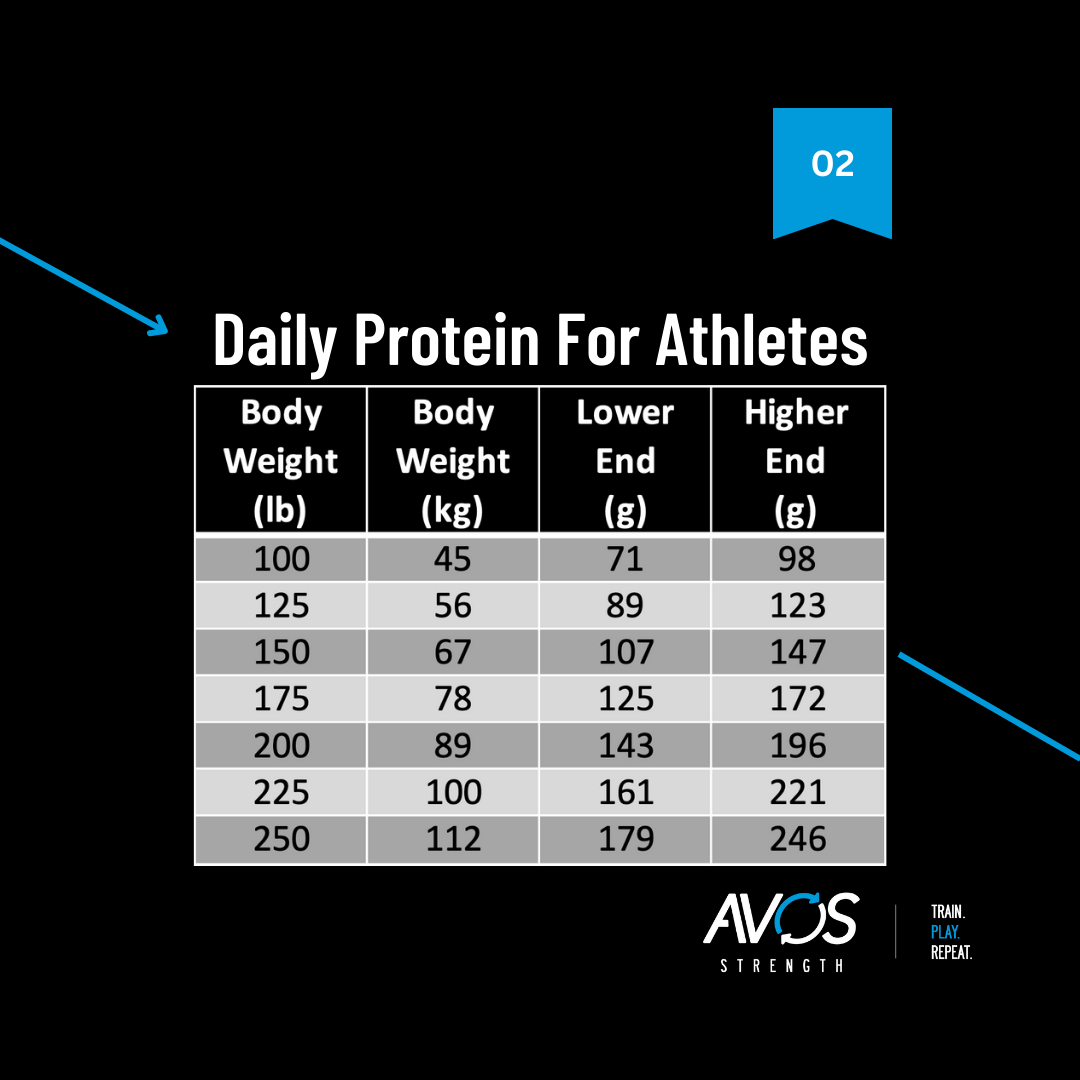
Active adults/athletes should consume 1.6 -2.2 grams/Kg/day spread across 4 or more meals/feedings.  This can be more or less depending on what your needs are.

Daily Protein Consumption for Athletes Based on Body Weight


How much protein should you eat per meal?

For maximal stimulation of muscle protein synthesis (MPS), individuals should aim for:

0.4–0.6 g/kg/meal of quality protein (found in meat, eggs, and dairy).

0.24 to 0.40 grams/kg/meal for most young adults

0.4 to 0.6 grams/kg/meal for older adults*


*Older adults need more protein due to muscle atrophy/sarcopenia - which is the progressive loss of muscle mass and strength. As you age it becomes harder to build muscle mass so you need to consume more protein to stimulate MPS.  (Ideally the additional protein should be paired with resistance training.)


 Can you eat too much protein?

It was previously thought that consuming an excess amount of protein would be wasted and excreted through your urine. However, that is from previous research 30+ years ago that believed that the increased amounts of nitrogen in urine was thought to be from excess protein consumption, in which case the protein was being wasted. This has since been refuted and the increased amounts of nitrogen actually represent an increase of the breakdown of your damaged or oxidized protein (which is a good thing - out with the old and in with the new!). Essentially, what is happening is that when you eat more protein, your body can replace more of its damaged or oxidized proteins, so that your protein synthesis (building) and breakdown are both increased.

 Therefore there is no downside to eating more protein (other than pushing you over your caloric goal if you are trying to be in a deficit). So have at her and let’s all eat some more protein!!

 References:

Morton RW, Murphy KT, McKellar SR, Schoenfeld BJ, Henselmans M, Helms E, Aragon AA, Devries MC, Banfield L, Krieger JW, Phillips SMA systematic review, meta-analysis and meta-regression of the effect of protein supplementation on resistance training-induced gains in muscle mass and strength in healthy adultsBr J Sports Med.(2018 Mar)

Moore DR, Churchward-Venne TA, Witard O, Breen L, Burd NA, Tipton KD, Phillips SMProtein ingestion to stimulate myofibrillar protein synthesis requires greater relative protein intakes in healthy older versus younger menJ Gerontol A Biol Sci Med Sci.(2015 Jan)

Morton RW, McGlory C, Phillips SMNutritional interventions to augment resistance training-induced skeletal muscle hypertrophyFront Physiol.(2015 Sep 3)

Schoenfeld BJ, Aragon AAHow much protein can the body use in a single meal for muscle-building? Implications for daily protein distributionJ Int Soc Sports Nutr.(2018 Feb 27)

10 Step Approach For When You Get Injured

Often people think that coaches are invincible/super human… but we aren't. You can do everything right: have a solid warmup, good technique etc but sometimes things happen!

Note that this is not medical advice - this is what I find works best for me.


  1. Stop what you're doing

  2. Don't be the hero and assume you can do another set. Trust me, it never goes well.

  3. Book an appointment with your therapist of choice as soon as you can get in.

    1. Everyone has someone, or some type of modality that works best for them.

    2. But remember that these are always temporary solutions.

  4. Assess your current movement abilities and the area of restriction with low level mobility drills.

    1. The first thing that I usually do would be a joint range of motion assessment - something like a cat cow/spinal rotation to see what positions I'm restricted in.

  5. Usually attempting to foam roll or release the area does not work when it's too acute and flared up.

  6. I find the most beneficial thing to do is to actually walk. Make sure that you walk with a good arm swing to allow rotation through the spine.

  7. I will also do some positional breathing drills to drive expansion to the compressed areas.

  8. Try to stay active -When you stop moving is generally when it starts to get worse.

  9. Once it's less acute and/or you've gotten in to see a therapist, I will do some mobility and movement work.

  10. I will gradually progress the intensity and start to add exercises that don't cause pain, increasing the load over time.

    1. Note this may take 1-2+ days or weeks depending on your situation


Be patient and keep moving. There is always something that you can do in the gym. I'm also a big fan of heat: hot baths, hot tub, sauna..


Do what works for you - and hopefully some of these pointers will help you!

Amateur Boxing Off-Season Nutrition and Supplement Recommendations

Note that this is not medical advice, the information being shared here is from my research and information that I gained during my sport performance nutrition class. I highly recommend that you consult a Registered Dietician (RD) to assist you with your nutritional and supplemental needs that are required for your sport. As a retired athlete, looking back on my athletic career, my biggest regret was not working with an RD, especially because I was competing in a weight class sport.

Below is an infographic that you can use as a resource for nutritional and supplement recommendations for amateur boxing. It is labelled as off season because trying new supplements mid-season is not recommended. In the off season, you can see how your body responds to the supplement(s) and if they are appropriate for you. Remember that everyones needs are individual and there is never a one size fits all approach.